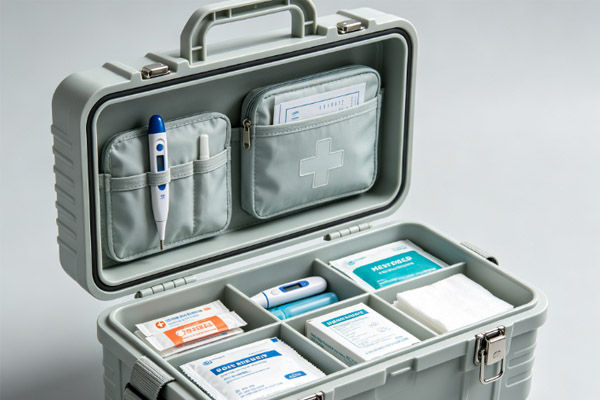
As public safety awareness and the demand for in-vehicle emergency preparedness continue to rise, medical kits have gradually evolved into essential safety components in both public spaces and vehicles. Whether in shopping malls, schools, and office complexes, or during family road trips, long-distance transport, and outdoor excursions, emergencies can strike at any moment. Without comprehensive medical emergency equipment, minor issues can easily escalate into serious problems in challenging environments. A scientifically sound and practical solution for public and in-vehicle medical kits not only enhances the efficiency of on-site emergency response but also provides a more robust guarantee for personal safety. Through logical categorization, professional provisioning, and portable designs, the management of medical supplies in public and vehicular settings can become significantly more efficient and organized.
The Growing Importance of Public and In-Vehicle Medical Kits
As travel scenarios and public environments become increasingly complex, medical kits are no longer merely simple storage containers; they have become integral components of a comprehensive safety management system. A well-stocked and properly organized kit empowers individuals to execute rapid emergency responses when unforeseen situations arise.
Enhancing Emergency Response Efficiency and Minimizing On-Site Chaos
In public venues or while vehicles are in transit, emergencies often demand immediate attention. If medical supplies are stored in a disorganized manner, it can significantly compromise the efficiency of the emergency response.
- Rapid Access to Common First Aid Supplies: Items such as adhesive bandages, hemostatic dressings, and alcohol swabs should be placed in the most easily accessible locations to facilitate immediate basic treatment.
- Separate Categorization for Medications and Tools: Regular medications and first aid instruments should be managed in distinct sections to prevent chaotic rummaging during emergencies.
- Centralized Management of Emergency Equipment: Tools such as scissors, flashlights, and emergency whistles should be stored together to enhance overall emergency response capabilities.
A logical storage structure can significantly alleviate feelings of panic during emergencies while simultaneously boosting the overall efficiency of safety management.
Strengthening Safety Guarantees in Public and Vehicular Settings—Enhancing User Experience
Many public environments and vehicular scenarios are inherently unpredictable; therefore, proactive emergency preparedness is of paramount importance.
- Addressing Temporary Physical Discomfort: Conditions such as motion sickness, hypoglycemia, and minor injuries are relatively common during travel; a comprehensive medical kit provides essential support for managing these issues.
- Enhancing the Sense of Safety in Public Areas: In settings such as offices, schools, or shopping malls, the standardized provision of medical kits reinforces the overall safety management framework.
- Reducing Stress During Emergencies: With a complete set of tools and supplies at hand, individuals can remain calmer when facing urgent situations, thereby facilitating a more organized and effective on-site response.
A comprehensive emergency response system not only enhances safety but also fosters a more standardized and orderly environment within public spaces and vehicles.
How to Scientifically Stock Medical Kits for Public and Vehicular Use
A medical kit is not merely a haphazard collection of medications; rather, it requires scientific planning tailored to specific real-world scenarios. A rational configuration can significantly boost operational efficiency during actual use.
Basic First Aid Supplies: Meeting Everyday Emergency Needs
The basic first aid section constitutes the core of the entire kit, enabling it to address the majority of common, sudden incidents.
- Trauma Care Supplies: It is recommended to stock adhesive bandages, gauze, tourniquets, and medical tape to facilitate the treatment of abrasions and minor injuries.
- Disinfection & Hygiene Supplies: Alcohol wipes, povidone-iodine pads, and disposable gloves should be kept on hand at all times to minimize the risk of wound infection.
- Common Medications: It is advisable to include basic over-the-counter drugs—such as fever reducers, gastrointestinal remedies, and motion sickness medication—to meet the health needs associated with daily travel.
- Emergency Thermal Protection: A thermal blanket plays a crucial role in low-temperature environments or while waiting for assistance following a vehicle breakdown.
Once these basic first aid supplies are comprehensively stocked, the overall emergency response capability within public spaces and vehicles is significantly enhanced.
Functional Equipment: Boosting Comprehensive Emergency Response Capabilities
In addition to basic medical supplies, medical kits intended for public spaces and vehicles should also incorporate a selection of functional equipment.
| Equipment | Main Function | Applicable Scenario |
| Emergency flashlight | Night illumination | Night driving, power outage |
| Safety scissors | Quick bandage/cutting | First aid treatment |
| Reflective warning items | Improve visibility | Roadside emergency |
| Multi-tool pliers | Temporary repairs | In-vehicle environment |
| Disposable masks | Basic protection | Public places |
- Nighttime Lighting Equipment: Visibility is limited in nighttime environments; an emergency flashlight can enhance safety during on-site response operations.
- Long-Term Stockpiling of Protective Gear: Items such as face masks and gloves are highly practical in public settings, bolstering basic hygiene and protective capabilities.
- Versatile Multi-tools: Equipment like multi-pliers can assist in resolving minor equipment issues, thereby improving overall emergency response efficiency.
Functional Configurations: These specialized features enable a medical toolkit to deliver greater value across a wider range of scenarios.
Different Scenarios Call for Different Medical Toolkit Configurations
Public venues and vehicle environments differ significantly; consequently, toolkit configurations must be tailored to meet the specific requirements of each setting.
Medical Toolkits for Public Venues: Emphasizing Standardized Management
Public settings—such as schools, shopping malls, and office complexes—typically accommodate large numbers of people, necessitating a highly systematic approach to toolkit configuration.
- Enhancing Item Identification Efficiency: Utilizing color-coding and illustrated labels facilitates the rapid identification and retrieval of specific first-aid supplies.
- Optimizing for Multi-User Accessibility: Disposable supplies and basic protective gear must be kept in ample stock to ensure they are readily available for simultaneous use by multiple individuals.
- Designated Storage Areas: It is recommended that medical toolkits be permanently positioned in highly visible locations to ensure maximum accessibility during emergencies.
Standardized management enhances the stability of emergency response systems in public environments.
Vehicle-Mounted Medical Toolkits: Prioritizing Portability and Durability
Space is at a premium within a vehicle environment; therefore, a vehicle-mounted medical toolkit must be compact and structurally robust.
- Reinforced Shock-Resistant Structure: Vehicles are prone to vibration while in motion; the toolkit’s internal structure must remain stable to prevent contents from becoming dislodged or scattered.
- Optimized Overall Dimensions: Vehicle-mounted toolkits should be sized to fit conveniently within the trunk or passenger cabin without encroaching upon everyday usable space.
- Enhanced Water and Dust Resistance: Since vehicle-mounted kits may be exposed to a variety of challenging environmental conditions over extended periods, robust protective features are essential.
Vehicle-Specific Optimization: By tailoring the toolkit to the unique demands of a vehicle environment, the overall user experience becomes significantly more stable and efficient.
Modern Medical Toolkits: Focusing on Modular and Specialized Design
As the demand for public safety and vehicle-based emergency preparedness continues to rise, medical toolkits are evolving toward increasingly specialized and systematic designs.
Modular Compartmentalization: Boosting Daily Management Efficiency
Modular design allows for the flexible reconfiguration of the toolkit’s internal layout to suit the specific requirements of different scenarios.
- Segregated Storage for Medications and Tools: Separating medications from tools into distinct compartments minimizes confusion and accelerates the retrieval process during emergencies.
- Support for Rapid Detachment and Use: Core first-aid modules can be quickly detached and removed from the main kit, facilitating immediate, on-the-spot emergency response.
- Facilitating Future Expansion: The modular layout allows for flexible adjustments to accommodate the addition of new equipment, ensuring long-term usability and adaptability.
Modular design is emerging as a key trend in modern medical storage solutions.
Enhanced Protection: Adapting to the Demands of Complex Environments
Given the complex nature of public and vehicular settings, the inherent durability of the medical toolbox itself has become increasingly critical.
- Robust Waterproofing: A more stable waterproof structure minimizes the ingress of rain or moisture, thereby enhancing the safety and security of the contents stored inside.
- Pressure-Resistant Materials: The use of pressure-resistant materials boosts overall durability; this ensures the toolbox remains undamaged during frequent movement and transit, making it ideally suited for high-intensity usage scenarios.
- Portable and Mobile Design: Many toolboxes now feature integrated carrying handles or ergonomic designs to facilitate rapid and effortless relocation across a variety of different settings.
A more structurally sound design ensures that a medical toolbox delivers long-term utility and value throughout its service life.
A scientifically designed and comprehensive medical toolbox—whether intended for public spaces or vehicles—significantly enhances the efficiency of emergency response operations. Furthermore, it contributes to the establishment of a more stable and secure emergency preparedness framework for both public areas and travel environments. From basic first-aid supplies to specialized functional tools, and from public venues to in-vehicle applications, every minute detail plays a pivotal role in shaping the actual user experience. As modern society’s standards for safety management continue to rise, the demand for professional, systematic medical toolbox solutions is garnering increasing attention. SIPHIA BOX specializes in high-quality medical storage solutions, leveraging intelligent structural designs and professional organizational principles to provide robust, reliable support for safety management initiatives in both public and vehicular settings.