
In modern industrial production and equipment maintenance, electrical and electronic working environments place much higher demands on tools than ordinary work scenarios. Whether it is workshop repair, construction site wiring, or electronic testing in auto repair shops, standardized management and safety of tools directly affect work efficiency and personnel safety. Therefore, a systematic “Electrical & Electronic Work Tool Box Solution” is not just a container for storing tools, but a comprehensive system focused on safety, efficiency, and standardized management.
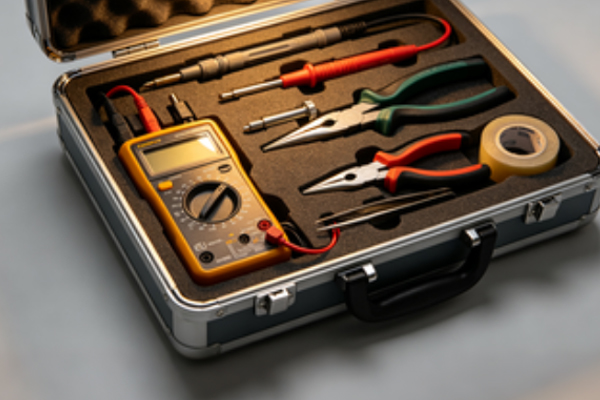
What is an Electrical & Electronic Work Tool Box?
An electrical and electronic work tool box is a professional tool storage and management system specifically designed for electrical installation, electronic maintenance, and equipment debugging environments. It is not only used for storing tools, but also emphasizes classified management, protective performance, and portability efficiency, making it an indispensable basic equipment in modern industrial sites.Unlike traditional ordinary tool boxes, electrical and electronic tool boxes prioritize “safety first” and “precise storage.” In electrical operations, tools often involve live working environments, so they must have insulation, anti-static, and anti-misoperation capabilities. For example, screwdrivers, pliers, multimeters, cable tools, etc., all need to be stored in categories to avoid confusion that could lead to misuse.
At the same time, such tool boxes are commonly used in the following scenarios:
—Industrial electrical equipment maintenance workshops
—Automotive electronic repair and testing workshops
—Temporary power distribution and wiring on construction sites
—Factory production line equipment maintenance areas
—Professional maintenance service vehicles (mobile repair)
The Role of Tool Boxes in Work Operations
The value of electrical and electronic work tool boxes is reflected in the efficiency optimization of the entire workflow. From tool preparation to on-site use and final storage, it runs through the entire work chain.
Tool Preparation and Classification Before Work
Before formal operations, tools need to be classified according to function, for example:
—Electrical testing tools (multimeter, test pen)
—Connection and installation tools (crimping pliers, wire stripper)
—Fastening tools (insulated screwdriver, wrench)
—Protection and auxiliary tools (insulated gloves, anti-static mat)
Through the compartment design of the tool box, tool organization can be completed in advance, avoiding time waste caused by searching for tools on site.
Fast Access and Mobile Operation on Site
In workshops or construction environments, operations are often dynamic. Electrical and electronic tool boxes are usually equipped with tool carts or mobile tool cabinets, allowing operators to move to different workstations at any time.
| Tool Type | Traditional Method | Tool Box Solution |
| Tool Management | Random stacking | Classified drawer system |
| Searching Efficiency | Low | Fast positioning |
| Transportation Method | Hand carrying | Rolling mobility |
| Safety | Easy to lose | Locked protection |
Through this structured management, work efficiency can be significantly improved and repetitive labor reduced.
Return and Maintenance After Work
After completing work, tools must be returned to their designated positions. This step is particularly important for long-term use.
Standardized tool box design enables:
—Fixed slots to prevent misplacement
—Label identification for quick organization
—Dust-proof structure to extend tool life
—Categorized management to reduce omissions
This is especially critical in large workshops and auto repair shops, where a large number of tools are used. Once management becomes disorganized, it will directly affect subsequent work efficiency.
Manufacturing Standards of High-Quality Electrical & Electronic Tool Boxes
A high-quality tool box is not just a simple metal or plastic structure; it requires multiple industrial technologies.
Material Structure and Durability Design
High-quality tool boxes usually use:
—High-strength cold-rolled steel plates
—Industrial-grade PP engineering plastics
—Anti-corrosion coating structures
These materials ensure stability in high-frequency usage environments, especially in complex environments such as construction sites and workshops.
Protective Design
Electrical and electronic tool boxes must have multiple protection designs:
—Anti-static structure (protect electronic components)
—Insulated layers (avoid electric shock risks)
—Shock-resistant lining (protect precision tools)
—Waterproof and dustproof design (for outdoor construction sites)
Modular Storage Management
Modern tool boxes increasingly emphasize modular design, such as:
—Detachable drawer systems
—Adjustable partitions
—Multi-layer classified tool structures
—Independent precision instrument compartments
This structure can adapt to different job requirements and achieve “one box for multiple uses.”
Comparison of Tool Carts and Large Tool Cabinets:
| Type | Application Scenario | Advantages |
| Portable Tool Box | Small repairs | Flexible mobility |
| Tool Cart | Workshop / Construction site | Fast circulation |
| Tool Cabinet | Fixed workstation | Large-capacity storage |
In large workshops or auto repair shops, tool carts and tool cabinets are often used together to form a complete management system.
Frequently Asked Questions
Q: Is the electrical and electronic tool box suitable for outdoor construction sites?
A: Yes, high-quality tool boxes have waterproof, dustproof, and impact-resistant capabilities, making them suitable for construction sites, workshops, and other complex environments.
Q: Can different tool layouts be customized?
A: Yes, according to different work requirements, internal structures, drawer partitions, and tool slots can be customized for personalized management.
Q: Can the tool box bear heavy loads for long-term use?
A: Industrial-grade tool boxes are designed to withstand frequent opening/closing and heavy-duty use, making them suitable for workshops and auto repair shops.
Why Choose Our Tool Box Solutions?
TB Toolbox focuses on providing reliable and innovative tool box solutions. Our mission is to deliver practical and durable products that help you work smarter and more efficiently. Our products are certified by internationally recognized standards and meet strict quality and safety requirements to ensure customer trust.We not only provide products, but also systematic tool storage and management solutions.
| Core Capability | Data & Advantages |
| Global Delivery Capability | 80+ countries |
| Production Scale | 500,000+ tool boxes |
| Project Experience | Over 10,000 projects |
| Application Fields | Workshops / Garages / Construction Sites / Industrial Maintenance |
As your trusted tool box manufacturer, we are committed to providing durable, reliable, and customized tool storage solutions for the global market, helping enterprises achieve higher efficiency in different working environments.Whether in workshops, construction sites, or auto repair shops, a good electrical and electronic work tool box helps organize tools properly so that each tool has a fixed position. When needed, it can be found at a glance, and after use, it can be returned directly without searching everywhere.In large tool cabinet and tool cart systems, this advantage becomes even more obvious. For example, on construction sites, you can push the tool cart directly; in workshops, each workstation has a fixed tool area; in auto repair shops, electrical testing tools and mechanical tools are stored separately to avoid confusion.