Racing engineers need to deal with high-intensity, high-efficiency, and high-precision working environments during track testing, vehicle tuning, race maintenance, and racing modification. Compared with ordinary maintenance toolboxes, toolboxes used by racing engineers not only need to meet tool storage requirements but also need to adapt to mobile transportation, quick access, shock resistance, dust prevention, and professional equipment protection. Every minute in a racing competition is extremely important. A well-designed dedicated toolbox solution can help engineers quickly find the required tools, improve maintenance efficiency, and reduce tool damage and loss. The dedicated toolbox solution for racing engineers is mainly designed for racing maintenance teams, event service teams, automotive research and testing organizations, and high-performance vehicle modification companies. Through reasonable planning of toolbox structures, internal module layouts, protective performance, and transportation methods, the toolbox becomes an important auxiliary device in the engineer’s workflow.
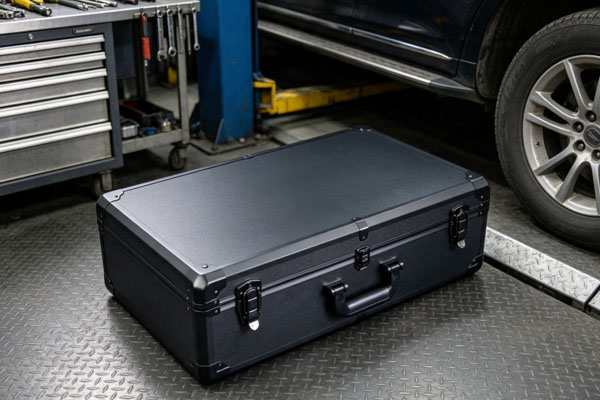
Professional toolboxes are usually manufactured using high-strength PP materials or aluminum alloy materials, combined with customized inner lining designs, allowing wrenches, sockets, power tools, testing instruments, electronic devices, and other equipment to be stored securely. TB Toolbox focuses on professional protective cases, aluminum alloy transport cases, and customized toolbox solutions, providing safe and reliable transportation protection products for industries such as racing engineering, automotive repair, and aerospace equipment. The company has a complete R&D and production system and can provide customized size design, internal structure planning, and functional optimization according to customer requirements, helping customers create professional tool storage solutions suitable for actual application scenarios.
Design Concept and Application Requirements of Dedicated Toolboxes for Racing Engineers
Racing Maintenance Environments Require Higher Toolbox Standards
The working environment of racing engineers is significantly different from ordinary automotive repair. At race events, teams usually need to complete inspections, component replacements, parameter adjustments, and fault handling within a short period of time. The tools carried by engineers are diverse, including precision torque wrenches, measuring equipment, electronic testing instruments, tire tools, battery inspection devices, and more. If tools are placed randomly, the time required for searching will increase, affecting vehicle tuning progress. Professional racing toolboxes need to be designed according to engineers’ working habits, allowing frequently used tools to be accessed quickly while ensuring that tools are not damaged by collisions during transportation. For example, different-sized modular storage spaces can be arranged inside the toolbox to classify and manage small tools, precision instruments, and large equipment separately.
Common design requirements for racing engineer toolboxes are as follows:
| Design Requirements | Solutions |
| Large number of tools and complex classification | Use modular inner lining design |
| High dust levels in track environments | Add sealed dustproof structures |
| Easy vibration during transportation | Use cushioning protection materials |
| High value of tools | Adopt high-strength toolbox structures |
| Need for quick movement | Equip with wheels and pull handles |
Through reasonable design, the toolbox is not only a simple storage device but also an important piece of equipment that helps racing teams improve work efficiency.
Different Racing Projects Require Different Toolbox Configurations
Different types of racing have different requirements for tool configurations. For example, Formula racing teams focus more on lightweight design and quick operation. Endurance racing teams require long-term event support, so toolboxes need stronger durability and larger storage capacity. Automotive research and testing teams pay more attention to the protection of testing equipment. Dedicated toolboxes for racing engineers can be customized according to different application scenarios:
Track Repair Toolbox: Focuses on improving mobility and quick tool access capability.
Racing Development Toolbox: Focuses on protecting electronic testing equipment and precision instruments.
Modification Engineering Toolbox: Needs to accommodate more mechanical processing tools.
Race Support Toolbox: Needs to meet long-term transportation requirements and complex environmental conditions.
Through customized design, traditional toolbox problems such as wasted space can be avoided, allowing every storage area to provide practical value.
Toolboxes Provide More Than Storage Functions
A toolbox is also an important representation of a team’s professional image. A well-designed and visually unified toolbox can demonstrate the management level of a racing team. Some customers customize toolboxes according to racing brand requirements by adding logos, customized colors, and exclusive identification marks on the toolbox surface, allowing the toolbox to serve as both a storage solution and a brand display tool. At large racing events, uniformly designed toolboxes help teams establish a more professional visual identity.
Manufacturing Process of Dedicated Toolboxes for Racing Engineers
Solution Planning Based on Usage Requirements
Customization of racing toolboxes is not simply about changing toolbox dimensions. It requires comprehensive planning based on actual usage conditions. Before production, manufacturers need to understand the types, quantities, sizes, and transportation methods of the tools carried by customers. Designers usually communicate with customers about the following information:
- Tool lists and equipment dimensions;
- Usage environments, such as racing tracks, repair workshops, or transport vehicles;
- Toolbox mobility requirements;
- Protection level requirements;
- Appearance color and brand identification requirements.
Through early communication, a toolbox structure that better suits engineers’ working needs can be determined.
Toolbox Manufacturing and Internal Structure Design
After the solution is confirmed, the production stage begins. Racing toolboxes commonly use high-strength PP safety protective cases or aluminum alloy bodies. These materials feature lightweight construction, impact resistance, and corrosion resistance. The internal structure usually adopts customized foam, EVA materials, or other cushioning materials. These materials are cut according to the shape of each tool, allowing tools to be fixed securely in designated positions.
For example:
| Tool Type | Internal Design Method |
| Torque Wrench | Dedicated fixing slot |
| Electronic Testing Equipment | Soft cushioning layer |
| Socket Tools | Compartment storage board |
| Power Tools | Thickened impact protection area |
This design can reduce tool movement during transportation and improve overall protection performance.
Installation Testing and Quality Inspection
After the toolbox production is completed, structural inspections are required, including toolbox strength testing, opening and closing cycle tests, protection performance testing, and transportation stability testing. Professional toolboxes need to meet long-term usage requirements. Therefore, attention needs to be paid during production to:
- Whether toolbox connection points are firm and reliable;
- Whether the sealing structure is complete;
- Whether internal fixing designs are reasonable;
- Whether carrying and moving the toolbox is convenient.
Toolboxes that pass complete testing can adapt to racing transportation, on-site usage, and long-term storage requirements.
Material Selection and Functional Design in Racing Toolbox Customization
High-Strength Toolbox Materials Improve Protection Capability
Racing engineering tools are usually high-value products, and some testing equipment can be extremely expensive. Therefore, the toolbox needs to provide excellent protection performance. PP safety protective cases feature impact resistance, waterproof performance, and dustproof capability, making them suitable for frequent mobile use. Aluminum alloy toolboxes provide stronger structural stability and a more professional appearance, making them suitable for racing teams and high-end automotive research projects.
TB Toolbox provides different material options according to different application environments:
| Material | Features | Suitable Applications |
| PP Material | Lightweight, impact-resistant, durable | Mobile repair, race events |
| Aluminum Alloy | Strong, attractive, high load-bearing capacity | Research teams, high-end racing |
| Customized Composite Structure | Higher protection performance | Precision equipment transportation |
Internal Modular Design Improves Work Efficiency
Racing engineers often need to complete repair tasks within limited time, so the arrangement of tools is extremely important. Modular design allows adjustments according to changes in tools. For example, detachable partitions and replaceable foam modules can be added, allowing the toolbox to be used for a long time without requiring replacement when tools increase. A reasonable layout can reduce the time engineers spend searching for tools and improve on-site work efficiency.
Combining Mobility, Protection, and Display Functions
Modern racing toolboxes not only need to protect tools but also need to provide convenient transportation.
Some large toolboxes can include:
- Universal wheel design;
- Retractable pull handles;
- Reinforced locking systems;
- Waterproof sealing rings;
- Label management systems.
These functions allow engineers to transport tools more conveniently to different racing venues.
Frequently Asked Questions
Can racing toolboxes be customized according to tool dimensions?
Yes. Professional toolboxes are usually designed according to the tool lists provided by customers. Internal slots, foam thickness, and space layouts can all be adjusted according to actual requirements. Whether it is small repair tools or large testing equipment, dedicated storage areas can be planned.
Will internal equipment be damaged during toolbox transportation?
Professional racing toolboxes reduce vibration impact through cushioning materials and fixing structures. Customized foam inserts can closely match equipment shapes, preventing tools from colliding inside the box. At the same time, high-strength toolbox bodies can withstand impacts during transportation.
Why Do Racing Teams Need Customized Toolboxes?
Ordinary toolboxes usually cannot meet the requirements of racing engineering environments. Customized toolboxes can improve tool management efficiency, allow engineers to quickly locate equipment, and protect valuable tools, improving overall team productivity. For racing teams, a professional toolbox is not only a storage device but also important equipment that improves maintenance efficiency and ensures stable race operation.
Racing competitions test not only vehicle performance but also the coordination efficiency of the entire engineering team. In a rapidly changing racing environment, engineers need reliable tools to complete inspections, repairs, and adjustments, and the toolbox serves as an important connection between engineers and equipment. An excellent dedicated toolbox for racing engineers needs to have features such as safety protection, quick access, convenient transportation, and long-term durability. Through reasonable internal space planning, suitable material selection, and integration with actual usage habits, tool management can become easier and maintenance work can become smoother.
TB Toolbox continuously focuses on the practical needs of users in different industries. Through professional design and manufacturing capabilities, the company provides customers with toolbox products that better match their application scenarios. Whether it is racing teams, automotive research companies, or professional repair organizations, customers can customize solutions according to their own requirements, ensuring that every tool has a safe and reliable storage space. If you are looking for a professional toolbox solution suitable for racing engineering projects, please contact TB Toolbox. We will provide customized services based on your tool configuration and application requirements.
Email: marktingoffice@siphiabox.com
WhatsApp/Phone: +2084098942