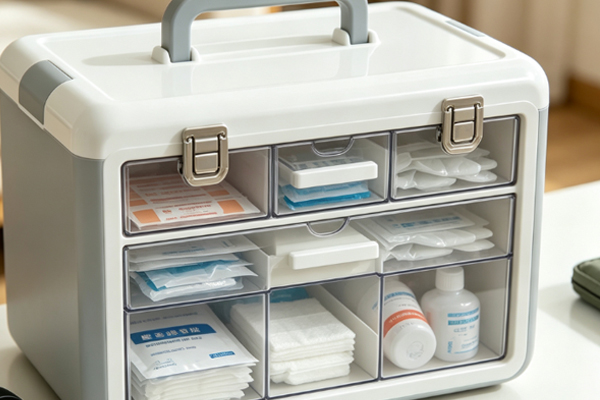
In medical institutions, corporate offices, schools, public areas, and industrial sites, emergency medical supplies play a vital role in ensuring personnel safety. Traditional storage methods often lead to scattered supplies, time-consuming retrieval, and unclear inventory management, which can reduce the efficiency of emergency response. The emergency medical supplies storage system integrates professional toolboxes, modular zoning, and standardized management methods to systematically organize first-aid supplies, protective equipment, and backup materials, making medical resource management more efficient and orderly. Designing appropriate storage solutions for different application environments helps improve emergency response capabilities and optimize daily management processes.
Growing Demand for Emergency Medical Supplies Storage
Emergency supplies are characterized by uncertain usage timing, diverse categories, and the need for rapid access. A scientific storage approach can significantly improve management efficiency.
Improving Access Speed in Emergencies
When emergencies occur, the location and classification of medical supplies directly affect response efficiency.
- Fixed storage areas: By setting up dedicated medical supply toolboxes, first-aid materials are kept in fixed positions for quick access.
- Clear classification management: Supplies are categorized into disinfection items, care items, and protective equipment to reduce search time.
- Label-based identification: Clear labels are placed in storage areas to help different users quickly locate items.
Standardized storage methods can improve the efficiency of emergency medical supply usage.
Reducing Confusion in Medical Supply Management
With a wide variety of medical supplies, lack of planning can easily lead to management disorder.
| Management Dimension | Traditional Issues | Optimized Storage System |
| Item storage | Scattered and disorganized | Centralized categorized storage |
| Retrieval efficiency | Time-consuming | Fast and accurate access |
| Inventory management | Difficult to track | Visualized management |
| User experience | Prone to confusion | Standardized workflow |
A well-structured management system helps maintain long-term order in medical supplies.
How to Design an Emergency Medical Supplies Storage System
An efficient storage system should be designed based on usage environment, supply volume, and access requirements.
Modular Design: Improving Space Utilization
Modular storage allows flexible adjustment of internal structure based on needs.
- Flexible space allocation: Different-sized modules are used to reasonably distribute first-aid kits, medicines, and protective supplies.
- Expandable design: As supplies increase, module layouts can be adjusted to meet long-term management needs.
- Adaptability to multiple environments: Suitable for offices, schools, factories, and public spaces.
Modular structures improve both space efficiency and management flexibility.
Categorized Storage Design: Building a Clear Management System
Proper classification is the foundation of emergency medical supply management.
- First-aid supply area: Stores bandages, gauze, disinfectants, and other commonly used items to improve access efficiency.
- Protective equipment area: Centralized storage of masks, gloves, and protective gear for quick distribution.
- Backup inventory area: Separately stores reserve materials for regular inspection and replenishment.
A clear classification structure helps establish an efficient management model and significantly improves emergency response efficiency.
Storage Solutions for Different Scenarios
Different environments have different requirements for medical supplies and require tailored configurations.
Corporate Offices: Focus on Convenient Management
Office environments are densely populated, and emergency supplies must be easy to locate and use. Setting up medical supply toolboxes in office areas allows employees to access basic materials conveniently. Common items such as bandages and disinfectants can be centrally stored to improve daily usability. Professional storage equipment enhances workplace organization, and a well-designed storage system further strengthens corporate safety assurance capabilities.
Industrial Sites: Emphasis on Durability and Fast Response
Industrial environments involve high-intensity operations and require stricter management of medical supplies.
- Professional toolboxes: Use structurally stable storage equipment suitable for workshop environments.
- Proximity to work areas: Properly plan storage locations to reduce retrieval time during emergencies.
- Classified safety material management: Separate protective equipment from first-aid supplies to improve efficiency.
Industrial scenarios rely more heavily on stable and reliable storage systems.
Schools and Public Areas: Emphasis on Standardized Storage
Schools and community spaces must meet the needs of multiple users.
- Simplified retrieval process: Clear classification improves item recognition efficiency.
- Strengthened daily maintenance: Regularly inspect supplies to ensure completeness and usability.
- Enhanced safety awareness: Standardized management helps form good emergency habits.
Proper configuration improves overall safety levels in public environments.
Long-Term Value of Emergency Medical Supplies Storage Systems
Professional storage solutions not only optimize current management but also help establish a long-term stable safety system.
Improving Overall Management Efficiency
Unified storage methods reduce repetitive organization work. Categorized storage allows quick inspection of supply status. Fixed structures reduce disorder and improve management efficiency. At the same time, staff can quickly access required items, enhancing user experience. A scientific storage system also supports long-term safety management.
Enhancing Equipment Value
High-quality storage equipment offers stronger long-term adaptability.
- Durable structural design: Robust materials adapt to various environments.
- Easy mobility configuration: Movable designs allow flexible use across different areas.
- Support for continuous upgrades: Internal structures can be adjusted according to changing supply needs.
This better meets the requirements of various emergency scenarios.
The emergency medical supplies storage system, through categorized management, modular design, and professional toolbox configuration, provides efficient material management solutions for enterprises, medical institutions, schools, and public areas. SIPHIA BOX focuses on professional storage solutions, using flexible structures and reliable design to help users build standardized, safe, and convenient emergency medical supply management systems, ensuring faster and more stable material deployment in critical moments.