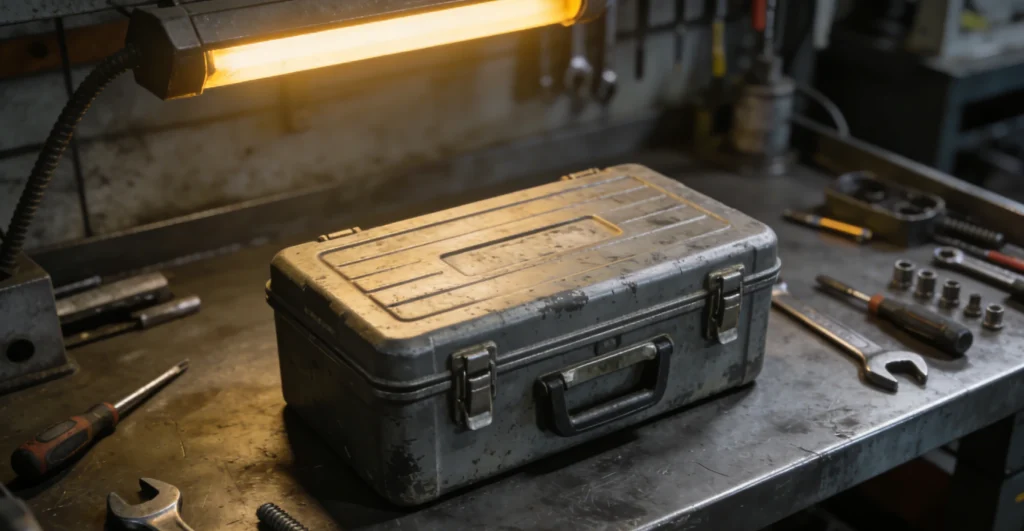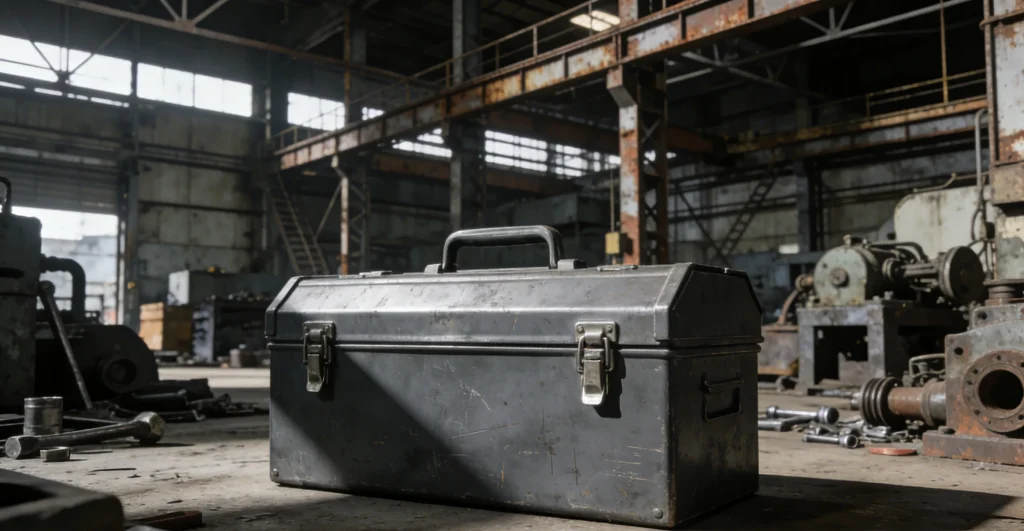
As the number of tools increases, the storage method directly affects workspace cleanliness and operational efficiency. Regular toolboxes usually feature a single-box structure, making them suitable for home repairs, basic installations, and storing a small number of tools. Stackable toolboxes, on the other hand, adopt a modular design that allows multiple boxes to be combined and expanded, offering greater flexibility. In scenarios such as automotive repair, industrial maintenance, construction work, and home DIY, the requirements for both types differ. Understanding their structural characteristics helps users choose a more suitable solution based on tool quantity, usage frequency, and working environment.
Differences in Spatial Structure and Storage Methods
The internal structure of a toolbox directly affects tool classification and organization efficiency. The two types differ in how they utilize space.
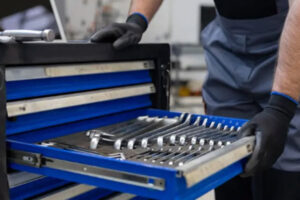
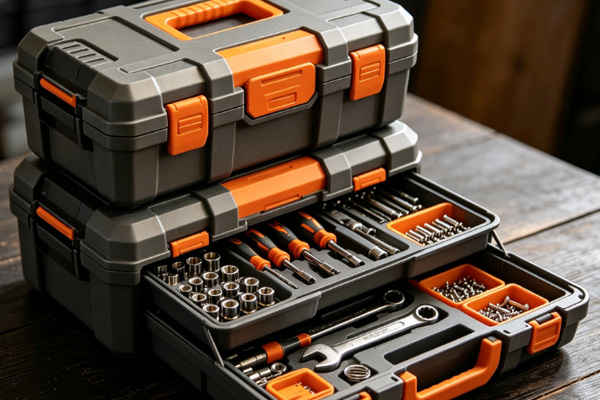
Stackable Toolboxes Support Space Expansion
The stackable design combines multiple independent units, providing greater scalability in storage capacity.
- Multi-box combination increases capacity: Toolboxes of different sizes can be freely stacked, allowing flexible expansion based on tool quantity.
- Clearer compartmentalized storage: Hand tools, power tools, and small accessories can be stored separately to reduce mixing.
- Efficient vertical space usage: Stacking upward reduces floor space usage, making it suitable for workshops or garages with limited space.
The modular structure makes tool management more scalable and systematic.
Regular Toolboxes Focus on Single-unit Storage
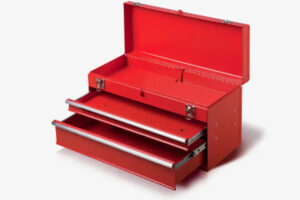
Regular toolboxes have a simple structure and are mainly designed for centralized storage of basic tools.
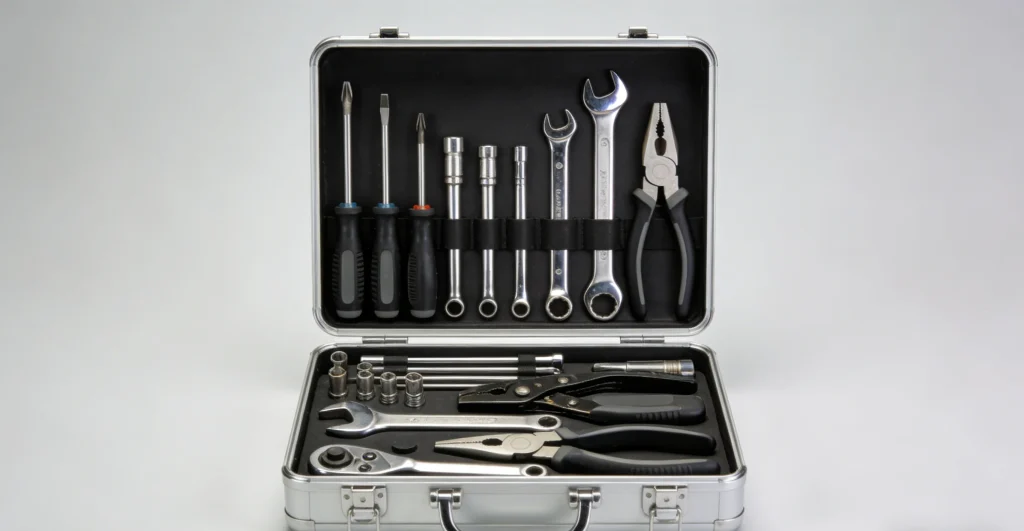
- Centralized storage of common tools: Screwdrivers, pliers, wrenches, and other basic tools can be stored together.
- More direct usage: The single-box design allows quick access, making it suitable for short-term repair tasks.
- Compact size: When the number of tools is small, it is easier to carry and store.
The single-unit structure meets basic daily needs and is suitable for home use.
Differences in Mobility and Combination Methods
Toolboxes are not only for storage; their portability also affects real-world usability.
Stackable Toolboxes Offer Greater Flexibility
The modular structure allows users to adjust combinations based on task requirements. For short-term tasks, only the necessary modules can be carried to reduce overall weight. For large-scale repair work, multiple boxes can be combined to increase tool capacity. Different modules can also be assigned to different workstations, improving on-site coordination and overall workflow efficiency. This makes them especially suitable for environments with diverse tools and frequently changing tasks.
Regular Toolboxes Are Better for Lightweight Mobility
Regular toolboxes are characterized by a simplified structure and more straightforward mobility.
- Suitable for home repairs: Convenient for furniture assembly, plumbing, and electrical maintenance.
- Easier to carry: The single-box design reduces the need for disassembly or combination.
- Ready to use: Can be used immediately without additional setup.
For users with fewer tool requirements, this structure remains highly practical.
Differences in Classification Management and Efficiency
Tool storage is not only about capacity but also about improving retrieval and organization efficiency.
Stackable Toolboxes Enable Better Organization Systems
The modular design allows clearer separation of different tool categories. Frequently used tools such as screwdrivers, wrenches, and pliers can be placed in easily accessible modules. Small accessories like screws, washers, and bits can be organized using compartmentalized trays. Specialized tools can be stored separately to avoid mixing, significantly reducing the time needed to find tools.
Regular Toolboxes Have Limited Classification Capability
As the number of tools increases, single-box structures can become disorganized.
- Tools are easily mixed: Different types of tools are stored together, requiring searching and sorting.
- Limited capacity expansion: As tools increase, space can quickly become insufficient.
- Organization depends on habits: Frequent manual rearrangement is required.
They are more suitable for scenarios with fewer tools.
Differences in Application Scenarios and Long-term Value
The two types of toolboxes are designed for different purposes and user groups.
Stackable Toolboxes for Professional Tool Management
Suitable for professional environments with a wide variety of tools and high usage frequency.
- Automotive repair: Can store sockets, wrenches, diagnostic tools, and accessories in categories.
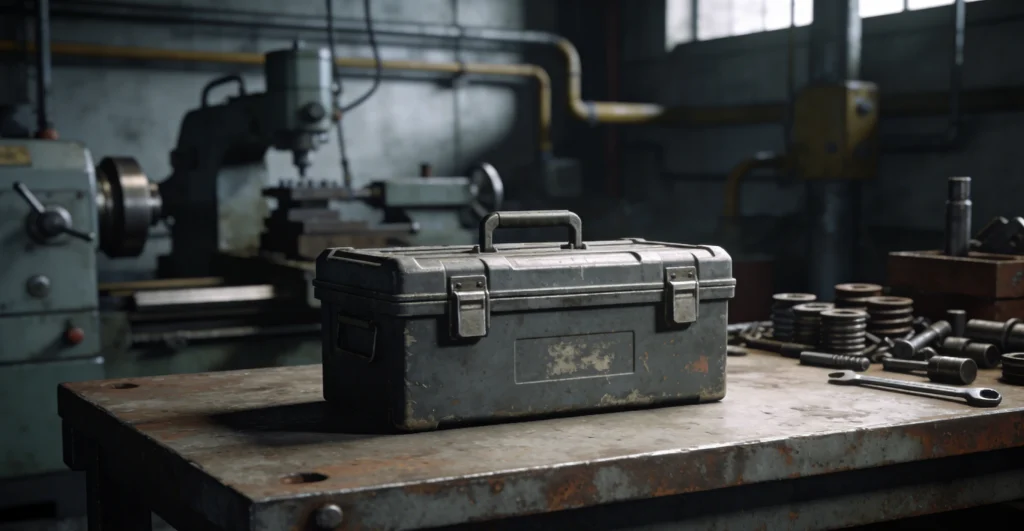
- Industrial maintenance: Modules can be grouped by equipment type for better organization.
- Construction work: Modules can be carried according to tasks, improving on-site efficiency.
This structure is better suited for long-term, high-intensity professional use.
Regular Toolboxes for Basic Tool Needs
More suitable for lightweight and low-frequency usage scenarios.
- Lower cost: Simple structure, ideal for basic tool storage.
- Easy to carry: Compact size allows flexible transport and storage.
- Meets daily repair needs: Common hand tools are sufficient for household use.
For users with higher demands, modular systems provide better scalability.
Stackable toolboxes and regular toolboxes each have their own advantages. Regular toolboxes are better suited for small tool sets and home use, while stackable toolboxes are more suitable for professional maintenance, large-scale tool management, and environments that require continuously expandable storage space. SIPHIA BOX focuses on professional tool storage solutions, using modular structures and flexible combination designs to provide users with a more efficient and organized tool management experience.