
Industrial inspection plays an important role in quality management across manufacturing, energy, machinery, electrical power, automotive, chemical, and other industries. Dimensional measuring instruments, ultrasonic flaw detectors, infrared thermal cameras, vibration analyzers, pressure testers, and various sensor devices often need to be transported between workshops, production lines, and outdoor engineering sites. These instruments are generally precise, valuable, and accompanied by multiple accessories, making ordinary storage boxes inadequate for protection against shock, dust, moisture, and transportation damage.
A professional toolbox designed specifically for industrial inspection instruments can provide more reliable protection during transportation, storage, and field operations. At the same time, it helps inspection technicians quickly find the equipment and accessories they need. An effective industrial inspection instrument toolbox solution should be designed around instrument dimensions, operating conditions, transportation methods, and inspection workflows.
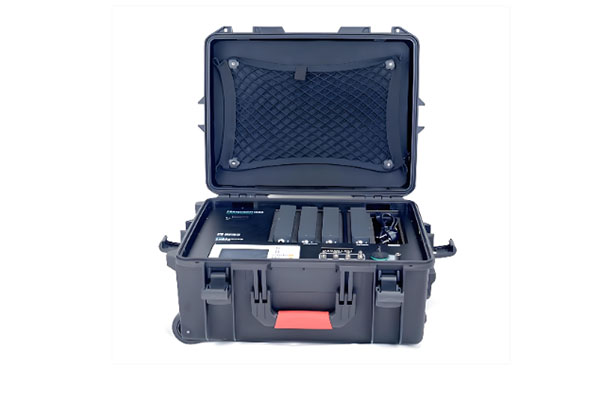
Why Do Industrial Inspection Instruments Need Professional Toolboxes?
Reduce the Risk of Impact During Transportation
Industrial inspection instruments often contain precision sensors, display modules, and electronic components. If they are exposed to strong impacts or continuous vibration during transportation, their performance may be affected and measurement accuracy can potentially be compromised.
Professional instrument toolboxes can reduce external impact through durable cases and internal cushioning structures. For ultrasonic flaw detectors, vibration analyzers, infrared thermal cameras, and other equipment, customized EVA foam inserts can be designed according to the instrument’s shape and dimensions to keep the equipment securely positioned inside the case.
Prevent Instruments and Accessories from Becoming Disorganized
Industrial inspection often requires more than one device. Technicians may also need probes, connection cables, data cables, calibration components, batteries, chargers, and other accessories. Without an organized storage system, accessories can easily become difficult to find or get left behind during field operations.
Customized compartments and independent storage areas can separate main instruments from accessories, improving the use of available toolbox space and making equipment management more efficient.
Key Design Features of Industrial Inspection Instrument Toolboxes
Durable and Robust Case Structure
Industrial environments can be demanding, and toolboxes may experience frequent handling, vehicle transportation, and accidental impacts. Therefore, the case should provide good impact resistance and wear resistance.
For equipment that is frequently used in factories, construction sites, or outdoor environments, a robust protective case can be selected according to the actual transportation conditions, equipment size, and protection requirements.
Customized EVA Foam Inserts
EVA foam is commonly used as an internal protective material for precision instruments. Through CNC cutting or other customization methods, dedicated compartments can be created according to the shape and dimensions of the equipment.
When multiple inspection instruments need to be stored together, different compartments can also be designed to give each instrument a fixed and secure position.
Dustproof, Waterproof, and Moisture-Resistant Protection
Industrial inspection environments may contain dust, oil, moisture, and water. Electrical inspections, construction projects, and outdoor testing applications can place particularly high demands on the sealing performance of a toolbox.
Protective cases equipped with sealing gaskets and reliable latches can help reduce the entry of external dust and moisture, providing a more stable storage environment for sensitive inspection equipment.
Choosing Toolboxes for Different Industrial Inspection Applications
Factory Production Line Inspection
Production line inspection often requires quick access to testing equipment. Therefore, the toolbox should emphasize portability and internal organization. For smaller inspection instruments, a lightweight handheld toolbox with dedicated accessory compartments can be a practical option.
Engineering Site Inspection
Engineering projects may require technicians to carry multiple instruments and tools. A larger instrument protective case can provide sufficient storage capacity. At the same time, case weight, handle design, and internal fixation should be considered to make transportation easier.
Outdoor Equipment Inspection
Outdoor environments are unpredictable, so toolboxes should focus on waterproofing, dust resistance, shock protection, and durability. For high-value inspection instruments that are frequently transported, a sealed protective case with customized foam inserts can provide additional protection.
| Industrial Inspection Instrument | Recommended Toolbox Type | Main Protection Requirements | Common Application |
| Ultrasonic Flaw Detector | Customized Instrument Case | Shockproof, impact protection | Weld inspection, equipment maintenance |
| Infrared Thermal Camera | EVA Foam Protective Case | Shockproof, dustproof | Power inspection, equipment testing |
| Vibration Analyzer | Reinforced Instrument Case | Impact resistance, moisture protection | Machinery inspection |
| Pressure Tester | Portable Instrument Case | Dustproof, impact protection | Pipeline and engineering inspection |
| Dimensional Measuring Instrument | Compartmentalized Toolbox | Scratch and shock protection | Factory quality inspection |
| Sensors and Accessories | Customized Storage Case | Secure fixation, moisture protection | Industrial field testing |
Why Choose a Customized Industrial Inspection Instrument Toolbox?
Improve Space Utilization
Industrial inspection instruments vary considerably in size and shape between brands and models. Standard toolboxes may leave unused space or fail to secure equipment properly. Customized foam inserts can optimize the internal layout according to the actual dimensions of each instrument.
Improve Field Work Efficiency
A well-organized toolbox allows technicians to access equipment quickly according to their workflow. Frequently used instruments, test cables, and probes can be placed in easily accessible positions, while spare accessories can be stored in separate compartments.
Adapt to Different Transportation Methods
Industrial inspection equipment may be transported by vehicle, air freight, or manually carried by technicians. Selecting a toolbox based on transportation distance, handling conditions, and environmental requirements can further reduce the risk of equipment damage.
An industrial inspection instrument toolbox is more than a simple storage container. It is an important solution for protecting precision equipment and improving field inspection efficiency. From ultrasonic flaw detectors and infrared thermal cameras to pressure testers and vibration analyzers, different instruments have different requirements for internal layouts and protective performance.
With a durable case, customized EVA foam inserts, practical compartments, and dustproof and waterproof structures, industrial inspection instruments can receive more comprehensive protection. Selecting the appropriate toolbox size, internal layout, and protection features according to the application environment can also make equipment transportation safer and field operations more efficient, providing a reliable storage and protection solution for industrial inspection equipment.