
In engineering measurement, industrial inspection, electronic testing, laboratory research, medical testing, and outdoor operations, precision instruments often have high equipment value and are sensitive to vibration, impact, drops, and environmental changes. During long-distance transportation, field construction, and frequent handling, inadequate protection can cause damage to internal components, reduce equipment performance, or even prevent instruments from working properly.
Shockproof protective cases for instruments and equipment provide a reliable solution for these challenges. By combining a durable outer shell, shock-absorbing interior, sealing structure, and customized storage space, professional protective cases can provide comprehensive protection for precision instruments during transportation and storage. Compared with ordinary cardboard boxes, fabric bags, or general-purpose storage containers, professional protective cases are better suited to demanding working environments.
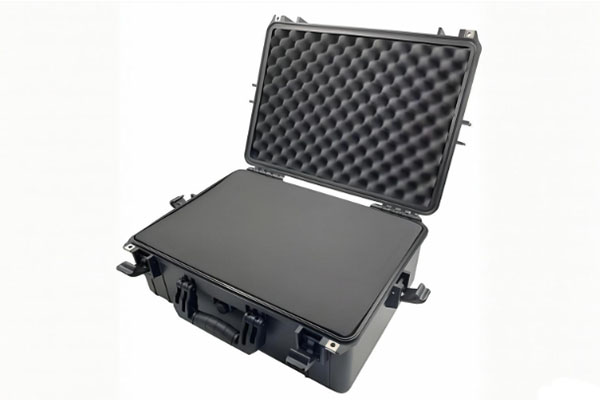
Why Do Precision Instruments Need Shockproof Protection?
Reducing Impact During Transportation
Instruments can experience vibration, bumps, and accidental drops during logistics transportation, vehicle transportation, and manual handling. For equipment containing optical components, electronic modules, sensors, or precision mechanical structures, these impacts may cause internal damage that is not immediately visible.
A shockproof protective case typically combines a durable outer shell with cushioning materials. The internal foam absorbs part of the impact energy and helps maintain a stable protective distance between the equipment and the case.
Preventing Equipment Movement Inside the Case
If the interior of a protective case is too large, equipment may slide or collide with the case during transportation. Without proper organization, cables, probes, and other accessories may also rub against each other.
Customized EVA foam or sponge inserts can be designed according to the actual shape of the instrument. Dedicated compartments keep equipment and accessories securely positioned, improving transportation stability and reducing the risk of damage.
Key Design Features of Shockproof Instrument Cases
Durable and Reliable Outer Shell
Professional protective cases are commonly manufactured from high-strength engineering plastics that offer good impact resistance and durability. A robust outer shell creates the first layer of protection, helping reduce the effect of external impacts on the instruments inside.
For equipment used outdoors for extended periods, it is also important to consider abrasion resistance, weather resistance, and the reliability of components such as latches and hinges.
Effective Shock-Absorbing Interior
Shock protection does not depend only on the case material. The internal cushioning system is equally important. Common interior materials include EVA foam, sponge, and convoluted foam.
Customized EVA foam can be precision-cut according to the equipment’s shape to create dedicated compartments. A properly designed insert helps minimize direct contact between the instrument and the protective case while also making equipment easier to remove and organize.
Waterproof and Dustproof Construction
Many professional instruments are used outside controlled indoor environments. Surveying equipment, industrial inspection devices, and field-testing instruments may be exposed to construction sites, factories, mining areas, or outdoor conditions.
For these applications, shockproof cases should also provide suitable water and dust protection. A case equipped with a sealing gasket can help reduce the entry of moisture and dust, creating a more stable storage environment for sensitive equipment.
Shockproof Protective Case Solutions for Different Instruments
| Application | Common Equipment | Recommended Protection | Main Protection Requirements |
| Engineering Measurement | Surveying instruments, distance meters, laser equipment | Protective case with customized EVA foam | Shock resistance, fixation, portability |
| Industrial Inspection | Inspection instruments, sensors, data acquisition equipment | Waterproof and shockproof protective case | Impact, dust, and water protection |
| Electronic Testing | Multimeters, testing equipment, probes | Multi-compartment instrument case | Organized storage and collision protection |
| Laboratory Applications | Optical instruments, testing equipment | Precision instrument protective case | Cushioning, dust protection, stability |
| Medical Testing | Portable testing equipment | Protective case with customized inserts | Shock protection, cleanliness, portability |
| Outdoor Operations | Surveying equipment, field inspection devices | Waterproof shockproof case | Protection, transportation, quick access |
How to Choose the Right Shockproof Protective Case?
Choose According to Equipment Dimensions
Before selecting a protective case, measure the length, width, and height of the instrument accurately. Consider the storage requirements of cables, probes, batteries, chargers, and other accessories as well.
The internal dimensions should not be selected based only on the bare dimensions of the equipment. Additional space is needed for protective inserts and cushioning materials. For irregularly shaped instruments, customized foam is often more effective than standard filling materials.
Consider the Transportation Environment
For equipment that is mainly moved inside laboratories, portability and storage efficiency may be the primary considerations. If instruments are transported over long distances or frequently used at outdoor construction sites, greater attention should be paid to impact resistance, waterproofing, dust protection, and overall durability.
For precision equipment frequently transported by vehicle, a protective case with effective cushioning is recommended. Customized interior inserts can further reduce equipment movement during transportation.
Consider the Value of the Equipment
For high-value precision instruments, the protective case is an important part of the equipment transportation system. Compared with basic packaging, a professional shockproof case provides more comprehensive protection and can help reduce potential repair or replacement costs caused by transportation damage.
What Are the Advantages of Customized Instrument Cases?
Better-Fitting Interior Space
Different instruments have different shapes and structures, making it difficult for standard foam to provide complete support. Customized inserts can be designed according to the equipment’s contours, creating dedicated slots that keep the instrument stable inside the case.
Organized Storage for Instruments and Accessories
A complete instrument system often includes not only the main unit but also probes, cables, adapters, power supplies, and other accessories. Customized foam inserts can create separate spaces for each component, preventing accessories from being mixed together or colliding during transportation.
Improved On-Site Work Efficiency
A well-organized interior layout allows technicians to quickly locate the equipment and accessories they need. For teams that regularly perform field inspection and maintenance, a protective case can serve as a combined solution for transportation, storage, and on-site equipment organization.
SIPHIABOX Shockproof Protective Case Solutions
SIPHIABOX focuses on toolboxes, instrument protective cases, and professional equipment storage solutions. Depending on equipment dimensions, structural requirements, and working environments, suitable case sizes and interior configurations can be selected for different applications.
From engineering surveying instruments and industrial inspection equipment to electronic testing tools and laboratory devices, a properly designed protective case can combine shock resistance, waterproofing, dust protection, organized storage, and portable transportation.
The combination of a durable outer case and customized foam inserts can provide stable protection for different types of professional equipment. For equipment that requires frequent transportation or long-term use, the interior layout can also be customized according to the product dimensions and actual operating requirements.
Protecting professional instruments during transportation requires more than basic packaging materials. For frequent handling, long-distance transportation, outdoor construction, and demanding industrial environments, a professional shockproof protective case for instruments and equipment can create a comprehensive protection system through a durable outer shell, cushioning inserts, waterproof and dustproof construction, and customized interior space.
Choosing the right shockproof protective case requires consideration of equipment dimensions, weight, transportation methods, operating environment, and the number of accessories. For high-value or precision equipment, a customized protection solution can provide an additional level of security and help keep instruments protected across different working environments.