
When heavy-duty tools are shipped in the hardware industry, the real headache is often not the freight cost but what happens after the tools reach the customer. Scratches, dents, deformation, damaged paint, or even functional problems can quickly turn into returns and complaints. Large wrenches, hydraulic tools, repair equipment, assembly tools, and metal tool sets are heavy and often have hard edges, making ordinary cardboard boxes difficult to rely on for long-distance shipping. A practical heavy-duty tool transportation protection solution needs to address load-bearing capacity, shock protection, tool fixation, handling, and repeated use.
Why Are Heavy-Duty Tools Easily Damaged During Transportation?
Heavy-duty tools are exposed to much greater stress during transportation than ordinary products. Sudden braking, sharp turns, vehicle vibration, stacking pressure, and repeated handling can all cause problems. If the tools are free to move inside the box, they may repeatedly hit each other throughout the journey.
Common Transportation Damage to Heavy-Duty Tools
For companies in the hardware industry, transportation damage usually appears around several key areas. Heavy and oversized tools are particularly vulnerable to the following problems:
- Tools hitting each other: Metal tools can easily develop dents or impact marks when they collide during transit.
- Insufficient bottom support: Heavy tools concentrate weight on the bottom of the box, increasing the risk of collapse.
- Too much empty space: Tools can shift from side to side when there is not enough internal support.
- Surface scratches: Direct contact with the box wall, dividers, or other tools can damage painted or polished surfaces.
A good heavy-duty tool transportation protection solution needs to keep the tools firmly in place. When movement is limited, transportation impacts are easier to distribute and the risk of product damage is much lower.
How Should Different Heavy-Duty Tools Be Protected?
| Tool Type | Main Transportation Risk | Recommended Protection |
| Large hand tools | Impact, scratches | Custom insert + compartment fixation |
| Hydraulic tools | Heavy weight, movement | Heavy-duty box + reinforced bottom |
| Precision repair tools | Vibration, impact | EVA foam + individual slots |
| Metal tool sets | Tool-to-tool collision | Dividers + custom inserts |
| Industrial repair equipment | Compression, tipping | Reinforced box + fixing brackets |
Why Is Fixation More Important Than Simply Adding Thicker Packaging?
When tools are damaged during transportation, some companies simply add more foam. But if the tool keeps moving inside the box, even thick cushioning material can gradually lose its effectiveness after repeated compression. Heavy-duty tool packaging should focus on securing the tool in the correct position so transportation forces are absorbed by the box and protective structure instead of being transferred directly to the tool.
How Can Heavy-Duty Tool Packaging Be Made Safer?
A practical heavy-duty tool transportation protection solution is more than putting a tool inside an outer box. For hardware industry applications, the box, insert, divider, and fixation system should work together. Heavy tools need stronger bottom support and reinforced stress points, while precision tools require better vibration and surface protection.
How Should You Choose a Heavy-Duty Tool Transportation Box?
Different tools require different packaging structures. Short-distance delivery may prioritize lighter packaging, while long-distance logistics and export shipping require stronger impact resistance and compression strength.
- Metal tool boxes are suitable for heavy-duty tools, industrial maintenance tools, and repeated transportation.
- Aluminum tool boxes provide a good balance between structural strength and overall weight.
- Heavy-duty plastic boxes are useful for medium-weight tools where lower packaging weight is important.
- Composite boxes can improve structural stability through reinforcement ribs, protective corners, and other design features.
How Should Tools Be Fixed Inside the Box?
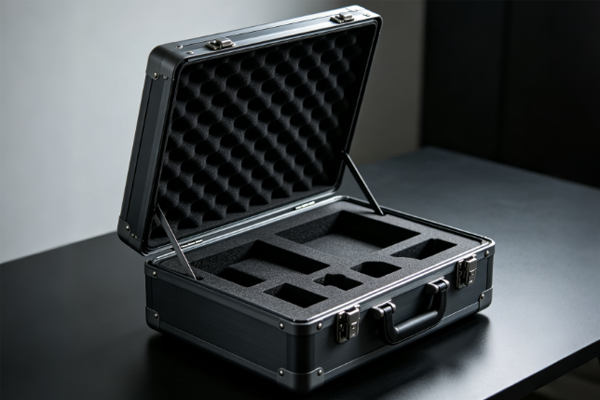
Tools should not have excessive room to move after being placed inside the box. A more effective approach is to create slots, dividers, or foam inserts based on the actual tool shape and dimensions.
What Additional Protection Is Needed for Long-Distance Shipping?
For cross-regional and export transportation, tools may experience longer transit times and more handling. Large tools can be protected with fixing straps, metal buckles, reinforced corners, and bottom supports. These structures help prevent tools from shifting when vehicles brake suddenly, turn, or travel over uneven roads.
Heavy-Duty Tool Packaging Protection Configuration
| Protection Structure | Main Function | Suitable Application |
| EVA foam insert | Shock absorption, scratch protection | Precision and metal tools |
| Custom divider | Prevents tool-to-tool contact | Tool sets |
| Reinforced bottom plate | Distributes weight | Heavy-duty tools |
| Fixing straps | Limits tool movement | Long-distance shipping |
| Metal corner protection | Reduces corner impact | Heavy-duty boxes |
| Buckle system | Improves box stability | Reusable transportation |
The box carries the load, the internal insert absorbs vibration, and the fixing components limit movement. This combination is more practical than simply making the packaging thicker. For heavy tools, the bottom, handles, locks, and connection points also deserve special attention because these areas often experience high stress during transportation.
How Do You Choose Packaging Materials for Heavy-Duty Tool Transportation?
Packaging materials have a direct impact on transportation safety, packaging weight, and long-term operating costs. Tools used in the hardware industry are generally hard and heavy, and some have sharp edges. Material selection should not be based on price alone. Cold-rolled steel, aluminum alloy, ABS, and EVA foam each perform different jobs, so the right combination depends on tool weight, transportation conditions, and whether the packaging will be reused.
When Is Cold-Rolled Steel Suitable for Heavy-Duty Tools?
Cold-rolled steel boxes provide strong load-bearing performance and are suitable for large metal tools, maintenance tools, and industrial equipment transportation. When tools have concentrated weight, the bottom panel and corners can also be reinforced to improve durability.
What Are the Advantages of Aluminum Tool Boxes?
Aluminum offers a useful balance between strength and weight. Heavy tools are already difficult to handle, and an excessively heavy box can make loading and unloading more difficult. Aluminum tool boxes are practical for engineering maintenance, field service, industrial repair, and equipment transportation.
When Are ABS and Foam Suitable?
ABS is suitable for medium-weight tools where low weight and easy handling are important. EVA foam is mainly used for internal shock absorption and separation rather than carrying the overall tool weight. For precision tool transportation, an EVA insert shaped around the tool can provide much better positioning and protection.
Heavy-Duty Tool Packaging Material Comparison
| Material | Load-Bearing Capacity | Weight | Protection Features | Common Application |
| Cold-rolled steel | High | Heavy | Strong impact resistance | Heavy industrial tools |
| Aluminum alloy | High | Relatively light | Good balance of strength and portability | Engineering tools |
| ABS | Medium | Light | Impact resistant, easy to handle | Medium-weight tools |
| EVA foam | Not used as the main load-bearing structure | Light | Shock absorption, scratch protection | Tool box inserts |
How Can You Control the Cost of Heavy-Duty Tool Transportation Protection?
Heavy-duty tool packaging does not have to use the thickest material or the most complicated structure. The real cost calculation includes packaging costs, freight costs, product damage, and after-sales handling. High-value tools may need more advanced inserts and fixation systems, while standard tools shipped in large quantities can use standard boxes with modular internal inserts. For hardware industry companies that ship tools regularly, one box design can also be adapted to different tool sizes by changing the internal slots or dividers. This makes warehouse management and packaging preparation easier.
How Can Packaging Costs Be Reduced for Bulk Shipments?
For large-volume transportation, tools can be classified by size and weight. Several standard packaging specifications can then be developed instead of creating a completely different package for every tool model.
What If Heavy-Duty Tool Packaging Needs to Be Reused?
If packaging moves repeatedly between factories, warehouses, workshops, and job sites, it should not be designed for one shipment only. The box body, handles, locks, hinges, and corner protection all need to withstand repeated use. A higher initial investment can make sense when the same box is used for many transportation cycles.
Why Does Easy Handling Matter for Transportation Costs?
Heavy-duty tools are already difficult to move. If the box does not have practical handles, openings, or secure lifting positions, tools can be dropped during loading and unloading. Proper handling design reduces manual effort while also lowering the chance of impact damage during handling.
How Should Heavy-Duty Tool Transportation Packaging Be Configured?
The packaging configuration can be adjusted according to tool weight and transportation conditions:
- Standard short-distance shipping: Reinforced bottom support with basic separation and fixation.
- Long-distance logistics: Additional cushioning inserts, fixing straps, and reinforced corners.
- Export transportation: Stronger box construction with consideration for repeated handling and stacking pressure.
- High-value precision tools: Custom foam inserts, stronger shock protection, and dedicated fixing spaces.
A heavy-duty tool transportation protection solution comes down to a few practical points: the box needs to carry the weight, the insert needs to absorb vibration, the fixation system needs to prevent movement, and the overall design needs to make handling easier. For hardware industry companies shipping large metal tools, hydraulic equipment, maintenance tools, and industrial tool sets, paying attention to these details can reduce transportation damage and make long-term packaging costs easier to manage.