
As the beauty industry continues to become more professional and technology-driven, beauty equipment is increasingly used in beauty salons, skin care centers, spas, aesthetic clinics, and beauty training institutions. At the same time, the number of accessories used with beauty equipment is also increasing, including probes, connection cables, power adapters, handles, conversion connectors, fixing components, and replacement parts.
These accessories come in different sizes, shapes, and models. Without an effective classification and storage system, they can easily become mixed together, misplaced, or damaged, which may affect the normal operation of beauty equipment.
A professional beauty equipment accessories classification and management solution uses protective cases, customized inserts, compartmentalized layouts, and labeling systems to organize different accessories systematically. This approach can help beauty businesses improve equipment management efficiency while reducing accessory loss and damage.
Why Do Beauty Equipment Accessories Need Classification Management?
Beauty equipment accessories often have characteristics such as multiple types, small sizes, and different specifications. Accessories for different devices may not be interchangeable. If all accessories are stored together, staff may spend considerable time searching for the correct components.
Accessory Models Can Be Easily Confused
Beauty equipment may have different models and specifications. Similar-looking cables, probes, or handles may have completely different functions. Without clear classification, staff may accidentally select the wrong accessory.
Small Accessories Are Easy to Misplace
Connectors, probes, screws, adapters, and other small components can easily disappear when they are placed randomly. They may fall into drawer corners or become covered by other tools, resulting in missing accessories over time.
Collisions Can Affect Accessory Performance
Some beauty equipment accessories are precision components, such as probes, sensors, and electronic connectors. Storing them loosely may cause scratches, impacts, or compression. Therefore, they require a more organized and protective storage method.
Common Beauty Equipment Accessories and Management Methods
Different accessories should be classified according to their dimensions, functions, and level of precision. Customized internal structures can provide a dedicated position for each component.
| Accessory Type | Common Characteristics | Recommended Management Method |
| Beauty equipment probes | Precision components, vulnerable to impact | Individual EVA slots |
| Connection cables | Multiple cables, easy to tangle | Dedicated cable compartment |
| Power adapters | Relatively large size | Fixed compartment |
| Handle accessories | Special shapes | Customized grooves |
| Conversion connectors | Small and easy to lose | Small-parts organizer |
| Replacement components | Multiple models and specifications | Labeled compartments |
How Can Professional Protective Cases Improve Accessory Classification?
Customized EVA Inserts
Beauty equipment accessories vary significantly in shape and size, making it difficult for ordinary storage boxes to provide secure positioning.Customized EVA inserts can be designed according to the dimensions of each accessory, creating different slots and grooves for probes, handles, connectors, and other components.This design helps reduce direct contact between accessories while allowing staff to quickly check whether all components are present.
Multi-Compartment Storage Structure
A complete beauty device may include operating accessories, power components, main equipment accessories, and replacement parts. Therefore, different functional areas can be created according to accessory categories.For example, probes can be placed in a dedicated precision-component area, cables can be organized in a separate section, and power adapters can be securely positioned in their own compartment. Additional space can be reserved for backup components.This structure helps reduce the risk of mixing different accessories.
Labels Improve Identification Efficiency
For beauty equipment with many accessory models, numbers or labels can be added to internal compartments. Staff can quickly locate the required component according to the equipment model and corresponding label.This is particularly useful for beauty salons, chain institutions, equipment distributors, and maintenance teams.
Accessory Management Requirements for Different Beauty Applications
Daily Equipment Management in Beauty Salons
Beauty salons often use multiple types of beauty equipment. Dedicated protective cases can be used to store accessories for different devices separately, preventing components from becoming mixed together and improving daily operating efficiency.
Beauty Equipment Repair and After-Sales Service
Maintenance personnel often need to carry connection cables, testing accessories, replacement parts, and repair tools. Classification management helps technicians quickly identify the components required for maintenance and reduces the possibility of missing parts.
Beauty Training Institutions
Training schools often have large quantities of teaching equipment and accessories. Using standardized protective cases for classification can organize components according to course, equipment model, or student group, making equipment distribution and post-training inventory checks more convenient.
SIPHIABOX Beauty Equipment Accessories Classification Solution
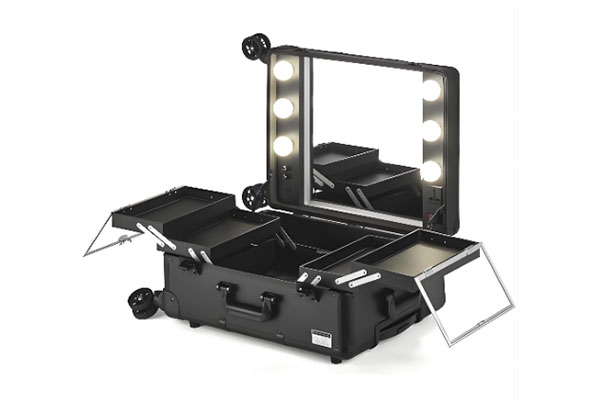
To address the complex accessory types and different dimensions found in beauty equipment applications, SIPHIABOX can provide protective cases in different sizes and combine them with customized EVA inserts to optimize internal storage space.
Dedicated compartments can be designed for probes, handles, connection cables, power adapters, and other accessories, giving every component a clearly defined position.
For beauty equipment accessories that need to be transported frequently, portable protective cases can also make it easier for staff to move equipment between different work areas.
Through customized designs, businesses can also create dedicated accessory cases for different equipment models, upgrading accessory management from simple storage to a more systematic classification system.
How to Build an Efficient Beauty Equipment Accessories Management System?
Beauty businesses can establish classification standards based on equipment model, accessory function, frequency of use, and precision level.Frequently used accessories should be placed in easily accessible positions, while backup components can be stored in dedicated areas.Regular inspections can also be carried out to check accessory quantities and operating conditions. Missing, damaged, or aging components can then be identified in time.Accessories for different equipment models should not be randomly mixed. Labels, identification numbers, or visual markers can be used to distinguish different categories.For beauty equipment accessories that are not used for extended periods, protective cases with dustproof and moisture-resistant features can provide additional protection during long-term storage.
Although beauty equipment accessories are often relatively small, they can be numerous and play an important role in the proper operation of beauty equipment.A professional beauty equipment accessories classification and management solution combines customized EVA inserts, compartmentalized organization, labeling systems, and protective cases to reduce the risks of accessory mixing, loss, and impact.For beauty salons, skin care centers, beauty training institutions, and beauty equipment maintenance teams, effective accessory management can improve operational efficiency and help extend accessory service life.With professional protective cases and customized internal structures, businesses can establish a cleaner, more efficient, and more organized management system for beauty equipment accessories.