
Automotive repair shops, automotive after-sales service providers, fleet management companies, 4S dealerships, roadside assistance providers, and automotive parts service companies use wrenches, screwdrivers, sockets, pliers, jack accessories, inspection equipment, and various small repair components in their daily work. As the number of repair projects increases, the number of tools also continues to grow. Without suitable storage space, tools can easily become mixed together or lost, while collisions may occur during transportation. For companies that need to purchase products in a standardized manner, automotive toolboxes need to provide basic storage functions while also being reasonably designed according to the application scenario, tool quantity, vehicle space, and branding requirements. Bulk customization of automotive toolboxes can be adjusted in terms of toolbox dimensions, materials, internal space, opening methods, locks, handles, colors, surface finishes, LOGOs, and packaging methods.
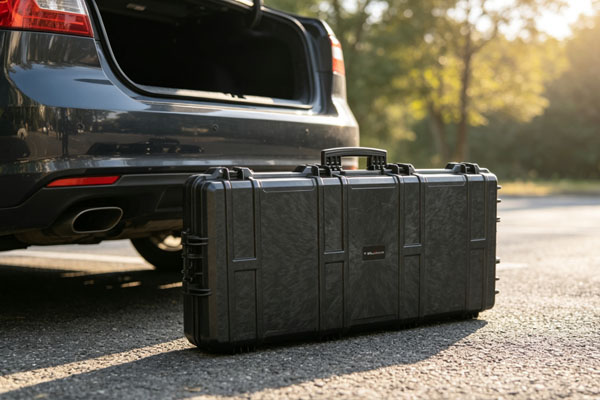
Purchasing companies can determine the internal layout according to the actual dimensions of their repair tools, or design suitable toolbox specifications according to the vehicle installation location. This can help avoid insufficient capacity, wasted space, or improper tool placement after purchasing standard products. Guangzhou Siphia Case Co specializes in the production and customization of toolboxes and related storage products, providing product solutions according to the needs of automotive repair, vehicle services, mobile repair, and other applications. For companies with bulk purchasing requirements, product dimensions, materials, structure, and appearance can be confirmed first, followed by sampling and mass production, helping customers establish a more standardized tool storage solution.
Usage Requirements for Bulk Automotive Toolbox Customization
Although automotive toolboxes are common storage products, different companies have significantly different working environments. Repair workshops require larger storage capacity, mobile repair vehicles place greater emphasis on weight and portability, while fleet maintenance departments pay more attention to product consistency and long-term use. The larger the purchase quantity, the more important it is to define product requirements in advance.
Select the Right Toolbox According to the Application
The application scenario directly affects the dimensions and structure of an automotive toolbox. Repair workshops generally store a large number of hand tools, so the toolbox needs sufficient internal space and should allow workers to quickly locate tools. Mobile repair personnel carry toolboxes to different work locations, making lightweight and easy-to-carry products more suitable. Roadside assistance usually requires tools to be removed quickly, so the internal structure should not be overly complicated. For fleet maintenance companies, toolboxes may be placed in vehicles, maintenance areas, or storage spaces for extended periods, making toolbox strength, locks, handles, and internal storage space important considerations.
| Recommended Product Direction for Application | Key Requirements | |
| Automotive repair workshop | Large-capacity toolbox | Sufficient capacity, clear organization |
| 4S dealership after-sales service | Customized toolbox | Consistent appearance, brand display |
| Mobile repair vehicle | Portable toolbox | Reasonable weight, easy to carry |
| Fleet maintenance | Bulk toolboxes | Consistent specifications, durability |
| Roadside assistance | Portable protective case | Quick access, internal fixation |
| Automotive parts service | Storage toolbox | Organized storage, convenient transportation |
If a company has different job positions, different models can also be configured according to each position. For example, regular maintenance personnel can use medium-sized toolboxes, equipment maintenance personnel can use models with larger internal spaces, while managers or mobile service personnel can use portable models. A consistent product style can provide different positions with a clearer method of tool management.
Plan the Internal Space According to the Tool List
When customizing automotive toolboxes in bulk, it is recommended to organize the tools that need to be stored in advance. Tool names, quantities, lengths, widths, heights, and weights all affect the internal space design. For example, wrenches generally need to be arranged according to size, sockets are suitable for centralized storage areas, screwdrivers can be assigned fixed positions according to their lengths, and pliers can have separate storage areas. If power tools, inspection instruments, or other equipment also need to be stored, more space is required, along with consideration of tool fixation during transportation. Frequently used tools should be easy to access, while less frequently used accessories can be placed in separate areas. This can improve space utilization while reducing the time maintenance personnel spend searching for tools.
Consider Future Replenishment for Bulk Purchasing
Automotive repair companies often have long-term purchasing requirements. New employees, additional repair locations, fleet expansion, or wear and damage to existing products may create new toolbox requirements. Therefore, when customizing products in bulk, it is recommended to establish stable product specifications, including dimensions, materials, colors, internal layouts, LOGO positions, and packaging methods. Future repeat orders can continue to use the same standards, avoiding significant differences between different batches. Automotive product distributors and brands can also determine multiple specifications in advance to create product series with different capacities. This can meet different customer requirements while making future product promotion and inventory management easier.
Automotive Toolbox Customization Solution
Automotive toolboxes are regularly exposed to repair tools, vehicle components, dust, oil, and other substances found in working environments. Therefore, materials and structures need to be selected according to the actual application. For bulk purchasing, the focus should not be limited to the exterior of the toolbox. Tool weight, handling frequency, working environment, and transportation methods also need to be considered.
Select Suitable Toolbox Materials for Bulk Purchasing
Different materials have different characteristics. Plastic toolboxes are generally lightweight and suitable for mobile repair and daily tool storage. Aluminum toolboxes offer good structural stability and a professional appearance, making them suitable for storing repair tools, equipment, and accessories. Some protective cases can also be equipped with internal cushioning and fixation structures according to transportation requirements.
| Material | Common Applications | Main Characteristics |
| PP and other plastic materials | Daily repair, mobile use | Lightweight, easy to carry |
| Aluminum alloy | Professional repair, vehicle equipment | Stable structure, clean appearance |
| Composite materials | Special storage requirements | Adjustable according to product requirements |
| Customized protective cases | Inspection equipment, precision tools | Emphasis on fixation and cushioning |
Material selection should be combined with the actual application of the product. If the toolbox is mainly used for lightweight hand tools, there is no need to increase the toolbox weight unnecessarily. If heavy equipment is stored inside, the toolbox structure and load-bearing capacity need to be considered further.
Internal Structure Determines Tool Storage Performance
A toolbox with a large capacity can still become cluttered if the internal layout is not properly designed. Automotive toolboxes can divide the internal space according to tool dimensions and frequency of use. Common designs include dividers, slots, trays, foam liners, and separate storage compartments. Frequently used wrenches, screwdrivers, and sockets can be assigned easily identifiable positions. Small screws, nuts, and fasteners can be stored in separate compartments to reduce scattering. If the toolbox is used to transport inspection instruments or electronic equipment, movement during transportation also needs to be considered. Corresponding foam compartments can be designed according to the equipment shape to reduce movement inside the case. The internal design should also consider future maintenance. If dividers or liners can be removed and replaced, the toolbox can still be adjusted according to new tool configurations after a period of use.
External Structure Affects Long-Term Use
The handle of an automotive toolbox needs to be designed according to the weight of the toolbox to prevent inconvenience when the toolbox is fully loaded. The latches should open and close normally so workers can access tools quickly. Hinges should maintain a stable connection with the toolbox structure. For bulk corporate purchases, toolbox colors and appearances can also be standardized. For example, automotive repair brands can use consistent brand colors, while fleets can distinguish toolboxes according to vehicle numbers or departments. This design helps companies manage tools while providing a more consistent visual appearance.
How to Control Product Consistency?
A single toolbox and a bulk order have different production requirements. When a company purchases dozens, hundreds, or more products at one time, the dimensions, colors, internal structures, and accessories of each toolbox need to remain consistent. Significant differences between products can affect subsequent use and company management.
Sample Approval Is an Important Step Before Mass Production
Before formal mass production, a sample can be confirmed first. The sample should be checked not only for appearance but also for actual usability. Purchasing personnel can place commonly used tools into the sample to check whether the tools can be arranged properly, whether the lid can close smoothly, whether the handle is convenient to carry, and whether the internal space is sufficient. If any part of the internal structure is unsuitable, adjustments can be made before mass production. After sample approval, the final production specifications can be confirmed, reducing the need for modifications after bulk products have been completed.
What Needs to Be Checked During Bulk Production?
Corresponding inspection items can be established according to the product structure during automotive toolbox production. Dimensions, appearance, opening and closing, locks, handles, internal layout, and packaging should remain consistent.
| Inspection Item | Main Inspection Content |
| Toolbox appearance | Complete surface, consistent color |
| Product dimensions | Length, width, and height meet confirmed specifications |
| Lid opening and closing | Opens and closes smoothly |
| Locks | Stable installation, normal operation |
| Hinges | Stable opening and closing connection |
| Handle | Convenient for carrying |
| Internal structure | Accurate positions of dividers, foam, and slots |
| LOGO | Position, size, and appearance meet requirements |
| Packaging | Proper protection during product transportation |
These inspection items can be adjusted according to different products. For long-term customers, fixed product specifications can also be established for repeat orders, making future orders easier to confirm.
Standardize Toolbox Colors, LOGOs, and Packaging
When companies purchase toolboxes in bulk, they often require brand LOGOs, specified colors, or specific packaging. For 4S dealerships, automotive repair brands, distributors, and fleet companies, these elements can help create a consistent corporate image. The LOGO position can be confirmed according to the toolbox dimensions and surface structure. Colors can be determined according to the actual production method and product material. Packaging can be planned according to individual toolboxes, multiple-toolbox combinations, and export transportation requirements. If products need to be transported over long distances, the outer carton dimensions, stacking method, and protective materials can also be confirmed in advance. Proper packaging can not only reduce the possibility of impacts during transportation but also make centralized warehouse storage easier.
How to Complete Procurement for Bulk Automotive Toolbox Customization
From requirement confirmation to product delivery, bulk automotive toolbox customization involves several stages. If the purchasing party prepares basic information in advance, the supplier can confirm the product solution more quickly and reduce repeated communication.
Basic Information Is Enough to Start Solution Discussions
The purchasing party does not necessarily need to prepare complete design drawings. If product images, dimension drawings, or internal layout drawings are already available, they can be provided directly. If complete drawings are not available, communication can begin with the following basic information:
- Expected toolbox purchase quantity
- Main application scenario
- Types of tools to be stored
- Desired toolbox dimensions
- Material and color requirements
- Whether a LOGO is required
- Whether a special internal structure is required
- Expected packaging and transportation method
Based on this information, the suitable toolbox type and customization direction can be further confirmed. Guangzhou Siphia Case Co provides toolboxes and related storage products and can customize them according to automotive repair, vehicle service, and professional tool storage requirements. For bulk purchasing projects, dimensions, materials, internal layouts, colors, LOGOs, and packaging can be discussed before confirming the final product specifications.
Move From Sample Approval to Mass Production
After the product specifications are confirmed, the project can enter the sample approval stage. The sample is mainly used to check product dimensions, appearance, internal space, and actual usability. If the purchasing party has actual tools available, a packing test can be performed directly. Actual testing provides a clearer understanding of whether the tools can be arranged properly and can also reveal issues such as insufficient toolbox height or unsuitable divider positions. After sample approval, mass production can be arranged according to the final specifications. For large-volume orders, this process can reduce later adjustments and improve consistency across bulk products.
Establish Long-Term Purchasing Specifications
For automotive repair groups, 4S dealerships, fleets, automotive product distributors, and brands, toolboxes often have ongoing purchasing requirements. Long-term cooperation can establish fixed specifications for commonly used products, such as standard dimensions, colors, LOGOs, internal layouts, and packaging methods. When additional orders are placed, only the quantity and delivery requirements need to be confirmed. For distributors, small, medium, and large toolboxes can also be developed according to different customer requirements, creating a complete product combination.
Frequently Asked Questions
Q: Can the internal structure of an automotive toolbox be designed according to tool dimensions?
Yes. The purchasing party can provide a tool list, tool dimensions, or tool photos. Dividers, slots, foam, and other internal structures can then be determined according to the actual tool quantities and storage methods.
Q: Can a company LOGO be added to a customized automotive toolbox?
The LOGO position, size, and presentation method can be confirmed according to the product type and production method. For 4S dealerships, automotive repair brands, and fleet companies, customization can follow unified branding requirements.
Q: Can I request a quotation without a design drawing?
Yes. You can first provide the product application, estimated quantity, dimensional requirements, tool photos, or images of an existing product. More complete basic information generally makes product specification confirmation easier.
Q: Can I review a sample before placing a bulk order?
Sample confirmation can be arranged according to project requirements. It is recommended to check dimensions, internal layout, color, locks, handles, and LOGO before mass production.
Q: Can toolboxes be produced in different sizes?
Yes. Different dimensions can be confirmed according to purchasing requirements. If a company needs to store hand tools, power tools, and inspection equipment at the same time, different product specifications can also be planned according to tool sizes.
Q: Are automotive toolboxes suitable for long-term purchasing?
Yes. Companies can standardize commonly used models, dimensions, colors, and internal structures. Future orders can then continue to follow the same specifications, helping maintain product consistency.
A properly planned toolbox can make repair tools easier to organize and can also reduce the time spent dealing with mixed tools and searching for equipment. If your company is purchasing automotive repair toolboxes, fleet toolboxes, 4S dealership after-sales toolboxes, mobile repair toolboxes, or automotive service cases, you can first organize the tools that need to be stored and the expected purchase quantity, then confirm the dimensions, materials, and internal layout. A complete design drawing is not required for initial communication. The product solution can be developed based on actual application requirements. Guangzhou Siphia Case Co can further discuss toolbox specifications, materials, internal structures, colors, LOGOs, and packaging methods based on product dimensions, tool lists, images, or basic requirements provided by customers. For bulk purchasing projects, fixed product specifications can also be established according to long-term usage requirements, making future replenishment more convenient.
If you are looking for a supplier for bulk automotive toolbox customization, please contact us with your product requirements and purchase quantity. We will further confirm a suitable product solution based on your actual needs.
Email: marktingoffice@siphiabox.com
WhatsApp / Phone: +1 6027256314