
As the importance of health management continues to rise in modern families, more and more people are realizing that household medical supplies need not only to be “well-prepared” but also “well-organized.” In reality, although many families stock basic items such as cold medicine, band-aids, and thermometers, due to a lack of proper planning, problems often arise: medicines are mixed together, expired medications are hard to spot, and items cannot be found in an emergency. Especially in households with elderly members, children, or those with chronic illnesses, a scientifically designed home medical Tool box configuration can significantly improve the efficiency of family health management. A reasonable classification structure, functional zones, and safety features not only facilitate daily use but also help family members respond more quickly in emergency situations.
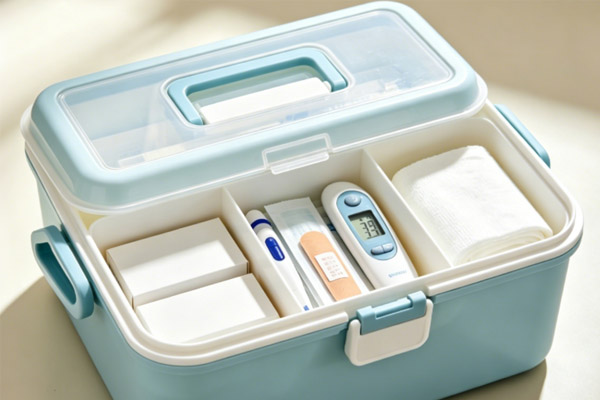
The Growing Importance of the Home Medical TOOL Box
As family health needs become increasingly diverse, the medical Tool box is no longer just a simple Tool tool but an important component of the family health system. A well-structured medical Tool system helps family members manage various medical supplies more quickly and clearly.
Improves family emergency response efficiency: Reduces panic during urgent situations
Families inevitably encounter emergencies such as a child bumping into something, a nighttime fever, or an elderly person feeling unwell. If medical supplies are haphazardly stored for a long time, it often delays response time.
- Centralized management of common medications: Storing fever reducers, cold medicines, gastrointestinal remedies, and other regular medications together reduces search time, especially at night or during emergencies, making it faster to find what is needed.
- Separate zone for first aid supplies: Items like band-aids, iodine, gauze, and medical cotton swabs should have their own area, preventing them from being mixed with other medications and improving emergency response efficiency.
- Fixed Tool location: It is best to keep the medical Tool box in a permanent, designated area. Once family members are familiar with its location, they can access it quickly in an emergency.
Proper Tool planning significantly reduces chaos during family emergencies and improves overall safety.
Reduces medication expiration and duplicate purchases: Improves management efficiency
Many families encounter situations where they “can’t find what they bought” or “only find it after it expires,” which is often related to unreasonable Tool methods.
- Clear classification labels: Distinguishing medication purpose with labels makes it easier to check inventory. When restocking, this helps avoid duplicate purchases.
- Easier regular organization: With layered Tool, you can quickly check expiration dates, reducing waste from long-term accumulation.
- More standardized family health management: A tidy, organized Tool method makes the entire family medical system clearer. Over time, it becomes easier to develop a habit of regular organization.
Scientific management not only improves efficiency but also enhances family members’ awareness of health and safety.
How to Scientifically Configure a Home Medical Tool Box
A medical Tool box is not about having the largest capacity possible; rather, a reasonable structure and clear classification are more important. Only by meeting actual usage needs can it truly improve the family health management experience.
Classified Zoning Design: Building a clear Tool logic
Establishing a reasonable classification is the foundation of the entire medical Tool system. Mixing medications for different purposes for long periods significantly impacts usage efficiency.
- Daily medication area: Suitable for storing cold medicine, pain relievers, gastrointestinal remedies, and daily vitamins. It is recommended to place this area for easy access, convenient for daily use.
- First aid area: Items like iodine, bandages, band-aids, and alcohol wipes should be managed together; a separate area is more conducive to hygiene and cleanliness.
- Child care area: Children’s medications must be completely separated from adult medications, with clear labels added to reduce the risk of accidental ingestion.
- Chronic disease medication area: Long-term medications should have a dedicated area, making it easy for elderly or chronically ill family members to take them regularly.
With reasonable classification, the entire medical Tool system becomes more intuitive, improving the overall user experience.
Material and Structural Design: Affects long-term user experience
Many people easily overlook the material of the medical Tool box itself, but this actually directly affects the preservation of medications.
| Configuration Feature | Main Function | Suitable Family |
| Moisture-proof structure | Reduces humidity impact | Families in humid southern regions |
| Layered drawers | Improves classification efficiency | Multi-member families |
| Airtight seal design | Prevents dust ingress | Families storing long-term medications |
| Safety lock mechanism | Reduces risk of accidental opening | Families with children |
- Moisture-proof design: A humid environment can easily affect medication stability. Adding a moisture-proof structure can extend the Tool time of certain medications.
- Layered design: A multi-layer structure is more suitable for classified management. Different medicines and care supplies can be stored separately.
- Airtight seal: An airtight design reduces air and dust ingress, helping to maintain a stable internal environment.
- Safety lock design: For families with children, a safety lock is very important. It reduces the risk of children accidentally opening the medical box.
Good structural design allows the medical Tool box to remain stable and tidy over long-term use.
Different Families Suit Different Medical Tool Solutions
Different family structures have different needs for medical supplies. Tailoring the configuration based on the household scenario can further enhance usage efficiency.
Families with Children: Prioritize safety and care functions
Families with children are generally more prone to emergencies, so the medical Tool system needs to be more comprehensive.
- Store children’s medications separately: It is recommended to have a dedicated area for common children’s medications to avoid confusion with adult medicines.
- Stock basic care supplies: Items like fever patches, children’s thermometers, and care sprays should be kept on hand for dealing with minor daily issues.
- Improve identification efficiency: Use color-coded labels or icons to help parents quickly find what they need. Families with children need Tool solutions that prioritize both safety and efficiency.
A well-designed medical Tool solution for families with children not only improves daily care efficiency but also helps parents feel more composed and confident when facing emergencies.
Households with Elderly Members: Emphasize long-term health management
Elderly households often stock multiple long-term medications, so routine management is more important.
- Set up a daily medication area: Sort medications by time of day to help the elderly take their medication regularly.
- Include health monitoring devices: Items like blood pressure monitors and blood glucose meters can be organized together for convenient daily health monitoring.
- Prioritize high-frequency medications: Frequently used medications should be placed in the outermost layer to reduce the need for repeated searching.
After specialized optimization for elderly households, overall health management becomes easier and more efficient.
Modern Medical Tool Focuses More on Systematization and Convenience
Today’s medical Tool boxes are no longer just simple Tool tools; they are gradually developing into home health management systems.
Modular Design: Adapts to more life scenarios
Modular structures are becoming increasingly popular among families because they allow flexible layout adjustments based on different needs.
- Suitable for travel: Core medication areas can be detached, making it more convenient to carry when traveling.
- Flexible space expansion: When adding medications later, the structure can be easily rearranged, improving long-term usability.
Modular design makes medical Tool more suitable for the multi-scenario needs of modern families.
Establishing a Home Emergency Management System: Enhances overall sense of security
More and more families are focusing on overall emergency management, not just isolated medication Tool.
- Unified management of medical supplies: Can be stored together with masks, protective gear, emergency lights, etc., forming a complete home emergency system.
- Fixed emergency area: A fixed Tool location reduces search time, making it more efficient during emergencies.
- Enhances family health awareness: Systematic management makes family members more familiar with emergency procedures, improving overall health management capabilities.
A well-designed home medical Tool system is gradually becoming an important configuration for modern families.
A scientifically reasonable home medical Tool box configuration solution not only improves the tidiness of home space but also helps families establish a more efficient and safer health management system. Every detail affects the actual user experience, from classification structure to material design, from child care to long-term medication management for the elderly. As modern families’ demands for health management continue to rise, professional and systematic medical Tool solutions are gaining more attention. SIPHIA BOX focuses on home medical Tool solutions, using more reasonable structural designs and professional Tool concepts to make home health management easier, more organized, and more reassuring.