
Mechanical engineering work involves assembly, maintenance, measurement, commissioning, and on-site construction. Tools used in different tasks vary significantly in size, weight, and precision. Large wrenches and power tools require stable support, while precision instruments such as calipers and micrometers need protection against impact and vibration. Small accessories can also be easily misplaced during transportation. To address these practical requirements, a tool transportation solution should systematically consider internal layout, cushioning and fixation, case protection, and mobility, allowing tools to meet the needs of workshop transfers, vehicle transportation, and on-site engineering operations.
Planning Storage Structures Based on Mechanical Engineering Tool Types
Different tool types have different requirements for internal storage space. Properly dividing storage areas allows each tool to receive an appropriate method of fixation.
Classified Storage for Common Hand Tools
Hand tools are often used in large quantities, and organizing them by size and purpose can improve accessibility.
- Wrench and Socket Classification: Wrenches and sockets of different specifications can be arranged by size in separate sections for easier identification and access.
- Separate Storage for Screwdrivers and Pliers: Long-handled tools and gripping tools can be secured separately to reduce contact and collision during transportation.
- Centralized Management of Small Accessories: Bolts, washers, fittings, and other small parts can be stored in containers or divided compartments to prevent them from becoming scattered during movement.
A clear classification system reduces tool mixing and makes it easier to check and return tools after work.
Dedicated Securing Spaces for Precision Tools
Measuring instruments and torque tools are more sensitive to transportation conditions and need to be protected against compression and impact. Calipers, micrometers, and inspection instruments should have dedicated cushioned areas to prevent contact with heavy tools. Torque wrenches require stable support, while adjustable torque wrenches with spring-loaded mechanisms should be set to the specified minimum scale before long-term storage according to their usage requirements. Power tools should be stored in separate compartments with designated spaces for batteries, chargers, and accessories.
Reducing Transportation Risks Through Cushioning and Case Protection
Mechanical engineering tools may be exposed to vehicle vibration, outdoor operations, and demanding construction environments. Internal fixation and case protection need to be considered together.
Improving Tool Fixation with EVA Inserts
EVA inserts can be cut according to tool contours to provide dedicated support for different instruments.
- Contoured Cutouts: Storage slots are designed according to the shape of each tool to limit movement during transportation.
- Layered Cushioning: Heavier tools require proper load distribution to prevent excessive pressure from being concentrated in one area for extended periods.
- Contact Surface Protection: Adding cushioning between metal tools and rigid case structures can reduce friction, impact, and transportation noise.
The insert structure should be designed according to tool weight, dimensions, and load-bearing points. Storage slots should not simply be made as tight as possible.
Case Protection Should Match Actual Working Conditions
Tool cases face different risks in different environments, so protection features should be selected according to actual operating conditions.
| Tool Type | Transportation Risk | Protection Focus | Recommended Structure |
| Hand Tools | Impact, Mixing | Classified Fixation | EVA Slots, Divided Compartments |
| Precision Measuring Tools | Vibration, Impact | Independent Cushioning | Custom Inserts, Dedicated Slots |
| Power Tools | Displacement, Compression | Separate Compartments | Deep Slots, Cushioning Modules |
| Small Accessories | Scattering, Loss | Independent Organization | Storage Boxes, Dividers |
| Heavy Tools | Movement, Impact | Load-Bearing Fixation | Reinforced Case, Securing Structures |
Case configurations should be selected according to specific working conditions rather than adding protective features that are unrelated to actual requirements.
Configuring Portable Transportation Solutions for Different Mechanical Engineering Scenarios
Transportation distances, tool weights, and work frequencies vary across mechanical engineering environments. Carrying methods should be matched to the actual load.
Workshop Maintenance Prioritizes Capacity and Quick Access
Equipment maintenance in workshops often requires multiple tools at the same time, so the internal layout should balance storage capacity and operational efficiency.
- Frequently Used Tools Near the Opening: Wrenches, screwdrivers, and pliers can be placed in easily accessible areas to reduce repeated searching.
- Large Tools Stored Separately: Heavy-duty wrenches, power tools, and inspection equipment should have stable storage areas to prevent them from being compressed by other items.
- Small Accessories Organized Separately: Bolts, fittings, and spare parts can be stored in dedicated compartments for easier inventory checks and replenishment.
A well-planned layout allows maintenance personnel to retrieve and return tools more efficiently.
Engineering Sites Require Greater Mobility and Environmental Adaptability
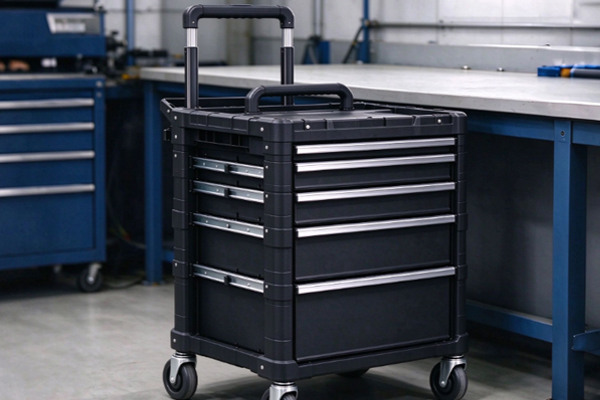
On-site transportation should consider more than case dimensions and should select mobility structures according to the overall load. Lightweight tool cases can use handles for short-distance movement of a small number of hand tools. Heavy-duty tool cases are better suited to handles with telescopic systems and wheels, making it easier to transport heavy tools while reducing the burden of carrying them by hand or over the shoulder. For long-term use at construction sites or outdoor locations, dustproof, waterproof, and impact-resistant structures should also be considered. Matching the mobility structure to the actual load helps balance carrying comfort and transportation stability.
Establishing a Long-Term Transportation Management System for Mechanical Engineering Tools
Tool configurations may change with different maintenance projects and work requirements. Storage systems should provide room for adjustment while also supporting regular maintenance.
Customized Design Based on Tool Combinations
Different engineering teams use different tool combinations, and customized internal structures can reduce unused space.
- Cut Slots According to Tool Dimensions: Plan insert positions based on actual tool contours to improve space utilization.
- Arrange Storage According to Workflow: Position frequently used tools, precision instruments, and spare accessories according to actual working habits.
- Configure Support According to Tool Weight: Add stronger support structures for heavy tools to reduce deformation caused by long-term pressure on the inserts.
A customized layout allows the storage space to better match the actual tool combination.
Organizing and Inspecting Tools After Transportation
During long-term use, both the tool case and its internal structures require regular maintenance.
- Check Insert Condition: Inspect for cracks, deformation, or loose slots and make adjustments when necessary.
- Check Latches and Mobility Components: Regularly inspect the condition of latches, telescopic handles, wheels, and carrying handles to maintain transportation stability.
- Return Tools to Their Designated Positions: After work, organize tools according to their fixed locations and separately check the storage condition of precision measuring tools and torque tools.
Regular maintenance helps reduce storage structure failures and allows the tool case to remain suitable for frequent engineering operations.
The value of a mechanical engineering tool storage solution lies in turning tools with different specifications, weights, and precision requirements into clearly organized and manageable storage units. Proper insert structures can reduce impact, sealing and protective features can address demanding environments, while telescopic handles and wheels are suitable for transporting heavier tools on site. SIPHIA BOX can plan internal structures according to specific tool lists, case dimensions, and working methods, providing customized storage solutions that closely match the practical requirements of mechanical maintenance, equipment servicing, and engineering construction.