Automotive after-sales service centers need to handle a large number of work scenarios every day, including vehicle repair, inspection, maintenance, and roadside assistance. Maintenance technicians usually need to carry wrenches, screwdrivers, power tools, testing equipment, and various specialized spare parts. If tools are stored in a disorganized manner, it will not only affect repair efficiency but may also lead to tool damage or loss, and even influence customers’ perception of the service center’s professionalism. Therefore, more and more automotive after-sales service centers are adopting customized toolbox solutions to improve tool management efficiency through reasonable structural design, safety protection, and branded appearance.
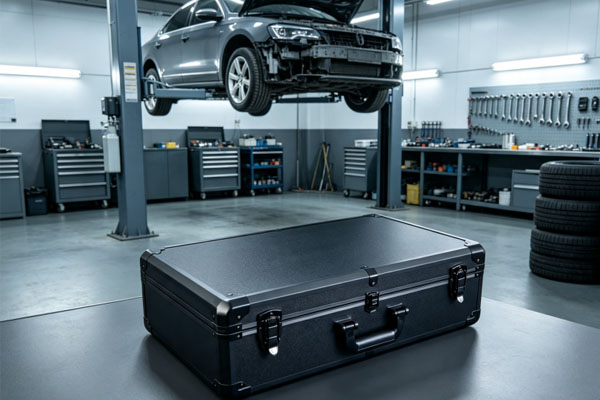
Customization of toolboxes for automotive after-sales service centers is not simply about manufacturing a box for storing tools. It involves overall design based on the repair environment, tool categories, usage frequency, and transportation requirements. From toolbox material selection and internal layout planning to protective performance testing and production processing, every step affects the final user experience. A professional customized toolbox can help maintenance personnel quickly find tools while meeting different requirements such as mobile repair, warehouse storage, and after-sales display.
Introduction to Automotive After-Sales Service Center Toolbox Customization Services
What Is a Dedicated Toolbox for Automotive After-Sales Service Centers
An automotive after-sales service center toolbox is a professional storage device designed according to the requirements of vehicle repair, inspection, and maintenance work. Compared with ordinary toolboxes, customized toolboxes pay more attention to tool classification, transportation safety, and long-term usage stability. During automotive repair, tools used by different positions vary significantly. For example, engine maintenance technicians need precision equipment such as torque wrenches and diagnostic instruments, while body repair technicians may need impact tools, measuring tools, and auxiliary accessories. If ordinary storage boxes are used, tools can easily become disorganized or damaged due to collisions. Customized toolboxes can be designed according to the customer’s tool list, creating dedicated internal structures. For example, foam cutouts, fixing slots, drawer modules, and classified storage areas can be added so that every tool has its own fixed position. When maintenance personnel open the toolbox, they can quickly check the condition of the tools, improving convenience in daily operations.
Common Material Choices for Automotive Repair Toolboxes
Automotive after-sales toolboxes are often used in repair workshops, outdoor rescue environments, and transportation conditions. Therefore, the toolbox material needs to provide good durability and protective performance.
Common materials include:
PP Safety Protective Case: Lightweight, impact-resistant, and with good waterproof performance, suitable for mobile repairs, roadside assistance, and daily tool transportation.
Aluminum Alloy Tool Case: Strong structure with a premium appearance, suitable for storing inspection equipment, precision tools, and high-value repair instruments.
Customized Plastic Box: Provides excellent molding performance and can be mass-produced according to different sizes, meeting the requirements of unified configuration for automotive brands.
Different materials are suitable for different application environments. For after-sales teams that frequently move between locations, PP protective cases can reduce carrying burdens. For repair centers storing valuable inspection equipment, aluminum alloy cases provide stronger protection.
| Toolbox Type | Common Applications | Main Features |
| PP Safety Protective Case | Mobile repair, roadside assistance | Impact-resistant, waterproof, lightweight |
| Aluminum Alloy Toolbox | Transportation of precision equipment | High strength, professional appearance |
| Customized Plastic Box | Large-scale after-sales configuration | Controllable cost, flexible dimensions |
The Value of Toolbox Customization for Automotive After-Sales Work
Automotive after-sales service centers focus on fast response and stable service quality. Customized toolboxes can reduce the time spent searching for tools and make repair processes smoother. For example, when a maintenance technician receives a vehicle fault repair task, if the toolbox interior has already been classified according to the repair workflow, the technician can quickly take out diagnostic devices, disassembly tools, and spare parts without repeatedly organizing tools. At the same time, fixed storage designs can reduce collisions between tools during transportation and lower equipment wear. For automotive brand companies, uniformly designed after-sales toolboxes can also enhance brand recognition. When employees provide services with professional toolboxes carrying company logos, customers can experience a more standardized after-sales service process.
Implementation Process of Automotive After-Sales Toolbox Customization
Requirement Communication and Tool Usage Analysis
Customization of automotive after-sales service center toolboxes usually begins with requirement confirmation. Manufacturers need to understand the customer’s actual usage environment, including tool types, quantities, sizes, transportation methods, and user habits. During communication, customers can provide photos of existing tools, size information, or tool lists. Designers use this information to plan the toolbox dimensions and determine the internal storage method.
For example: For mobile repair vehicles, toolbox weight and portability need to be considered; For repair workshops, larger storage capacity needs to be designed; For high-end automotive brand after-sales services, brand logos and unified visual designs need to be included. Through early requirement organization, problems such as tools not fitting inside the box or wasted storage space can be avoided after production.
Structural Design and Internal Layout Planning
The internal design of a toolbox is an important part of the customization process. A reasonable layout directly affects the working efficiency of maintenance personnel.
Common design methods include:
EVA Foam Customization: Dedicated positions are cut according to the shape of each tool to prevent tools from moving inside the box.
Layered Design: The upper and lower spaces are used to store different types of equipment separately.
Modular Design: Allows tools to be added later or internal structures to be adjusted according to changing requirements.
In the automotive repair industry, many tools are relatively expensive, such as diagnostic equipment and electronic testing instruments. Without a fixed protection structure, these devices can easily be affected by vibration during transportation. Therefore, internal cushioning designs can effectively reduce equipment damage.
Production Processing and Quality Inspection
After the design is confirmed, the toolbox enters the formal production stage. Professional manufacturers will carry out mold production, material processing, surface treatment, and assembly testing according to the customized solution.
During production, attention needs to be paid to:
Toolbox Strength Testing: Confirm the load-bearing capacity of the toolbox structure.
Opening and Closing Tests: Check the durability of hinges and locking mechanisms.
Protection Performance Testing: Verify waterproof, dustproof, and impact resistance performance.
Appearance Inspection: Ensure that colors and logos meet customer requirements.
Only toolboxes that have undergone complete inspections can meet the long-term usage requirements of automotive after-sales service centers.
Technical Requirements for Automotive After-Sales Toolbox Customization
Toolbox Protection Technology Improves Service Life
Automotive after-sales working environments are relatively complex. Toolboxes may encounter impacts, rain, dust, and high-temperature conditions. Therefore, the toolbox needs to have excellent protective performance. PP safety protective cases are usually manufactured using high-strength engineering plastics. Through special structural designs, they can improve impact resistance. During outdoor repairs or vehicle transportation, they can reduce the impact of external environments on internal tools. Aluminum alloy toolboxes enhance overall stability through metal frames and are more suitable for protecting precision instruments. For example, automotive diagnostic equipment and electronic testing devices require a more stable transportation environment.
Precision Internal Protection Technology
Automotive repair tools are not only large in quantity but also vary greatly in shape. Traditional simple partitions cannot meet professional requirements, so precise internal positioning designs are needed. Customized foam inserts can be processed according to tool contours, keeping tools firmly fixed after placement. When the toolbox experiences vibration or movement, internal equipment will not collide with each other. This design not only protects tools but also allows workers to quickly check whether all tools are complete. If a certain position is empty, missing tools can be discovered immediately.
Design Combining Brand Display and Functionality
Currently, automotive after-sales services are paying increasing attention to brand image. As equipment frequently used by employees, toolboxes have also become an important carrier for companies to display their professional image.
During customization, the following elements can be added:
- Company logo printing
- Customized color matching
- Tool classification labels
- After-sales service identification numbers
Through unified appearance design, repair teams can achieve standardized management and improve customer recognition.
Toolbox Configuration Solutions for Different After-Sales Scenarios
Different automotive service scenarios have different requirements for toolboxes, so selection should be based on actual working conditions. For example, automotive 4S store after-sales centers usually need to store large quantities of repair tools and inspection equipment, so they can choose large-capacity modular toolboxes. Mobile roadside assistance teams focus more on portability and can choose lightweight protective cases. New energy vehicle after-sales teams involve battery inspection equipment, so they need to pay more attention to protection and insulation design. Choosing the appropriate toolbox type can prevent functional mismatches after purchasing.
Frequently Asked Questions
Q: Can automotive after-sales toolboxes be customized based on existing tools?
A: Yes. Manufacturers can design dedicated internal structures according to the customer’s tool sizes, quantities, and usage habits, ensuring that every tool has a fixed storage position.
Q: Can the toolbox be printed with an automotive brand logo?
A: Yes. Customers can customize toolbox colors, logos, labels, and other elements to enhance the unified image of the after-sales service team.
Q: What is the difference between PP safety protective cases and aluminum alloy toolboxes?
A: PP protective cases are lighter and suitable for mobile repairs and outdoor use. Aluminum alloy toolboxes have stronger structures and are more suitable for storing precision inspection equipment.
Q: Can small-batch toolboxes be customized?
A: Yes. According to customer requirements, manufacturers can provide customized services in different quantities to meet trial use, project supporting, and bulk purchasing needs.
Q: What information is required for customized toolboxes?
A: Customers usually need to provide tool lists, size information, usage environments, and appearance requirements, allowing manufacturers to design suitable solutions.
Automotive after-sales service centers face a large number of repair tasks every day. A suitable toolbox can help employees save time while protecting important equipment. Compared with ordinary toolboxes, customized products are more suitable for the actual requirements of the automotive repair industry. Whether it is tool classification, transportation protection, or brand display, targeted designs can be provided. Choosing a professional manufacturer for customization allows the toolbox to become more than just a storage device; it becomes an important auxiliary tool for improving work efficiency.
Maintenance personnel no longer need to spend a large amount of time searching for tools, while managers can perform tool inspections and maintenance more conveniently. TB Toolbox, with mature production capabilities and extensive customization experience, provides stable and reliable toolbox solutions for different companies. Enterprises can select suitable toolbox materials and internal structures according to their vehicle repair requirements, equipment quantities, and working environments, making after-sales service processes more standardized.
If you are looking for dedicated toolboxes for automotive after-sales service centers and need a customized solution that meets your business requirements, TB Toolbox can provide integrated support from design to production.
Email: marktingoffice@siphiabox.com
WhatsApp/Phone: +2084098942