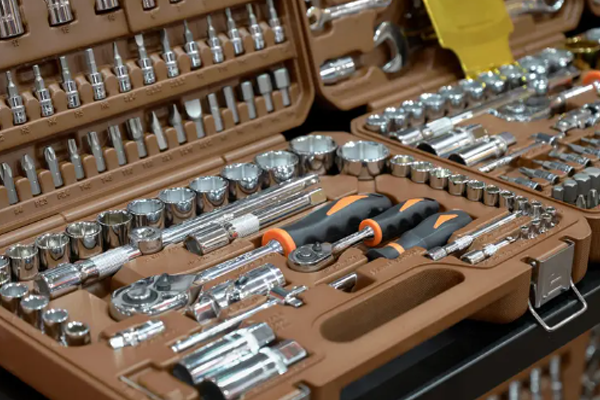
In hardware manufacturing companies, tools are used throughout every stage of production, from raw material processing and component assembly to equipment maintenance and quality inspection. How these tools are managed directly affects production efficiency and product quality. Poor tool organization can lead to misplaced equipment, damaged tools, longer retrieval times, and production delays. As the hardware industry continues to move toward smarter and leaner manufacturing, more companies are adopting professional tool box solutions. Through organized storage, systematic classification, and reliable protection, professional tool boxes help improve tool utilization, streamline workflows, reduce management costs, and support more efficient production operations.
Why Do Hardware Manufacturing Companies Need Professional Tool Box Solutions?
Hardware manufacturing companies use a wide variety of tools every day, including wrenches, screwdrivers, measuring instruments, power tools, and inspection equipment. As production scales increase, traditional storage methods are no longer sufficient for modern factory management. Professional tool boxes allow companies to organize tools according to departments, workstations, or tool categories, making tool management more efficient and standardized.
Different types of tool boxes offer different capacities, structures, and protection levels. Companies should select the most suitable option based on their production environment, the number of tools, and operational requirements. The table below compares several common tool box solutions.
| Tool Box Type | Main Features | Recommended Applications |
| Aluminum Tool Box | Durable construction with excellent protection | Hardware workshops, maintenance departments |
| Drawer Tool Box | Organized storage with quick access | Assembly and inspection stations |
| Mobile Tool Box | Large capacity with easy mobility | Production lines and equipment maintenance |
| Customized Tool Box | Custom interior layouts | Bulk purchasing and dedicated tool management |
As shown above, no single tool box fits every application. Production workshops often prioritize durability, maintenance teams need mobility, while manufacturers managing specialized tools benefit from customized solutions. Choosing a tool box based on actual working conditions ensures better efficiency and long-term value.
Improve Tool Management Efficiency
Well-organized tool management allows employees to spend more time working instead of searching for equipment. This becomes even more important during busy production periods when every minute matters.
- Assign fixed storage locations for every tool. Employees can quickly locate and return tools after use.
- Reduce unnecessary searching time. Organized storage improves workflow and productivity.
- Simplify inventory management. Daily inspections become faster, reducing the risk of missing or misplaced tools.
A standardized tool management system helps improve workshop organization, increases productivity, and creates a more professional manufacturing environment.
Reduce Tool Damage and Extend Service Life
Many professional tools, such as precision measuring instruments, inspection devices, and power tools, represent significant investments. Improper storage often leads to unnecessary wear and damage.
- Minimize collisions between tools.
- Protect tools from moisture and dust.
- Provide better protection for precision equipment.
Professional tool boxes create a safer storage environment, helping companies reduce replacement costs while extending the service life of valuable equipment.
Choosing the Right Tool Box for Different Production Areas
Each department within a hardware manufacturing facility has different operational requirements. Production workers focus on quick access to tools, maintenance technicians require mobility, while quality inspectors prioritize equipment protection. Understanding these requirements before purchasing ensures the right solution for every application.
Tool Box Solutions for Production Workshops
Production workshops use tools continuously throughout the day, making durability and accessibility essential features.
- Choose wear-resistant materials for long-term performance.
- Organize interior compartments for fast tool access.
- Provide sufficient capacity for frequently used equipment.
A properly designed tool box keeps the production area organized while making daily inspections and maintenance much easier.
Tool Box Solutions for Equipment Maintenance
Maintenance personnel often move between different machines and workstations, so portability and storage capacity are equally important.
- Caster wheels for easy transportation.
- Multi-layer storage for better organization.
- Secure locking systems for safe transport.
- Custom compartments for different tool sizes.
A well-equipped maintenance tool box enables technicians to respond more efficiently to equipment issues while reducing downtime caused by missing or disorganized tools.
Key Features of a Professional Tool Box
As manufacturing standards continue to improve, companies are paying greater attention not only to storage capacity but also to product quality, durability, and long-term usability. A professional tool box should be designed to perform reliably in demanding industrial environments.
Durable Construction Materials
Tool boxes are frequently exposed to impacts, transportation, and heavy daily use, making material quality a critical factor.
- High-strength aluminum construction.
- Excellent corrosion resistance.
- Lightweight yet durable for easy handling.
Premium materials improve the service life of the tool box while providing reliable protection for valuable tools in harsh industrial environments.
Well-Designed Interior Layout
A durable exterior is only part of the solution. The internal organization also plays a major role in improving efficiency.
- Adjustable dividers for flexible organization.
- Custom EVA foam inserts for secure storage.
- Stable positioning for every tool.
- Easy expansion for future tool additions.
A well-planned interior layout helps employees quickly locate tools, improves inventory management, and supports future operational growth.
How to Choose the Right Tool Box Solution for Your Business?
Purchasing a tool box is not simply buying a storage product—it is an investment in long-term operational efficiency. Companies should evaluate production requirements, tool inventory, budgets, and supplier capabilities before making a decision.
Purchase According to Operational Needs
Every manufacturing company has different production processes and management requirements.
- Measure tool sizes and quantities.
- Plan storage based on different workstations.
- Allow room for future expansion.
Proper planning helps companies maximize purchasing value while avoiding unnecessary replacements or upgrades later.
Choose a Supplier That Offers Customization
Standard products can meet basic storage needs, but customized tool boxes often provide better long-term performance for hardware manufacturers.
- Custom dimensions available.
- Custom interior layouts.
- Logo and branding customization.
- Bulk manufacturing and delivery support.
For the hardware industry, professional tool boxes are much more than storage solutions. They improve organization, protect valuable equipment, and help companies build safer and more efficient production systems. Whether used in manufacturing, equipment maintenance, or quality inspection, the right tool box enhances productivity while reducing tool loss. Siphia Box specializes in professional tool box solutions for hardware manufacturing companies, offering customized products designed to improve operational efficiency, simplify tool management, and support the long-term development of modern industrial businesses.