In environments such as repair workshops, industrial production, and automotive maintenance, there is a wide variety of tools, and relying solely on large-capacity toolboxes is no longer sufficient to meet efficient management needs. Rolling tool boxes, with their multi-drawer structure, zoned design, and mobility, provide a more systematic storage solution for tools. However, whether the internal layout is well-designed directly affects access speed and management efficiency. By reasonably dividing areas, optimizing placement logic, and combining storage accessories, the user experience can be significantly improved, reducing search time and increasing operational efficiency.
The Importance of Internal Planning in a Rolling Tool Box
A tool box is not only for storing tools but also influences the overall workflow. A clear structural design helps improve classification efficiency and operational smoothness.
Improving Tool Retrieval Efficiency
During maintenance work, tools are frequently accessed, and proper zoning can reduce unnecessary searching.
- High-frequency tools placed first: Common tools such as wrenches, screwdrivers, and pliers should be placed in easily accessible drawer areas for quick access.
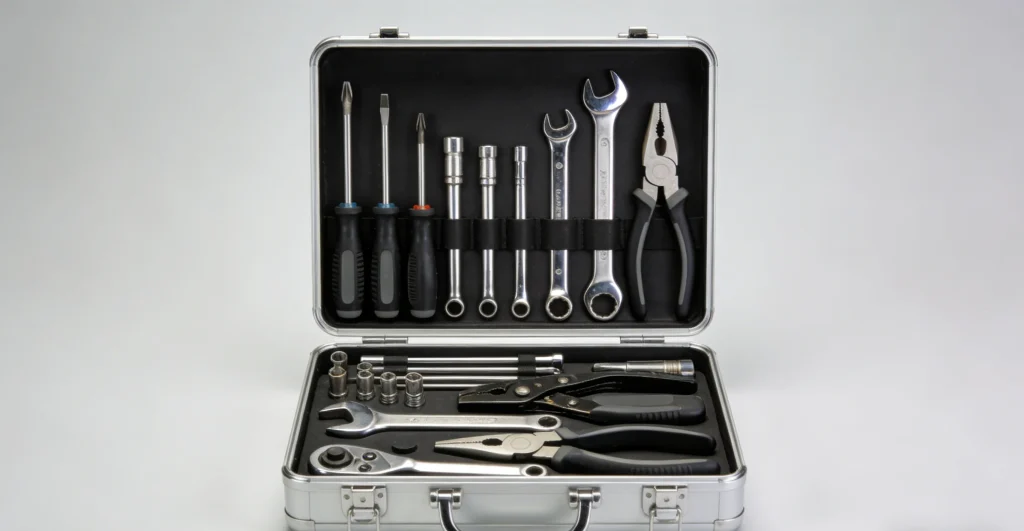
- Common tool combinations stored together: Paired tools such as socket sets and wrenches can be grouped in the same area to reduce interruptions during operation.
- Establish fixed storage rules: Keeping tool positions consistent helps build muscle memory and improves retrieval speed.
A clear layout better supports high-frequency maintenance scenarios.
Reducing Clutter and Wear Risks
Random tool placement can lead to disorganization and increase wear and tear.
- Zoning reduces contact: Separating different types of tools helps prevent damage caused by collisions.
- Small parts centralized storage: Screws, bits, and washers should be stored in compartmentalized containers to prevent scattering.
- Maintain internal cleanliness: Structured storage makes later organization and maintenance easier.
Standardized management helps extend tool lifespan.
Internal Space Allocation Methods for Rolling Tool Boxes
Different tools vary in size and usage frequency, requiring targeted layout planning.
Classification by Tool Type
Classification is the foundation of space planning, and different tools should be stored in separate zones. Hand tools such as wrenches, hammers, and screwdrivers are suitable for centralized storage for daily operation. Power tools such as drills, batteries, and charging equipment are larger in size and should be placed in lower or more load-bearing areas. Precision measuring tools should be stored separately to reduce vibration and impact. Through functional zoning, the internal structure becomes clearer.
Layered Layout by Usage Frequency
Tool usage frequency determines storage position.
- High-frequency tools placed on upper layers: Commonly used tools should be stored in upper drawers to reduce operation time.
- Low-frequency tools stored lower: Spare or specialized tools can be placed in lower sections.
- Special tools managed separately: Infrequently used tools should be categorized independently to avoid occupying core space.
A layered logic improves overall efficiency.
Storage Optimization Methods for Rolling Tool Boxes
In addition to basic classification, auxiliary structures can further improve space utilization.
Using Dividers to Improve Organization
Internal accessories help stabilize tool placement.
- Drawer divider systems: Divide areas according to tool size to prevent mixing.
- Small storage containers: Suitable for screws, electronic components, and other small parts.
- Fixed positioning design: Assign dedicated positions for frequently used tools to reduce movement.
Structured design helps maintain cleanliness.
Improving Vertical Space Utilization
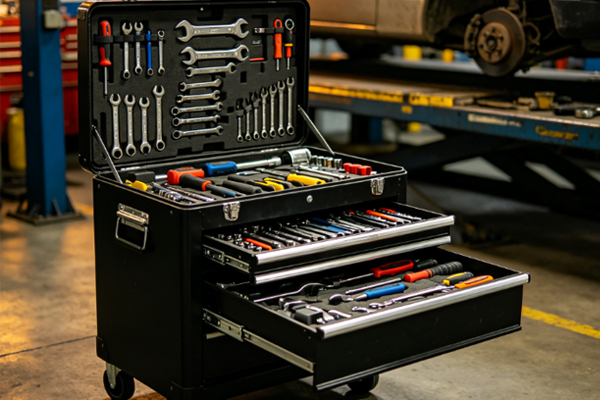
The multi-layer structure is a key advantage of rolling tool boxes. The upper layer is suitable for lightweight tools for quick access, the middle layer is used for regular equipment storage, and the bottom layer carries heavier tools to enhance stability. By properly allocating vertical space, overall storage capacity can be significantly improved. It also enhances the standardization of tool management.
Storage Strategies for Different Application Scenarios
Different working environments require different tool management approaches, so layouts must be adjusted flexibly.
Automotive Repair Scenarios
Automotive repair involves complex tool types and requires high efficiency.
- Centralized management of repair tools: Socket sets, wrenches, and diagnostic tools should be grouped for easy access.
- High-frequency tools placed at the front: Common tools should be positioned for quick retrieval to reduce interruptions.
- Small parts stored separately: Prevent components from mixing with larger tools.
A well-planned layout improves workflow efficiency, reduces tool search time, and increases productivity.
Industrial Maintenance Scenarios
Industrial environments place greater emphasis on standardization and capacity management.
- Classification by equipment system: Tools are grouped according to the equipment being serviced.
- Reserved expansion space: Storage space should be left for new tools.
- Enhanced protection management: Precision tools should be stored separately to reduce wear.
This scenario focuses more on long-term stability and systematization, while also considering tool expansion and maintenance convenience.
The space planning of a rolling tool box should be comprehensively designed based on tool type, usage frequency, and real-world application scenarios. Through zoning management, layered layout, and auxiliary storage structures, tool management efficiency and cleanliness can be significantly improved. SIPHIA BOX focuses on professional tool storage systems, providing more efficient tool management solutions through modular design and flexible structural configurations, enabling rolling tool boxes to maintain stable and efficient performance in different working environments.