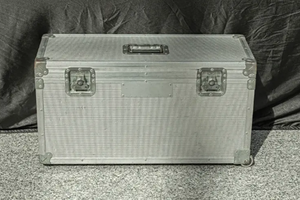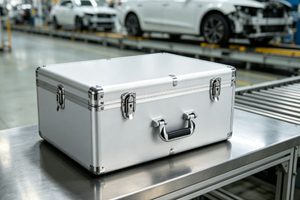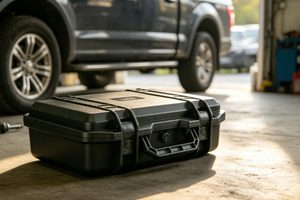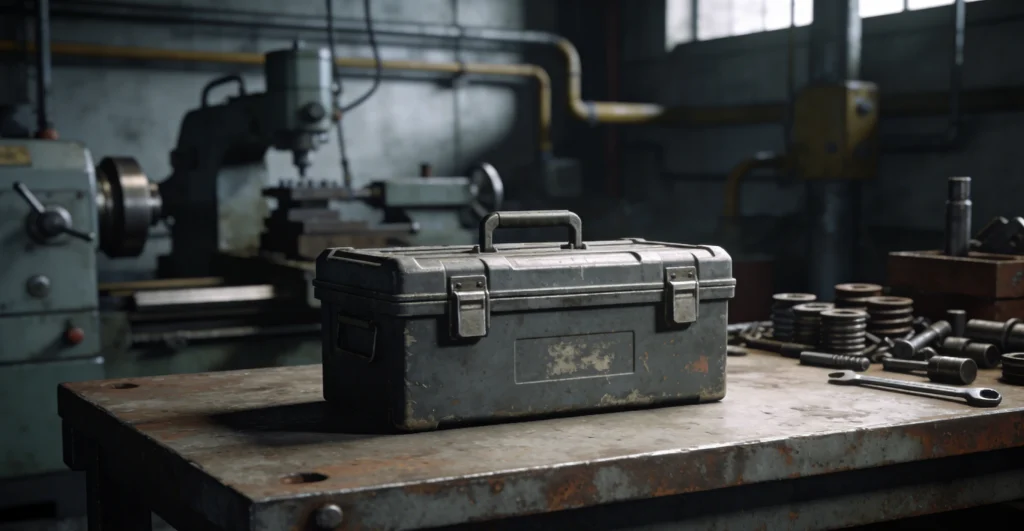
In maintenance workshops, construction sites, and home DIY environments, as the number of tools increases, storage clutter often becomes a daily challenge. Small accessories mixed together not only take up space but also increase the time needed to find items. Stackable toolboxes use vertical stacking, layered storage, and modular layouts to give different types of tools clearer storage positions. By combining multiple boxes in a reasonable way, storage capacity can also be expanded within limited space, shifting tool management from “casual placement” to more structured categorization, making it suitable for users with high requirements for efficiency and space utilization.
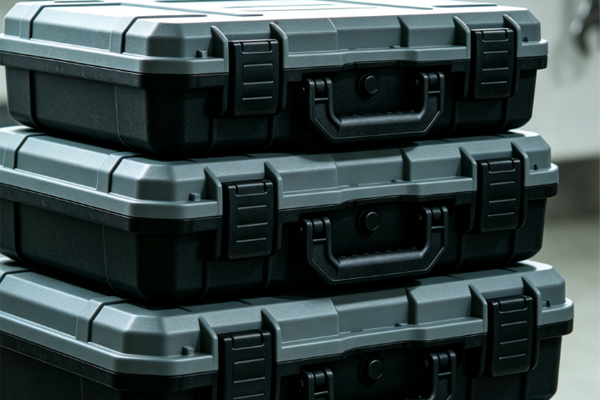
Stackable Toolboxes Improve Tool Categorization
Tool storage clutter is usually caused by unclear classification methods. Stackable toolboxes provide independent compartments and internal dividers, allowing different tools to have fixed storage areas.
Separate Management of Different Tools
Different types of tools vary in usage frequency and size, so storing them separately makes daily access more convenient.
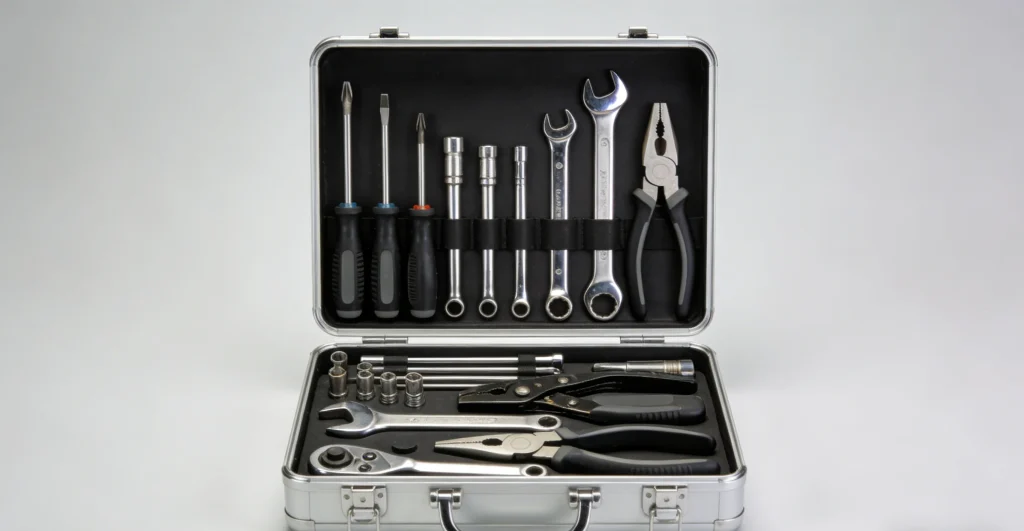
- Hand tools stored together: wrenches, pliers, screwdrivers, etc. can be placed in independent boxes to avoid mixing with other equipment.
- Power tools managed separately: drills, chargers, batteries, and other larger items are better stored in higher-capacity toolboxes.
- Small accessories organized by category: screws, washers, drill bits, and similar parts are best stored in compartmentalized boxes to reduce scattering and loss.
A clear classification structure helps fix tool positions and reduces the difficulty of daily searching.
Establishing Fixed Usage Habits
Once tools have defined locations, the process of use and return becomes smoother.
- Frequently used tools placed on upper layers: commonly used tools are stored in easily accessible positions to shorten retrieval time.
- Infrequently used tools placed on lower layers: spare and special tools are stored at the bottom to reduce occupation of prime space.
Fixed storage positions help users develop stable tool management habits.
Stackable Structure Improves Space Utilization
Traditional toolboxes have fixed capacity, and as tools increase, storage pressure often rises. Stackable structures improve space efficiency through vertical expansion.
Vertical Combination Expands Storage Space
Multiple toolboxes can be flexibly combined according to needs. As the number of tools increases, modules can be added directly without redesigning the entire storage system. Vertical stacking effectively saves floor space and adapts to different environments. Whether in workshops, maintenance rooms, or home garages, configurations can be adjusted based on available space. The vertical stacking design allows limited space to achieve higher storage efficiency.
Synchronized Optimization of Classification and Space
Stacking not only increases capacity but also makes tool management clearer.
- Functional grouping: maintenance tools, installation tools, and spare parts can be stored in separate boxes.
- Frequency-based grouping: frequently used tools are placed in easy-to-access positions, while less-used tools are placed on other levels.
- Task-based grouping: different repair projects can be assigned dedicated toolboxes to reduce repeated carrying.
Flexible combinations make tool storage better aligned with actual workflows.
Stackable Toolboxes Improve Tool Access Efficiency
The core value of storage is improving usability. A clear layout reduces searching time and makes operations smoother.
Shortening Tool Search Time
Once tools are fixed in place, daily operations become more efficient.
- Label-based identification: category labels help quickly identify the contents of each box.
- Transparent viewing areas: visual design allows quick confirmation of internal items.
- Priority access to frequently used tools: high-frequency tools are placed in easily accessible areas to reduce unnecessary searching.
Clear identification methods significantly improve tool access efficiency.
Reducing Duplicate Tool Carrying
Modular toolboxes allow flexible selection based on tasks.
- Carry only core tools: short tasks require only the relevant toolbox.
- Reduce unnecessary transport: select modules based on work content to avoid redundant carrying.
- Improve on-site flexibility: tools can be moved as needed to adapt to different working environments.
Modular systems make tool management lighter and more efficient.
Stackable Toolboxes Enable More Structured Long-Term Management
Stackable toolboxes achieve more flexible tool management through modular structures.
Tool Expansion and Systematic Management
Tool quantities change over time, so storage systems must be scalable. Stackable toolboxes allow gradual expansion of modules. Maintenance professionals can categorize by trade or equipment, while home users can organize by frequently used and spare tools.
Maintenance Habits and Space Optimization
Long-term structured management requires multiple supporting practices:
- Store tools in fixed positions to ensure each item has a clear place
- Use classification labels to improve identification efficiency
- Perform regular organization to remove redundant items and maintain cleanliness
Through these methods, tools can remain organized, reducing wasted space and unnecessary repurchases.
From workshop maintenance to home repairs, this modular storage approach brings better order to tool placement and makes access and return more efficient. SIPHIA BOX focuses on professional tool storage needs, providing more stable tool management solutions for different scenarios through modular structures and practical design. In addition, well-designed compartmentalization helps extend tool lifespan by reducing impact and wear. In multi-project collaborative work, this systematic management approach can also significantly improve team efficiency.