
As the number of electric vehicles continues to increase, the tools used for repair, inspection, maintenance, and roadside assistance are also changing. Common tools such as wrenches, sockets, screwdrivers, and pliers used for traditional gasoline vehicle repair are still required, while insulated tools, electrical testing equipment, vehicle diagnostic equipment, and some specialized auxiliary supplies are also added. As the number of electric vehicle repair tools increases, if they are still stored together in a standard tool box, problems such as long tool search times, equipment collisions, and insufficient protection for valuable instruments may occur.
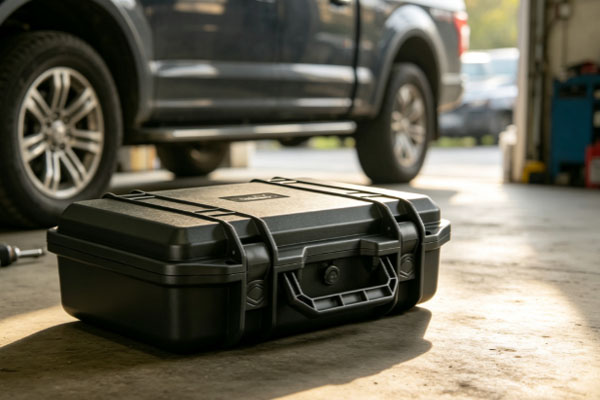
In practical applications, electric vehicle repair tool boxes can use PP protective cases, aluminum alloy tool boxes, multi-layer tool boxes, and customized inserts to provide fixed positions for different types of repair tools. For electric vehicle repair scenarios, separate storage areas can also be reserved for insulated tools and testing equipment, making tool management clearer. For automotive after-sales centers, 4S stores, repair workshops, fleet service teams, and mobile repair teams, bulk customization can also be carried out according to actual purchasing quantities. This solution can meet daily repair needs while making it easier for companies to standardize tool configurations and maintain a consistent brand image.
What Problems Should Electric Vehicle Repair Tool Boxes Solve?
Expanding from Traditional Repair Tools to EV-Specific Equipment
There are certain differences between electric vehicle repair and traditional vehicle repair. Conventional mechanical repair tools are still required, but electrical testing and vehicle diagnostic equipment account for a larger proportion. Therefore, the internal space of the tool box cannot be planned only around traditional wrenches and sockets.
Common configurations may include:
- Wrenches, sockets, screwdrivers, pliers, and other basic repair tools
- Insulated screwdrivers, insulated wrenches, and other insulated tools
- Multimeters, testing equipment, and vehicle diagnostic tools
- Electrical repair auxiliary supplies and small components
- Safety auxiliary supplies required by repair personnel
The equipment sizes used by different companies are not always the same. Therefore, a customized tool box can be designed according to the actual tool list to plan the internal positions instead of directly using a fixed specification.
Reducing Problems Caused by Mixing Tools Together
Electric vehicle repair tools usually come in many types. If all tools are simply placed inside the box, workers need to repeatedly search through the box during use. For mobile repair teams, this can also increase the risk of collisions during transportation. Customized inserts can be grooved according to the shape of each tool, allowing wrenches, testing instruments, screwdrivers, and other supplies to be stored separately. After use, each tool can be returned directly to its fixed position, allowing workers to quickly confirm whether all tools are present after opening the box.
Selecting the Box Structure According to the Application Environment
Electric vehicle tool boxes may be used in repair workshops or transported with repair vehicles. Therefore, product design needs to consider weight, strength, protection, and portability.
| Toolbox Type | Common Application Scenarios | Main Features |
| PP Protective Toolbox | Mobile maintenance, road rescue | Lightweight, impact-resistant, easy to carry |
| Aluminum Alloy Toolbox | Maintenance workshop, equipment transportation | Stable structure, professional appearance |
| Custom Plastic Toolbox | Batch after-sales configuration | Flexible dimensions, suitable for bulk procurement |
| Large-Capacity Toolbox | Maintenance center, 4S shop | Large storage space, convenient for centralized management |
Companies can select a suitable box type according to the actual working environment. If tools need to be transported with vehicles frequently, a lightweight and portable structure can be prioritized. If the tool box is mainly used at a fixed repair station, greater capacity and multi-layer storage space can be added.
Custom Design Solution for Electric Vehicle Repair Tool Boxes
Planning the Internal Space According to the Tool List
Tool box customization can start with the existing tools rather than the box dimensions. Customers can provide tool names, quantities, dimensions, photos, or existing tool arrangement methods. Designers can then plan the internal space based on this information. For example, an electric vehicle repair tool set may contain long wrenches, sockets in different specifications, testing equipment, and small components at the same time. During the design process, frequently used tools can be placed in easily accessible positions, larger equipment can be placed in separate areas, and small compartments or fixed slots can be used to store loose components. This approach can reduce unused space and prevent mismatches between tool sizes and the internal dimensions of the box.
Protecting Testing Equipment with Customized Inserts
Testing equipment used during electric vehicle repair generally needs to remain in good working condition. If equipment directly collides with metal tools during transportation, problems such as scratches on the housing, screen damage, or scattered accessories may occur. Therefore, EVA foam inserts can be customized according to the equipment shape to create separate protection areas inside the box. For larger diagnostic equipment, independent slots and cushioning space can also be provided. For tools such as wrenches and screwdrivers, fixed slots in corresponding shapes can be used. This design eliminates the need for workers to reorganize the tools each time. After use, each tool can simply be returned to its designated position.
Adding Portable, Locking, and Brand Design Features
Different repair teams have different tool box requirements. Mobile repair teams focus more on portability, fixed repair centers place greater emphasis on capacity and classification management, while automotive brand after-sales teams may require a consistent appearance. Therefore, customization can include box dimensions, handles, locks, inserts, colors, labels, and company Logos. For bulk purchasing projects, the product appearance can also be standardized so that the same specifications of tool boxes are used across different repair vehicles and repair stations.
Tool Box Configurations for Different Electric Vehicle Repair Scenarios
4S Stores and Automotive After-Sales Repair Centers
4S stores usually need to handle maintenance, fault diagnosis, electrical inspection, and conventional repairs at the same time, resulting in a large number of tools. Tool boxes can use large-capacity multi-layer structures to store conventional repair tools and testing equipment separately. If different workstations require different tools, multiple tool boxes with the same specifications can also be produced according to workstation requirements. This makes standardized management easier and can reduce the need for repair personnel to frequently exchange tools.
Mobile Repair and Roadside Assistance
Mobile repair scenarios require consideration of tool box weight and portability. The box should not become too large simply to increase capacity, as this may affect transportation by repair personnel. A compact tool box can be designed according to frequently used tools, with common wrenches, screwdrivers, testing tools, and emergency supplies stored together. When greater capacity is required, a multi-layer structure can also be used to keep different tools in separate positions.
New Energy Vehicle Repair Workshops
Repair workshops generally have more equipment, so tool boxes can use a large-capacity design and classify tools according to different repair positions. For example, mechanical repair tools, electrical testing tools, diagnostic equipment, and auxiliary supplies can each have their own storage areas. For bulk purchasing projects, different configurations can also be produced for different positions, while box dimensions, colors, and identification can be standardized. This makes tool management clearer and facilitates subsequent replenishment and purchasing.
| Application Scenario | Recommended Design | Customization Focus |
| 4S Shop After-sales Service | Layered Large-Capacity Toolbox | Classified storage, unified appearance |
| Mobile Maintenance | Portable Protective Case | Lightweight, impact-resistant, easy to carry |
| Road Rescue | Compact Toolbox | Quick access to commonly used tools |
| New Energy Maintenance Workshop | Large-Capacity Custom Case | Zoned storage for tools and testing equipment |
| Batch After-sales Projects | Uniform-Specification Toolbox | Unified logo, color and lining |
Custom Electric Vehicle Repair Tool Box Process from Design to Production
Requirement Confirmation and Product Design
Customization can start with the tool list. After the customer provides tool dimensions, quantities, application scenarios, and desired box dimensions, designers can plan the internal layout. If the customer already has an established tool configuration, the design can also be developed based on the existing products. At this stage, the box material, opening and closing method, handle, locks, inserts, color, and Logo also need to be confirmed. The clearer the requirements, the fewer adjustments will be needed during subsequent production.
Sample Confirmation and Bulk Production
After the design is finalized, a sample can be produced for actual assembly. The sample is mainly used to check whether the tools can be placed properly, whether the insert positions are reasonable, whether the box dimensions are convenient for transportation, and whether opening and closing are smooth. Moving into bulk production after sample confirmation can reduce the possibility of unsuitable dimensions in mass-produced products. For automotive brand after-sales projects, repair chain companies, and tool distributors, standardized specifications can also be established according to purchasing quantities.
Quality Inspection and Delivery
After production is completed, the box appearance, dimensions, insert installation, locks, handles, and opening and closing structure need to be inspected. For bulk orders, sampling inspections can also be performed according to unified standards to ensure consistent quality between different batches. For projects that require brand presentation, the Logo position, color, and label content can also be inspected to ensure that the final tool boxes meet the company’s daily use and brand presentation requirements.
Frequently Asked Questions
Q1: Can standard repair tools and testing equipment be stored together?
Yes. Wrenches, sockets, and other standard tools can be stored separately from testing equipment through compartmentalized storage, multi-layer structures, and customized foam inserts.
Q2: Can small-batch purchases be customized?
This can be confirmed according to the specific product and customization requirements. Requirements can be discussed for samples, project support, and bulk purchasing.
Q3: What information needs to be provided for customization?
Usually, customers only need to provide a tool list, tool dimensions, quantities, application scenarios, box dimension requirements, and a Logo file. If complete information is not available yet, existing tool photos and application requirements can also be provided first, followed by further confirmation of the solution.
Repair personnel need to access many different types of tools every day. If the tools are stored in a disorganized manner, searching for tools takes time, and collisions may also occur during transportation. By planning the tool arrangement according to actual usage habits in advance, each tool can have a fixed position, making daily work more convenient. Guangzhou Siphia Case Co can provide customized tool box solutions according to customers’ tool dimensions, quantities, application scenarios, and purchasing requirements. From box materials and product dimensions to internal foam, compartment structures, colors, and Logos, the design can be adjusted according to project requirements. Whether for 4S stores, new energy vehicle repair centers, mobile repair teams, or bulk automotive after-sales purchases, suitable product configurations can be developed according to actual requirements. Through reasonable tool box design, repair tools can be easier to manage, while purchased products can also be more consistent and practical.
If you are looking for a customized electric vehicle repair tool box supplier, you can contact Guangzhou Siphia Case Co directly and provide a tool list, dimensions, or product photos. We can further discuss the box structure and customization solution according to your actual requirements.
Email: marktingoffice@siphiabox.com
WhatsApp/Phone: +1 6027256314