
Engineering surveying is widely used in construction projects, road and bridge development, mining, topographic surveying, and engineering inspection. Total stations, digital levels, laser distance meters, GNSS equipment, surveying probes, and related accessories are precision instruments that can be affected by impacts, vibration, dust, moisture, and other environmental conditions during transportation and field operations.
A professional engineering surveying instrument toolbox solution is therefore more than a simple storage container. It needs to provide reliable protection while also supporting organized storage, easy transportation, and efficient field operations. Siphia Tool Box offers a range of toolboxes, instrument cases, protective cases, and customized interior solutions for different equipment sizes and application environments.
Why Do Engineering Surveying Instruments Need Professional Toolboxes?
Reduce the Risk of Impact During Transportation
Surveying instruments are frequently moved between offices, warehouses, vehicles, and construction sites. If ordinary storage boxes are used, equipment may move around inside the box and become damaged by external impacts.
Professional instrument cases can use foam, EVA inserts, and customized compartments to secure equipment. Siphia offers protective cases with options such as pick-and-pluck foam and CNC-machined EVA inserts, allowing the interior to be designed around the shape of specific instruments. This helps reduce movement and provides additional protection during transportation.
Handle Challenging Outdoor Environments
Engineering surveying is often performed outdoors, where equipment may be exposed to rain, dust, mud, humidity, and temperature changes. A suitable toolbox should therefore provide effective environmental protection.
Waterproof and dustproof protective cases with sealed structures can help protect surveying instruments during outdoor transportation and field operations. For demanding applications, a high level of protection can be particularly important when equipment needs to be transported between different work locations.
How Should an Engineering Surveying Instrument Toolbox Be Configured?
Different surveying instruments have different dimensions, weights, and structural requirements. Therefore, toolbox selection should not focus only on external dimensions. The available internal space, protective padding, and equipment fixation should also be considered.
Select the Toolbox According to Instrument Type
Different surveying instruments can be matched with different toolbox configurations:
| Surveying Equipment | Recommended Toolbox Configuration | Main Protection Requirements |
| Total Station | Large instrument case + customized EVA insert | Shock resistance, dust protection, secure fixation |
| Digital Level | Portable instrument case + foam insert | Impact protection, portability |
| Laser Distance Meter | Compact portable protective case | Dust and moisture protection |
| GNSS Surveying Equipment | Customized instrument protective case | Shock resistance, waterproofing, organized storage |
| Surveying Probes and Accessories | Compartmentalized toolbox | Prevent mixing and damage |
| Surveying Accessories | Multi-purpose toolbox | Organized storage and quick access |
Optimize the Interior Space
The interior of an engineering surveying toolbox can be designed with layered foam, CNC-cut EVA inserts, equipment positioning slots, and dedicated accessory compartments.
For precision equipment such as total stations and GNSS receivers, CNC-machined EVA inserts can be designed according to the equipment’s actual shape. This helps keep the instrument securely positioned inside the case while reducing movement during transportation.
At the same time, dedicated storage areas can be created for main instruments, cables, batteries, measuring accessories, and other tools. This makes equipment easier to find and improves efficiency during field operations.
Key Design Requirements for Engineering Surveying Toolboxes
Waterproof and Dustproof Protection
Outdoor construction environments can expose surveying instruments to water, dust, and moisture. A toolbox with sealing features can help prevent external contaminants from entering the interior.
Some protective case designs use sealing gaskets, secure latches, and other structural features to improve environmental protection. For demanding outdoor applications, waterproof and dustproof protection can provide an additional layer of security for precision equipment.
Shock and Vibration Protection
The outer shell of a protective case helps resist external impacts, while internal foam or EVA inserts absorb vibration and keep the instrument securely positioned.
For precision surveying equipment, both external case strength and internal cushioning are important. A properly designed interior can reduce unwanted movement and help protect sensitive instruments during transportation.
Portability and Transportation
Surveying engineers often need to carry equipment directly to construction sites or remote outdoor locations. Toolbox design should therefore consider equipment weight and transportation distance.
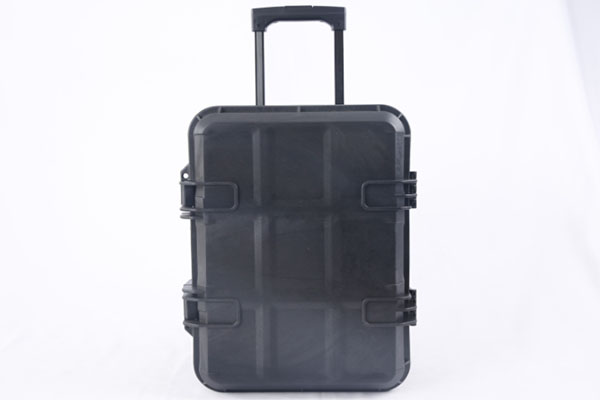
For lightweight instruments, compact handheld cases can provide convenient transportation. For heavier equipment combinations, larger cases with wheels and pull handles can reduce the physical effort required during transportation.
Size and Customization
Before selecting a toolbox, users should measure the length, width, and height of the equipment. Additional space should also be considered for protective foam, EVA inserts, cables, batteries, and accessories.
It is important not to select a case based solely on its external dimensions. Case wall thickness, structural components, and interior inserts can reduce the actual usable space inside the toolbox.
Siphia Engineering Surveying Instrument Toolbox Solutions
Siphia Tool Box provides different types of storage and protection solutions for engineering surveying applications, including portable toolboxes, instrument protective cases, large cases, and customized interior inserts.
For different surveying equipment requirements, the case can be configured according to equipment dimensions, quantity, transportation conditions, and field applications. Customized EVA inserts and other interior layouts can help create dedicated storage positions for individual instruments and accessories.
For engineering companies, surveying organizations, equipment manufacturers, and contractors that require multiple cases, customization can also help create a more professional equipment management system. Options such as customized interiors, dimensions, colors, accessories, and company logos can be considered according to project requirements.
Typical Applications
Engineering surveying instrument toolboxes can be used in a wide range of applications, including:
- Construction surveying
- Road and highway projects
- Bridge engineering
- Land surveying
- Mining surveying
- Engineering inspection
- Geological investigation
- Topographic surveying
- Outdoor measurement
- Infrastructure construction
Compared with ordinary toolboxes, professional instrument protective cases place greater emphasis on equipment fixation, waterproofing, dustproofing, shock absorption, and efficient use of internal space.
With an appropriate interior configuration, a single protective case can provide a complete solution for equipment storage, transportation, and field operations.
A high-quality engineering surveying instrument toolbox is more than a large-capacity storage box. It is a comprehensive equipment protection solution designed around the requirements of precision instrument transportation, field operations, and long-term storage.
A combination of a durable outer shell, sealing structure, shock-absorbing interior, organized compartments, and customized dimensions can help improve equipment transportation safety and field-work efficiency.
With a wide range of toolboxes, instrument protective cases, and customized interior solutions, Siphia Tool Box can provide flexible storage and transportation solutions based on the size, quantity, and operating environment of engineering surveying equipment.