When enterprises purchase box-type tool carts, the factors that truly affect the user experience are often not the appearance, but whether the equipment can adapt to actual tool configurations and workflows. Tool types vary considerably across maintenance workshops, automotive servicing, equipment maintenance, and production assembly. Users also have different requirements for capacity, mobility, accessibility, and safety management. During procurement, companies should evaluate the cart’s specifications and functional configuration based on current tools, working conditions, and long-term usage plans.
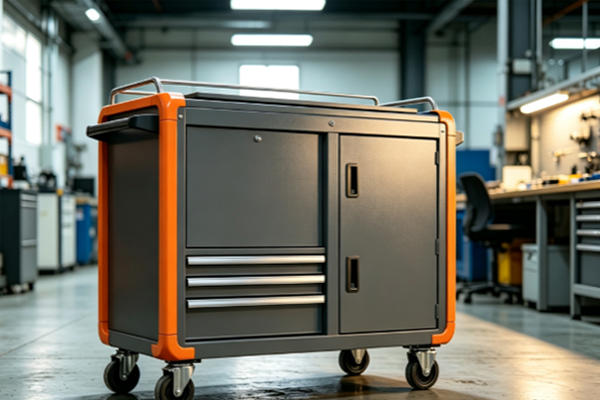
Determine Box-Type Tool Cart Capacity According to Tool Quantity and Type
The storage space of a box-type tool cart needs to match the company’s existing tools. Preparing a tool inventory before purchasing helps determine the number of drawers, storage heights, and space allocation for different areas.
Tool Quantity Determines Overall Storage Capacity
Companies can classify tools by type and quantity, determine the appropriate cabinet size.
- Hand Tools: Wrenches, screwdrivers, pliers, and similar tools are suitable for organized storage in shallow drawers.
- Power Tools: Drills, charging equipment, and similar items require taller storage areas.
- Small Accessories: Screws, bits, connectors, and other small parts are suitable for compartment boxes or dedicated storage areas.
- Specialized Equipment: Inspection instruments and specialized tools require individual planning based on their dimensions.
Giving each category a defined storage location can reduce mixed storage and make it easier for workers to quickly retrieve tools from designated areas.
Reserve Space for Future Tool Expansion
A company’s tool inventory may grow as equipment, job responsibilities, and business activities change. Some additional storage capacity can be reserved during procurement. A cart that is completely filled from the beginning can quickly become insufficient when new tools are added. For teams with rapidly expanding tool inventories, modular designs and adjustable internal structures can provide more flexibility for future changes.
Pay Close Attention to Load Capacity and Cabinet Structure
A tool cart at full load needs to withstand the combined weight of tools, drawers, and loads generated during movement. In addition to checking the total load capacity, buyers should understand the rated capacity of individual drawers, slides, the base, and casters.
Drawer Load Capacity Should Match Tool Weight
Different drawers may store different types of tools, so procurement can be based on actual weight distribution.
- Light-Duty Drawers: Suitable for screwdrivers, measuring tools, and small accessories.
- Medium-Duty Drawers: Suitable for wrenches, sockets, and commonly used maintenance tools.
- Heavy-Duty Drawers: Suitable for heavier power tools, socket sets, and professional equipment.
Assigning storage areas according to tool weight can reduce long-term stress on drawer slides and the cabinet caused by excessive loads on individual drawers.
Cabinet Rigidity Affects Long-Term Performance
The cabinet needs to withstand tool weight as well as vibration generated during pushing and turning. The frame, connection points, and bottom structure all deserve attention. A tool cart with good structural rigidity is more likely to remain stable when fully loaded, while the drawers can operate more consistently. For high-frequency use, buyers should also examine slide durability, drawer closing performance, and cabinet connections.
Anti-Tip Design Should Not Be Overlooked
Multi-drawer tool carts experience changes in forward loading when drawers are opened. Stability-related design features should be carefully checked during procurement.
- Drawer interlock: Prevents multiple drawers from being opened simultaneously.
- Anti-tip mechanism: Reduces the risk of forward tipping.
- Opening-limit design: Controls the extent to which drawers can be pulled out.
- Bottom weight distribution: Affects stability under full-load and open-drawer conditions.
- When storing large quantities of heavy tools, the actual loading arrangement should be considered during stability testing.
Checking these structural features provides a more accurate understanding of how stable the tool cart will be in practical use.
Mobility Performance and Working Conditions Determine Cart Configuration
Box-type tool carts need to move between different work areas. Floor conditions, aisle dimensions, and travel distances can all affect daily operation. Casters, handles, and locking mechanisms should be matched to the company’s working environment.
Caster Specifications Directly Affect Mobility
A fully loaded tool cart can be quite heavy, so the casters need to provide load capacity appropriate for the actual operating conditions.
- Caster Size: Larger casters are generally better suited to passing over floor joints, thresholds, and similar obstacles.
- Maneuverability: Work areas requiring frequent directional changes should consider swivel caster configurations.
- Locking Function: Lockable casters can help keep the cart stable during stationary work.
- Wheel Material: The wheel surface should be selected according to workshop flooring and exposure to oil or other contaminants.
Casters that match the site conditions can make pushing, turning, and parking smoother.
Handles and Worktops Also Affect Daily Operation
Companies that move tool carts frequently can check the handle height, grip design, and connection strength to make pushing more natural for workers. The top work surface can provide temporary space for tools, parts, or simple operations. For maintenance and assembly positions, these details directly affect how well the cart integrates with the actual workflow.
Enterprises Should Also Consider Internal Management and Long-Term Operating Costs
After a box-type tool cart is put into service, it also involves tool return, shared use, equipment maintenance, and future expansion. Incorporating these long-term factors into the procurement process can help reduce additional costs caused by repeated purchasing and disorganized tool management.
Internal Storage Methods Should Match the Workflow
The interior of the tool cart can be divided according to usage frequency and task type.
- Frequently used tools can be placed in upper drawers or shallow drawers for quick access.
- Backup tools can be stored in lower compartments to keep them separate from frequently used tools.
- Small accessories can be stored in dedicated compartments to reduce scattering and loss.
- Precision instruments can be equipped with shock-resistant liners or dedicated positions to reduce collisions during movement.
A consistent storage logic allows different users to become familiar with tool locations more quickly and makes it easier to return tools after use.
Locks and Safety Features Should Match Enterprise Management Requirements
When tools are shared by multiple employees, companies can consider drawer locks and centralized locking systems. For valuable tools, inspection equipment, or specialized instruments requiring controlled access, locking structures can help reduce unauthorized use and tool loss. Different departments may have different management systems, so safety functions should be configured according to actual access requirements.
Modular Structures Facilitate Future Adjustments
A company’s tool configuration is not necessarily fixed. New equipment, changes in job responsibilities, or adjustments to maintenance tasks may create new storage requirements.
- Adjustable dividers make it easier to modify spaces according to tool dimensions.
- Modular trays can be rearranged as tool combinations change.
- Combinable storage units allow expansion or separation when needed.
- For shared use across multiple workstations, tool configurations can be allocated according to job responsibilities.
- Mobile tool carts can support a clearer tool management system.
Maintaining room for adjustment allows the storage system to better adapt to long-term changes within the enterprise.
When purchasing a box-type tool cart, companies can view the product as a working link between “tool storage” and “on-site operations” rather than simply as a storage cabinet. For enterprises that require long-term maintenance and rapid tool allocation, a properly configured box-type tool cart can become part of the daily workflow and help establish a clearer tool organization system. SIPHIA BOX can provide box-type tool carts and modular tool storage solutions based on application scenarios, tool dimensions, job requirements, and mobility conditions, offering flexible tool management options for professional maintenance, equipment servicing, and multi-workstation operations.