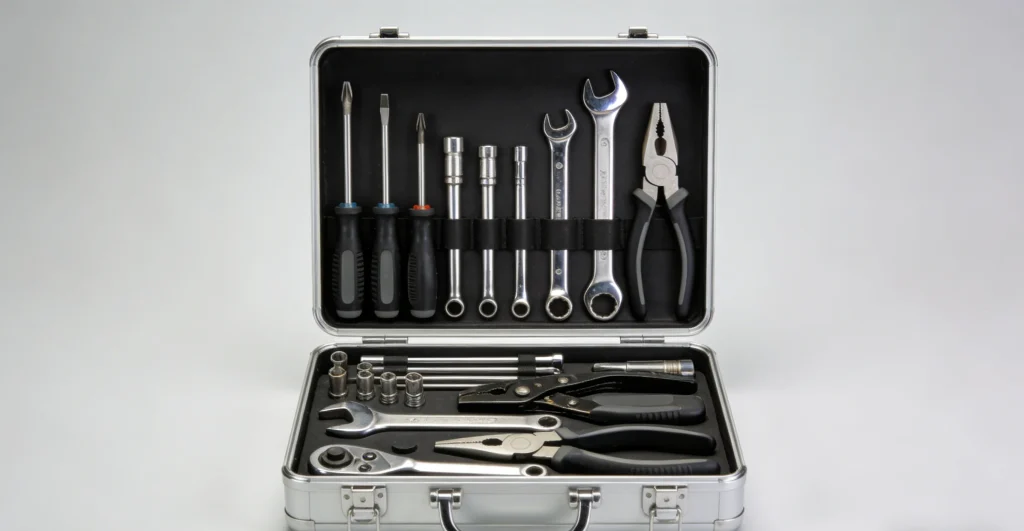
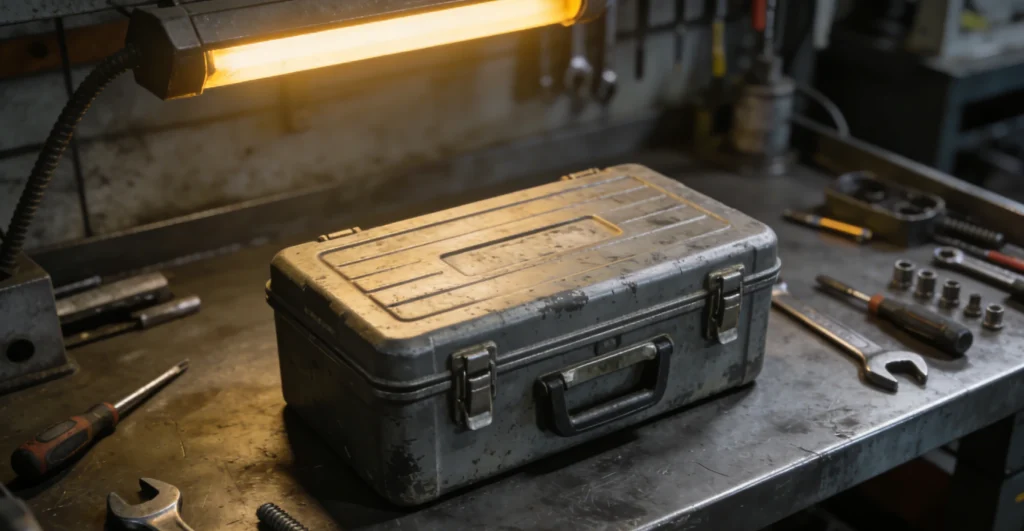
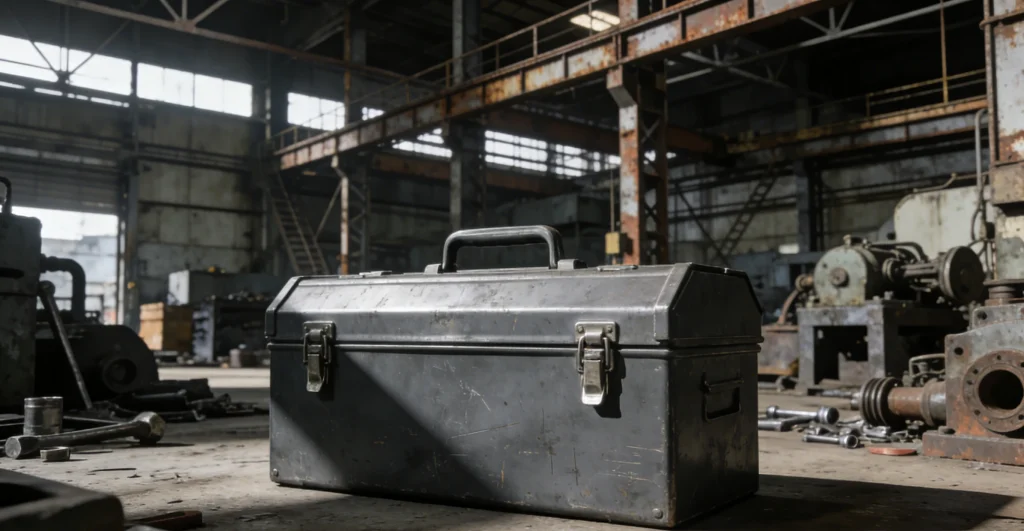
Maintenance, installation, inspection, and other tasks often require workers to change operating locations, while tools also need to move along with personnel and equipment. Traditional hand-carrying methods become limited by weight, capacity, and carrying distance as the number of tools increases, while stationary tool cabinets lack the mobility required for on-site work. Rolling toolboxes combine storage space with caster systems, allowing workers to bring commonly used tools, parts, and some equipment directly to the work area while maintaining an organized access sequence through internal storage layouts. This makes them suitable for various work environments that require on-site operations.
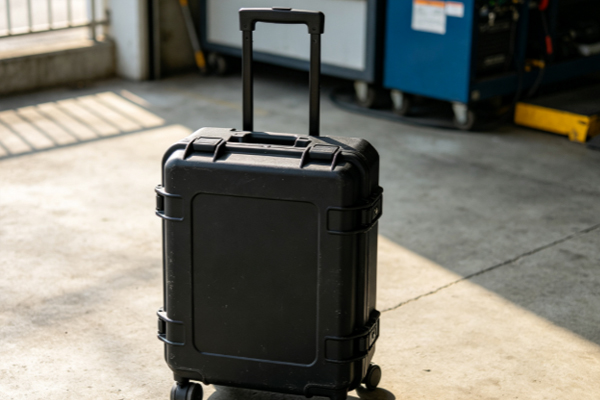
How Does the Mobile Structure Adapt to Different Working Distances?
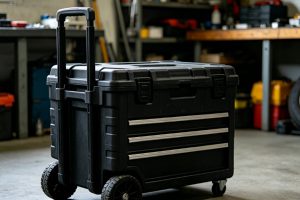
One of the key advantages of rolling toolboxes is that they allow tools to move directly from a fixed storage area to the actual work location. Casters, handles, and toolbox dimensions need to be matched according to the working environment.
How Does Caster Design Affect On-Site Mobility?
Different work areas have different floor conditions and available passage space, so casters need to balance maneuverability, load capacity, and parking stability.
- Flexible Maneuverability: Swivel casters make it easier to change direction in workshops, warehouses, and other spaces, providing greater convenience when working close to equipment.
- Stable Load Bearing: When the toolbox is heavily loaded, the casters need sufficient load capacity to reduce shaking during movement.
- Secure Positioning: Casters with braking mechanisms can secure the toolbox at the work location, making continuous tool access and placement more convenient.
A properly designed base structure allows the toolbox to move smoothly between different areas.
How Should Toolbox Dimensions Match Passage Conditions?
Toolbox dimensions directly affect the convenience of turning, passing through doorways, and moving through narrow passages. Large repair workshops can use higher-capacity toolboxes, while warehouses and small workshops are generally better suited to compact sizes. For positions that require frequent relocation, toolbox weight and pushing distance should also be considered to prevent increased capacity from negatively affecting actual handling convenience.
How Does Layered Storage Facilitate Quick On-Site Tool Access?
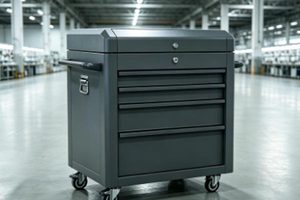
Once tools are brought to the work location, the internal layout directly affects on-site operations. Properly designed drawers, compartments, and storage areas can maintain clear positional relationships between different items.
How Should Storage Areas Be Divided According to Tool Specifications?
Different tools vary considerably in size, so the internal space can be designed with multiple storage heights.
- Frequently Used Hand Tools: Wrenches, screwdrivers, pliers, and similar tools can be placed in upper or shallow drawers for convenient continuous access.
- Large Equipment: Power drills, pneumatic tools, and some inspection equipment require separate storage areas to avoid squeezing smaller items.
- Loose Accessories: Screws, washers, fittings, and similar small parts can be organized in compartment boxes to reduce mixing and omissions.
When different areas are assigned different functions, on-site operations become more convenient.
How Does Modular Combination Facilitate Task-Based Adjustments?
Not every job requires carrying every tool, so the tool combination can be adjusted according to the day’s tasks.
- Carry inspection modules during equipment inspections.
- Add hand tools and consumable modules during repair work.
- Use detachable or combinable storage structures to rearrange tool combinations.
- Reduce unnecessary items to make on-site work lighter.
Adjusting tool combinations according to specific tasks can meet operational requirements while reducing the carrying burden.
How Can Rolling Toolboxes Provide Mobile Advantages in Different Work Scenarios?
The practical value of a rolling toolbox is closely related to the location where it is used. Different work environments can be configured around mobility distance, tool quantity, and operating methods.
Why Are They Suitable for Frequent Workstation Changes in Workshops?
Automotive repair, machinery maintenance, and similar environments often involve multiple work locations. A toolbox can be pushed directly to a vehicle, machine, or production line, eliminating the need for workers to repeatedly return to a fixed tool cabinet. Frequently used tools can be placed in easily accessible positions, while specialized tools can be stored in other drawers, making the entire repair process more continuous.
How Can Construction Projects Balance Relocation and Storage?
Work areas on construction sites may change continuously, so tool management needs to adapt to the requirements of different work stages.
- On-Site Installation: Place the tools needed for the day’s work in the corresponding storage areas so they can move along with the work location.
- Equipment Commissioning: Inspection instruments and related accessories can be separately secured to reduce the time spent searching for components.
- Temporary Repairs: Keep only the core tools according to the specific task to avoid carrying excessive unrelated items.
For teams that frequently change work locations, mobile storage can reduce the management pressure caused by scattered tools.
Why Are They Suitable for Daily Repairs and DIY in Home Garages?
Home users often need to move tools between garages, storage areas, and workbenches. A rolling structure allows multiple tools to be stored together and then moved to the appropriate location according to the day’s installation, repair, or DIY tasks. Compared with carrying multiple tool cases separately, centralized storage makes it easier to keep the workspace organized.
How Do Durable and Safe Designs Support Long-Term Use?
Frequent movement increases the number of times the toolbox, casters, drawers, and connecting components are used. During long-term operation, load capacity, protection, and stability should be considered together.
How Should Toolbox Structures Match Actual Loads?
Different tool quantities and weights place different requirements on toolbox strength.
- For repair environments with many metal tools, attention should be paid to frame rigidity, drawer load capacity, and the base structure.
- For lightweight applications, greater consideration can be given to the balance between toolbox weight and ease of movement.
- Select the appropriate structural strength according to the actual tool combination to avoid insufficient load capacity or excessive bulk.
Matching toolbox strength to tool quantity and weight helps achieve a balance between durability and portability.
How Can Internal Fixing Reduce Collisions During Transport?
The toolbox will experience vibration during movement, so appropriate protective measures can be adopted according to the characteristics of different items.
- Add anti-slip mats to reduce item movement.
- Use dividers to prevent tools from becoming mixed together.
- Install EVA liners to cushion vibration and impacts.
- Store precision instruments and electronic equipment separately from ordinary hand tools to reduce mutual collisions.
Proper compartmentalization and cushioning can reduce the impact of vibration on tools and precision equipment.
How Can Locking Structures Improve On-Site Management?
In shared-use environments or open work areas, appropriate locking designs can provide a more stable user experience.
- Drawer locks can prevent tools from being accessed casually.
- Centralized locking facilitates unified management.
- Caster brakes can keep the toolbox stationary at the work location.
- Secure the toolbox after reaching the work location and return the tools to centralized storage after the work is completed.
Locking and securing features can create a clearer on-site management process.
The key to a rolling toolbox lies in coordinating caster load capacity, toolbox dimensions, internal layout, and safety structures. For workshop repairs, engineering installation, equipment inspection, and home DIY tasks, the structure can be planned according to tool weight, moving distance, working space, and storage methods. SIPHIA BOX specializes in customized toolbox storage solutions and can plan storage structures according to tool quantity, equipment specifications, and working environments, providing mobile storage and protection solutions that are better suited to specific requirements.