
Automotive roadside assistance is often unexpected and site-based. Rescue personnel may need to handle vehicle breakdowns on urban roads, highways, parking lots, underground garages, and remote road sections. Common situations include vehicles that cannot start, discharged batteries, tire problems, vehicle wiring faults, loose mechanical components, and simple component replacement. Different faults require different tools. If tools are kept mixed together in a standard storage box for a long time, it not only takes more time to find the required tool but can also lead to tool collisions, equipment damage, and missing accessories. Therefore, roadside assistance tool boxes need to be designed according to the rescue vehicle, tool quantity, usage frequency, and on-site working habits. Frequently used tools should be easy to access, precision testing equipment should be properly protected, larger tools need sufficient storage space, and the box itself should be suitable for vehicle transportation and frequent handling.
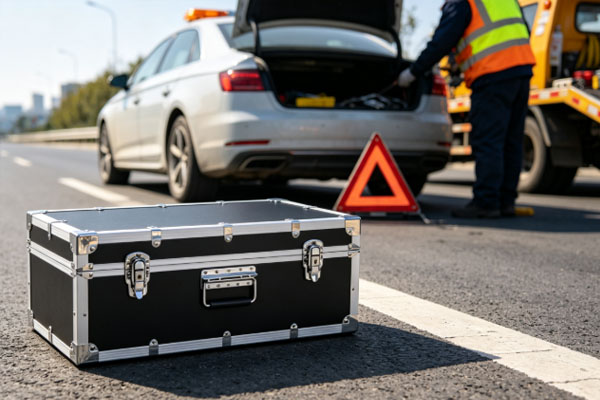
Guangzhou Siphia Case Co specializes in customized tool boxes and protective cases and can design solutions based on the tool list, product dimensions, operating environment, and branding requirements provided by customers. From case dimensions and material selection to internal foam, tool compartments, handles, locks, and exterior customization, each element can be adjusted according to roadside assistance applications. For automotive repair companies, roadside assistance companies, automotive brand after-sales teams, and transportation fleets, clearer tool storage solutions can be developed according to actual working requirements.
Planning Tool Box Configurations Based on Roadside Assistance Tasks
Roadside assistance personnel may encounter various types of vehicle faults, so tool configurations cannot be designed entirely according to the requirements of a standard repair workshop. On-site assistance places greater emphasis on tool portability, access speed, and protection. Therefore, before designing a tool box, it is necessary to identify the actual tools that rescue personnel need to carry.
Properly Organizing Common Repair Tools
Wrenches, sockets, screwdrivers, pliers, hex keys, and similar products are common tools used in roadside assistance. These tools come in various specifications. Without fixed storage positions, small tools can easily become covered by larger tools. A customized tool box can provide dedicated positions based on the actual dimensions of each tool, giving every tool a relatively fixed storage area. Frequently used tools can be arranged in the upper section or near the box opening so they can be removed quickly when needed, while less frequently used tools can be placed in lower areas. This layout not only reduces tool mixing but also makes tool inventory easier. After work is completed, personnel only need to check the fixed storage positions to confirm whether all tools are present, helping reduce tool loss.
Providing Independent Protection for Electrical Testing Equipment
Modern vehicles contain an increasing number of electronic devices, and roadside assistance is no longer limited to mechanical repairs. Multimeters, battery testers, circuit testing equipment, and other electronic products may also be standard equipment in rescue vehicles. Such equipment is generally more sensitive to impact and compression, so it should not simply be stored in an open space together with metal tools. The tool box can be designed with independent foam compartments based on the equipment shape and dimensions, reducing movement during transportation. If customers have several types of testing equipment, different areas can be designed according to equipment dimensions, allowing testing instruments, cables, and accessories to be stored separately and reducing cable tangling and mixed accessories.
Combining Emergency Supplies with Repair Tools
Roadside assistance tool boxes usually store more than traditional repair tools. Depending on the rescue task, they may also contain jumper cables, inflation equipment, tire repair tools, gloves, warning equipment, and commonly used spare parts. These products can vary significantly in size, so the internal design needs to provide a certain degree of flexibility. For example, larger inflation equipment can have an independent storage area, small accessories can be organized in compartments, and lightweight items such as gloves can be placed in easily accessible locations.
| Main Storage Area | Typical Configuration | Customization Focus |
| Basic Repair Area | Wrenches, sockets, screwdrivers, pliers | Classified storage for quick access |
| Electrical Testing Area | Multimeters, battery testing equipment | Independent space to reduce impact |
| Tire Service Area | Tire repair tools, inflation equipment | Space reserved according to equipment dimensions |
| Emergency Handling Area | Jumper cables, gloves, warning equipment | Quick access for on-site use |
| Spare Parts Area | Bolts, connectors, fuses, etc. | Small-item compartments to reduce omissions |
Designing the Tool Box Structure for Vehicle Transportation
Roadside assistance tool boxes are transported with vehicles for extended periods. Vibration, impact, and frequent handling during transportation can affect both the box and the tools inside. Therefore, the tool box structure should be designed around the actual vehicle environment rather than simply increasing storage capacity.
Adapting Tool Box Dimensions to Rescue Vehicles
Rescue vehicles usually have limited interior space. An oversized tool box may interfere with the placement of other equipment, while an undersized box may not provide enough capacity for the required tools. Therefore, the available space in the trunk, cargo compartment, or equipment area should be confirmed during the design stage. Customers can provide the vehicle model, installation location, or available space dimensions. Based on this information, the length, width, and height of the box can be determined, while also considering whether there is sufficient space to open the lid. If the same company operates different vehicle models, corresponding tool box specifications can also be designed separately so that each vehicle can make better use of its available space.
Creating the Internal Structure Based on Actual Tool Dimensions
Standard tool boxes generally use internal spaces designed around common dimensions, while roadside assistance tools often vary considerably. Testing instruments, inflation equipment, wrenches, and specialized tools from different brands may have completely different lengths, widths, and shapes.
Customized tool boxes can be internally planned according to the actual tools. For example:
- Long-handled tools can be stored vertically;
- Small tools such as sockets can have dedicated slots;
- Electrical equipment can be secured with foam;
- Cables and accessories can have dedicated storage areas;
- Large equipment can have independent reserved space.
This approach makes more effective use of the internal space while reducing collisions between tools.
Considering Usage Frequency When Selecting Materials
Tool box materials can be selected according to weight, strength, appearance, and operating environment. Lightweight cases are suitable for rescue personnel who need to carry them frequently. Aluminum tool boxes are suitable for companies that need to balance structural strength with a professional appearance. Plastic protective cases can be mass-produced and customized according to specific structures. Material thickness should be determined according to the actual tool weight and transportation conditions. If the box is mainly secured inside a rescue vehicle, greater attention can be given to space utilization and fixing methods. If it needs to be frequently carried from the vehicle to the breakdown location, both box weight and carrying convenience need to be considered.
Designing the Opening and Carrying Features
The handle, locks, and lid structure of a roadside assistance tool box directly affect daily use. Tool boxes that are frequently carried can be equipped with easy-grip handles. Larger boxes can be designed with wheels or other auxiliary carrying features according to their weight. The lid should also remain stable after opening to prevent it from suddenly closing during work. Locks should be selected according to the operating environment so they are convenient for daily access while reducing accidental opening during transportation. For tool boxes that remain in vehicles for long periods, fixing structures can also be added according to customer requirements to keep the box stable while the vehicle is moving.
Customizing the Tool Box from Tool Lists to Finished Products
Roadside assistance tool box customization generally involves several stages, including requirement confirmation, structural design, sample confirmation, and mass production. A clear process can reduce dimensional errors and allow customers to confirm the actual product before formal production.
Providing Tool Lists and Usage Requirements
Customers can first provide an existing tool list, including tool names, quantities, dimensions, and usage frequency. If complete tool photos are available, they can also be provided. If complete dimensional information is unavailable, customers can provide tool photos, vehicle types, application scenarios, and the equipment planned for configuration. Based on this information, the required internal space and the tools that need independent fixing can be determined. For enterprise bulk purchasing, customers can also provide the expected purchase quantity, tool quantities per vehicle, and requirements for different vehicle types, making it easier to plan standardized product specifications.
Planning the Structure According to Actual Requirements
After confirming the tool information, the case dimensions, materials, opening method, and internal structure need to be determined. Internal foam can be designed according to tool contours so that the tools remain stable after being placed inside. For rescue teams carrying many tools, upper and lower layers or separate storage areas can be used to maintain clear positions for different types of tools. Customers with more testing equipment can also have independent protection areas. Structural planning should consider the order in which tools are removed. After rescue personnel arrive at the site, they usually inspect the vehicle first and then select tools based on the diagnosis, so frequently used tools should remain highly visible and easy to access.
Moving to Mass Production After Sample Confirmation
For products with standard dimensions, production can be arranged directly according to customer requirements. If the tool configuration is complex, it is recommended to confirm a sample first. During the sample stage, actual tools can be placed inside the box to check whether they fit properly, whether the lid can close smoothly, whether the internal foam provides stable fixation, and whether the box dimensions are suitable for vehicle storage. If tool positions need to be adjusted, modifications can be made before mass production. After confirmation, mass production can proceed according to the final design, helping reduce later adjustment costs.
Maintaining a Consistent Corporate Image Across Bulk Products
Automotive rescue companies often operate multiple service vehicles. If each vehicle uses a different type of tool box, subsequent management can become more complicated. Therefore, box dimensions, colors, logos, and internal layouts can be standardized. Once standardized specifications are established, newly added rescue vehicles can use the same configuration, making it easier for personnel to become familiar with tool locations. Companies can also add identification information such as vehicle numbers, regional numbers, or service categories to facilitate tool management.
Customized Solutions for Different Automotive Rescue Scenarios
Roadside assistance companies do not all perform the same tasks. Mobile rescue teams place greater emphasis on portability, automotive after-sales teams need to carry more testing tools, and transportation fleets focus more on emergency repair requirements during long-distance vehicle operation. Therefore, tool boxes should be configured according to actual work requirements.
Mobile Roadside Assistance Tool Boxes
Mobile rescue personnel need to carry tools to vehicle breakdown locations, so the tool box needs to balance capacity and portability. Common wrenches, sockets, screwdrivers, pliers, electrical testing tools, and emergency supplies can be configured together. With fixed internal compartments, rescue personnel can check the tool status immediately after opening the box without repeatedly searching through mixed tools. If the service area is large, tool boxes can also be categorized according to different rescue tasks, such as basic repair boxes, electrical testing boxes, and tire service boxes, allowing personnel to carry the appropriate products for each task.
Tool Boxes for Automotive 4S Dealerships and After-Sales Service
Automotive brand after-sales services typically involve maintenance, fault inspection, repair, and pre-delivery inspections, requiring a wide range of tools. Compared with general roadside assistance, these applications place greater emphasis on tool classification and brand consistency. Different tool boxes can be configured according to repair positions, such as basic repair tool boxes, electrical testing tool boxes, and specialized tool boxes. Each box can use a fixed internal layout, making it easier for personnel to quickly confirm whether all tools are present. The exterior can also incorporate the brand logo and corporate identification colors, keeping the tool boxes visually consistent with after-sales service vehicles and repair areas.
Emergency Repair Tool Boxes for Transportation Fleets
Logistics transportation and commercial vehicles often operate over long distances. When a minor vehicle fault occurs, timely basic handling can reduce the waiting time for professional repair personnel. Fleets can configure corresponding tool boxes according to vehicle types. Large commercial vehicles can have larger storage areas for larger tools, connectors, and emergency repair supplies, while smaller vehicles can use lighter configurations. For companies operating a large number of transportation vehicles, standardized tool lists and box specifications can also be used to maintain consistent configurations across vehicles. Subsequent tool replacement and replenishment can then be managed according to the same purchasing standards.
Insurance and Comprehensive Roadside Assistance Services
Insurance rescue services often deal with vehicles from different brands and with different models, so tool configurations need to maintain a certain level of versatility. These tool boxes can focus on frequently used tools and basic testing equipment while reserving space for auxiliary tools that may be required by different vehicle models. For rescue teams that need to respond quickly, the internal layout can place greater emphasis on the visibility and accessibility of frequently used tools.
Frequently Asked Questions
What information is required to customize an automotive roadside assistance tool box?
If a tool list is available, customers can provide the tool names, quantities, and dimensions directly. If the information is incomplete, tool photos, vehicle models, storage locations, and application scenarios can also be provided. More complete information makes it easier to determine the internal structure.
Can the tool box be customized according to existing tools?
Yes. Both the box dimensions and internal structure can be planned according to the actual tools. For testing equipment or specialized tools with unusual shapes, corresponding fixed areas can be designed according to their specific dimensions.
Can many different types of tools be stored in one box?
Yes, but the quantity, dimensions, and weight of the tools need to be confirmed in advance. If there are many types of tools, upper and lower layers, separate compartments, or dedicated slots can be used for organization. Particularly large equipment requires separately planned storage space.
Can automotive roadside assistance tool boxes be customized with a logo?
Yes. Companies can provide logo files, brand colors, and other appearance requirements. The appropriate identification method can then be selected according to the case material and production process.
Can the tool boxes be customized in bulk?
Yes. For automotive roadside assistance companies, 4S dealerships, insurance rescue teams, and transportation fleets, bulk production plans can be developed according to the number of tool boxes required per vehicle, while standardizing box dimensions, internal layouts, and brand information.
Automotive roadside assistance tool boxes can help rescue personnel find the right tools more quickly when needed while reducing the risk of tools and equipment being damaged by collisions during transportation. A suitable tool box needs to consider vehicle space as well as tool quantity, dimensions, weight, and daily working habits. When a company operates multiple rescue vehicles, standardized tool box designs provide another clear benefit: the tool arrangement can remain largely consistent across vehicles. Personnel can quickly become familiar with the internal layout even after changing vehicles. When the company purchases, replenishes, or replaces tool boxes in the future, standardized specifications can continue to be used, reducing management difficulties. For companies requiring customized roadside assistance tool boxes, it is recommended to prepare tool lists, product dimensions, vehicle models, and estimated purchase quantities in advance. Even if only partial information is currently available, customers can begin the discussion and gradually complete the product requirements. Determining the box dimensions and internal structure according to actual operating conditions is generally more suitable for long-term use than simply selecting a standard specification.
Guangzhou Siphia Case Co provides customized tool box services for different automotive rescue scenarios, including mobile roadside assistance, automotive after-sales service, repair teams, insurance rescue, and transportation fleets. Companies can provide requirements based on their tools and vehicles, and we can assist in determining suitable case specifications and internal layouts. If you are looking for an automotive roadside assistance tool box supplier, please contact Guangzhou Siphia Case Co and provide tool photos, lists, or dimensional information. We can further discuss product structure, materials, internal configuration, and bulk customization requirements.
Email: marktingoffice@siphiabox.com
WhatsApp / Phone: +1 6027256314