
Automotive 4S dealerships handle maintenance, repairs, inspections, fault diagnosis, and pre-delivery vehicle checks every day. Different positions use a wide range of tools with significant differences in size and specifications. Common tools such as wrenches, screwdrivers, sockets, pliers, and hex keys need to be accessed frequently, while diagnostic scanners, testing instruments, and electrical testing equipment require better protection. If tools are stored together for a long time, it can become difficult to find specific tools, cause tools to collide, and result in missing accessories, which may also affect the workflow at the repair station. Therefore, automotive 4S dealership repair toolboxes need to be designed according to the repair station, tool types, frequency of use, mobility requirements, and dealership image.
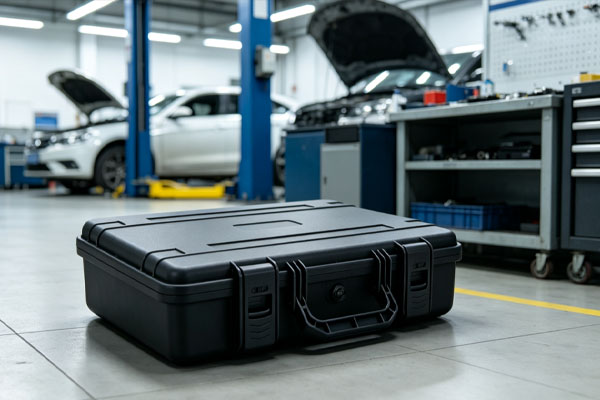
A properly designed toolbox can keep commonly used tools organized while reducing tool movement through compartments, drawers, foam inserts, and fixing structures. For technicians who need to work at different stations, wheeled tool carts or portable toolboxes can be provided so that tools can move with the technician. A professional automotive repair toolbox solution can also include customization options such as dimensions, colors, logos, interior layouts, and locks, allowing different positions to have clearer tool configurations. For automotive brands or 4S dealership groups with multiple locations, standardized toolbox appearances and internal layouts can also help create a more organized repair environment. Automotive after-sales toolbox solutions are typically configured according to different applications, including repair, inspection, mobile maintenance, and tool protection.
Plan Toolbox Configuration According to the 4S Dealership Repair Process
Different Repair Positions Require Different Tool Storage Methods
Not all technicians at an automotive 4S dealership use the same tools. Tool requirements vary between mechanical repair stations, body repair stations, electrical inspection stations, and quick maintenance stations. Therefore, toolbox design should start with the actual tool list. Mechanical technicians typically use wrenches, sockets, ratchet tools, screwdrivers, pliers, and certain specialized repair tools. Since there are usually many tools, larger multi-layer toolboxes or tool carts are suitable. Electrical repair technicians may use multimeters, diagnostic equipment, insulated tools, and other devices. Separate internal spaces should be reserved to reduce direct contact between precision equipment and metal tools. Quick maintenance stations place greater emphasis on fast access to frequently used tools, which can be stored in upper trays or easily accessible compartments.
Arrange Internal Positions According to Tool Usage Frequency
The internal layout directly affects the daily user experience of technicians.
| Tool Category & Common Tools | Recommended Storage Method |
| Frequently used repair tools | Wrenches, screwdrivers, sockets, pliers — upper trays or shallow drawers |
| Medium-sized repair tools | Ratchet tools, torque tools — separate drawers or fixing slots |
| Precision testing equipment | Diagnostic scanners, multimeters, testing equipment — dedicated areas with foam inserts |
| Small accessories | Screws, connectors, clamps — sorting boxes or separate compartments |
| Specialized tools | Special repair tools — customized slots or dedicated spaces |
This configuration can reduce mixed storage. After opening the toolbox, technicians can quickly identify where each tool belongs and easily check whether tools have been returned after use.
Make the Toolbox Suitable for the Daily Workflow of a 4S Dealership
Repair work at a 4S dealership is usually continuous, and the same technician may handle multiple vehicles during a single day. Therefore, the toolbox needs to balance capacity and accessibility. Fixed repair stations can use large-capacity tool cabinets or tool carts, while tools that need to be used across different stations can be placed in wheeled toolboxes. Equipment used for roadside assistance, mobile inspections, or temporary repairs can be stored in portable protective cases.
Select the Appropriate Toolbox Structure According to the Working Environment
Repair Workshops Require Load Capacity and Durability
Automotive repair workshops involve oil, dust, impacts, and frequent opening and closing. Toolboxes therefore need a stable overall structure. For large tool carts or fixed tool cabinets, factors such as overall load capacity, drawer service life, caster stability, and handle construction should be considered. If the toolbox remains at a fixed repair station for long periods, a larger-capacity structure can be selected to store commonly used tools, backup tools, and specialized tools separately. When frequent movement is required, casters and push handles can be added so technicians can move the tools directly to the vehicle.
Precision Testing Equipment Requires Better Internal Protection
Automotive diagnostic equipment, testing instruments, and electronic testing devices generally require more protection than ordinary wrenches. EVA foam, dividers, or fixing slots can be customized according to equipment dimensions to reduce movement during transportation. If a toolbox stores both testing equipment and ordinary metal tools, it is recommended to separate the two categories. Metal tools can collide during movement. Without an independent fixing structure, this may cause scratches to equipment housings or even affect normal equipment operation.
Portable Toolboxes Are Suitable for Mobile Repairs and Roadside Assistance
Some 4S dealerships also need to handle roadside assistance, on-site inspections, and temporary repairs. Large tool carts are usually unsuitable for these applications, so lighter protective cases are required.
| Application | Recommended Structure | Key Requirements |
| Fixed repair station | Large tool cabinet/tool cart | Large capacity, organized storage |
| Cross-station repair | Wheeled toolbox | Easy movement, quick access |
| Precision equipment transportation | Protective toolbox | Cushioning, fixing, protection |
| Roadside assistance | Portable toolbox | Lightweight, durable, easy to carry |
| Standardized dealership configuration | Customized toolbox | Unified dimensions, colors, and logo |
Using different structures for different applications can avoid situations where a small toolbox cannot hold enough tools or a large tool cabinet is inconvenient to move.
Improve 4S Dealership Tool Management Through Customized Design
Design Interior Foam According to Tool Shapes
One of the important elements of a customized toolbox is the internal structure. Standard dividers can separate storage areas, but they cannot completely secure tools with different shapes. Designing foam positions according to the tool list allows wrenches, sockets, testing equipment, and other tools to have fixed storage positions. When a tool is removed, the empty position is also clearly visible, allowing technicians to quickly identify missing tools.
A Unified Appearance Helps Establish Dealership Standards
4S dealerships need to maintain a clean and consistent service environment while improving repair efficiency. Toolboxes can be customized with colors, logos, nameplates, and tool classification labels according to corporate brand requirements. For example, different dealerships under the same automotive brand can use toolboxes with standardized specifications, helping maintain a consistent repair area. For 4S dealership groups, different sizes can be configured for different positions while maintaining a consistent exterior design.
Control the Process from Sample Confirmation to Mass Production
Automotive 4S dealership toolbox purchasing often involves multiple locations. Therefore, it is not recommended to begin with large-volume purchasing of standard products. A more practical process is to confirm the tool list and application requirements first, followed by dimension and internal layout design.
The process can generally be arranged as follows:
Requirement Communication → Tool List Confirmation → Toolbox Dimension Design → Internal Structure Design → Sample Confirmation → Material and Appearance Confirmation → Mass Production → Finished Product Inspection.
This approach helps identify problems related to dimensions, storage space, and actual use before mass production, reducing later modification costs.
Automotive 4S Dealership Toolbox Solution
Upgrade from Individual Toolboxes to a Complete Storage Solution
Guangzhou Siphia Case Co. can provide customized toolbox support for automotive repair, inspection, mobile services, and equipment transportation. Product designs can be adjusted in terms of case dimensions, materials, internal structures, foam layouts, locks, handles, colors, and logos. For automotive 4S dealerships, toolbox configurations can be planned separately for mechanical repair, electrical inspection, maintenance, and roadside assistance rather than requiring every position to use exactly the same product.
Balance Daily Use with Brand Presentation
Automotive repair toolboxes are used frequently every day, so product design needs to consider not only appearance but also durability, portability, and internal storage efficiency. Protective foam inserts can be designed for precision equipment. Layered structures and drawers can be added for large quantities of repair tools. More portable case designs can be selected for mobile repair work. Corporate logos, colors, and labels can also be integrated into the product design, allowing the toolbox to serve both as a storage solution for repair tools and as part of the unified image of the 4S dealership.
Suitable for Bulk Purchasing and Project Customization
For chain 4S dealerships, automotive brand after-sales service centers, and large repair companies, standardized designs can be developed according to actual purchasing quantities. Establishing standard dimensions and internal layouts can reduce product differences between locations and make future replenishment purchases easier.
| Customization Item | Available Design Options |
| Toolbox dimensions | Adjusted according to tool quantity and equipment dimensions |
| Internal structure | Foam, dividers, trays, fixing slots |
| Exterior | Colors, logos, nameplates, labels |
| Usage method | Hand carry, shoulder strap, casters, tool cart |
| Purchasing method | Sample confirmation, mass production, project customization |
Frequently Asked Questions
Q: Can automotive 4S dealership repair toolboxes be customized according to existing tool dimensions?
Yes. Customers can provide a tool list, tool photos, dimensional information, or existing samples. The internal space can then be designed according to actual storage requirements.
Q: Can different repair positions use different toolboxes?
Yes. Mechanical repair, electrical inspection, maintenance, and roadside assistance involve different tools, so toolbox capacity and internal structures can be designed separately.
Q: Can the 4S dealership logo be printed on the toolbox?
Yes. Logos, colors, labels, and other exterior elements can be customized according to project requirements, making them suitable for standardized corporate purchasing and brand image management.
Q: Is it necessary to purchase a sample before mass production?
For large-volume projects, sample confirmation is recommended. Samples can be used to check dimensions, tool placement, foam structures, and actual usability before mass production begins.
Q: Can precision testing equipment be stored in an automotive repair toolbox?
Yes, but independent spaces, foam inserts, and fixing structures are recommended to prevent testing equipment from directly colliding with metal tools.
Automotive 4S Dealership Repair Toolbox Customization Consultation
When purchasing repair toolboxes for an automotive 4S dealership, the product can be planned according to the existing tool quantity, repair positions, equipment dimensions, and frequency of use rather than simply selecting a fixed-size standard case. Different workstations can use different capacities and internal layouts. Frequently used tools can have dedicated storage positions, while precision equipment such as diagnostic scanners and testing devices can receive additional foam protection and fixing structures. For chain 4S dealerships, toolbox dimensions, colors, logos, and internal configurations can also be standardized, making long-term use and future replenishment purchases easier.
Guangzhou Siphia Case Co. can assist with toolbox dimensions, internal foam, dividers, trays, locks, handles, and exterior identification based on the tool list, product dimensions, photos, or actual application requirements provided by customers. Sample confirmation and mass production are also available. If you are looking for toolboxes for automotive repair, maintenance, inspection, or roadside assistance, you can contact us to discuss your specific requirements. Providing tool dimensions and estimated purchase quantities in advance can help determine a suitable product solution more efficiently.
Email: marktingoffice@siphiabox.com
WhatsApp / Phone: +1 6027256314