Everyday household life often involves simple repair tasks, such as tightening loose furniture screws, adjusting door handles, assembling cabinets, securing household equipment, installing small wall-mounted components, or performing basic bicycle maintenance. These tasks usually do not require the large equipment found in professional repair workshops. A few commonly used hand tools are often enough. If screwdrivers, wrenches, pliers, tape measures, and hex tools are scattered across drawers, cabinets, or storage areas, finding the right tool can become inconvenient when a repair is needed. A mini toolbox can keep these frequently used small tools together, allowing household users to quickly find the appropriate tool when dealing with minor repairs. Its compact size and efficient structure also take up very little storage space, making it a practical choice for keeping basic repair tools at home.
A Mini Toolbox Is Suitable for Storing Common Household Repair Tools
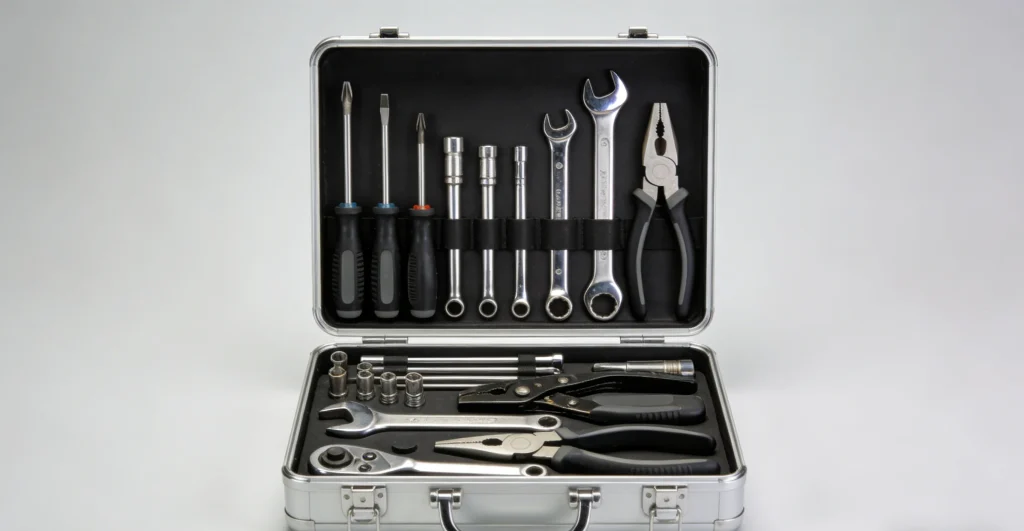
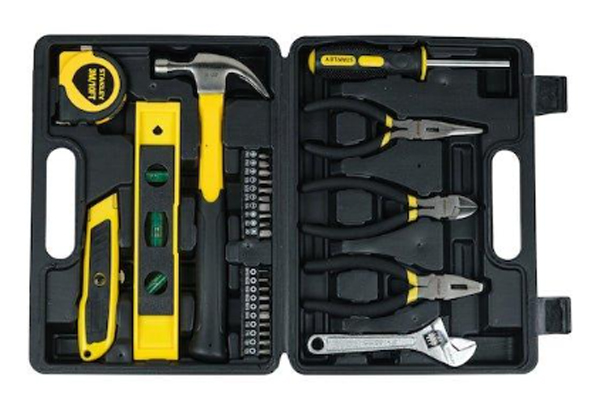
Household repairs generally involve a limited number of tools, but the types of tools tend to remain relatively consistent. A mini toolbox can be configured with a basic set of tools based on actual household needs and keep commonly used equipment together. For example, screwdrivers can be used for furniture, doors, windows, and small equipment, while needle-nose pliers and diagonal cutters are useful for gripping and cutting tasks. A small adjustable wrench can handle nuts of different sizes, while hex keys are useful for furniture assembly and bicycle adjustments. Tape measures, levels, screwdriver bits, and a small selection of spare screws can also be included depending on the available storage space. By combining these frequently used tools, a compact toolbox can cover many basic household repair tasks without requiring a large professional tool cabinet.
The Compact Size Fits Limited Household Storage Space
Unlike professional workshops, homes generally have limited areas dedicated to tool storage. A toolbox needs to fit naturally into cabinets, storage rooms, balconies, garages, or even spaces near a desk. A mini toolbox uses a compact body that can fit inside drawers, cabinet compartments, storage shelves, or vehicle trunks without significantly taking away space from other household items. This size advantage is particularly useful in smaller homes. Instead of leaving repair tools scattered across a desk or storage area, users can return them to the toolbox after use and place the box in a designated location. Its compact size also makes it easier for household members to move the toolbox when only a few screwdrivers or wrenches are needed.
Organized Storage Makes Household Repairs More Convenient
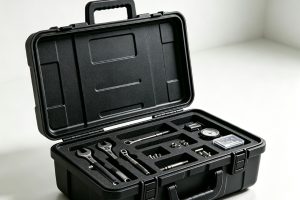
Household repairs often happen unexpectedly, so users generally want to locate the required tools quickly. If tools are kept together in an unorganized drawer, finding a specific item may take longer than the actual repair work. A mini toolbox can use internal slots, trays, dividers, and small compartments to organize different tools. Screwdrivers can be stored together, pliers and wrenches can have their own areas, while screws, washers, and small connectors can be placed in separate compartments. Household users can establish simple fixed storage locations based on their own habits, giving frequently used tools a clear place to return to after use. Returning tools immediately after completing a repair can also prevent them from gradually becoming scattered throughout the home.
A Mini Toolbox Can Support Many Household Repair Applications
Household maintenance is not limited to one type of task. The same toolbox may be used for furniture assembly, door and window adjustments, basic equipment maintenance, bicycle servicing, and simple hardware replacement. A mini toolbox can be configured according to actual household needs rather than following one fixed tool combination. Common applications can include:
- Furniture Assembly and Adjustment: Screwdrivers, hex tools, and small wrenches can be used for assembling and tightening tables, chairs, cabinets, shelves, and other furniture.
- Door and Window Maintenance: Screwdrivers, pliers, tape measures, and adjustable wrenches can help with loose handles, screw adjustments, and basic hardware replacement.
- Household Equipment Maintenance: Precision screwdrivers, small pliers, and other suitable tools can be prepared for basic external maintenance of certain household equipment.
- Bicycle Maintenance: Hex keys, small wrenches, and screwdrivers can be used for routine adjustments involving seats, handlebars, brake components, and other adjustable parts.
- DIY Projects: Cutting tools, measuring tools, precision screwdrivers, and small files can provide basic support for simple household DIY projects.
Configuring the toolbox according to actual household repair tasks can prevent the storage space from being filled with tools that are rarely used, allowing the available capacity to focus on practical equipment.
A Lightweight Structure Makes Daily Household Use Easier
Household repair tools are not necessarily used by one dedicated person. Adults, DIY enthusiasts, or other family members may need to handle simple repair tasks at different times. As a result, the operating convenience and carrying weight of the toolbox are also important. Mini toolboxes generally feature lightweight bodies and straightforward opening mechanisms, allowing users to see and access the tools inside relatively easily. When a furniture component becomes loose, a cabinet needs adjustment, or a small item needs to be installed, users can simply carry the toolbox to the repair location, complete the task, and return the tools to the box afterward. For situations where tools need to be moved between rooms, balconies, and garages, the compact body can also reduce the effort required for transportation. A practical handle, secure latch, and properly designed lid can further help keep the tools stable during storage and movement.
Another reason a mini toolbox is suitable for household repairs is that it can help establish a clearer tool management system at home. Many households do not necessarily lack repair tools; the problem is that the tools are scattered across different locations and are difficult to find when needed. A dedicated mini toolbox can bring frequently used repair equipment together and allow the tool selection to be adjusted according to changing household requirements. For example, after moving into a new home, users may add hex tools and screwdrivers for furniture assembly. During everyday use, they may keep an adjustable wrench, pliers, tape measure, and basic fastening tools inside. If bicycle maintenance is common, suitable hex keys and small repair accessories can also be added. This flexible configuration allows the toolbox to adapt to actual household needs instead of storing a fixed collection of tools that may rarely be used.
When choosing a mini toolbox for home use, users should also consider the material, load capacity, opening mechanism, and internal dimensions. Plastic toolboxes are generally lightweight and suitable for ordinary household use, while metal or reinforced structures may be more appropriate for environments requiring greater durability. The internal dimensions should match the tools intended for storage. Tools that are too long may not fit properly, while a toolbox that is unnecessarily large can waste storage space. The latch should close securely, the handle should have sufficient connection strength, and the bottom should be able to support the combined weight of the stored tools. For household users, a practical toolbox does not necessarily need to be the largest option. It should instead match the actual number of tools and repair requirements.
A mini toolbox can keep commonly used household repair tools together while reducing storage requirements and the time spent searching for equipment. Its compact size fits household storage environments, its organized interior supports quick access, its flexible configuration can accommodate furniture, doors, windows, bicycles, and DIY projects, and its lightweight body makes daily movement easier. For users who want to keep a basic repair tool set at home, choosing a mini toolbox with suitable capacity, practical organization, and reliable durability can make everyday repairs more convenient while creating a more orderly household tool management system.