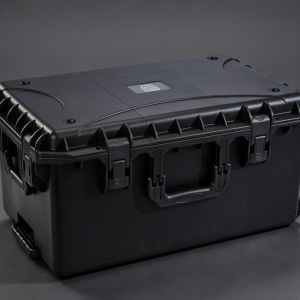
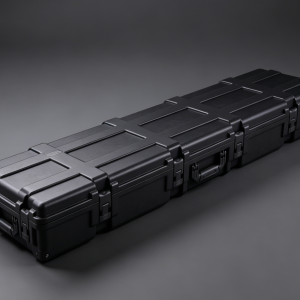
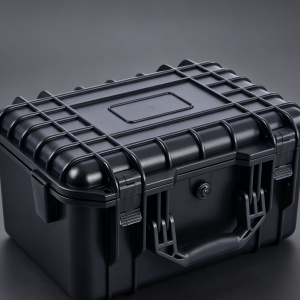
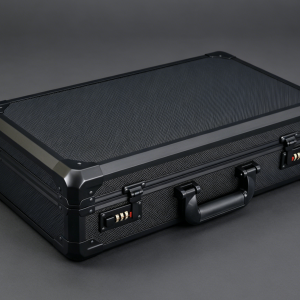
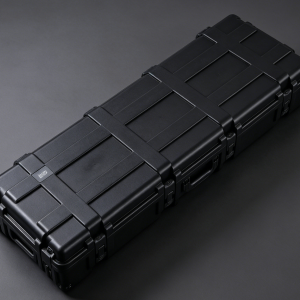
A toolbox is not necessarily better just because it is larger, nor is a smaller toolbox always more convenient. Home repairs, automotive maintenance, electrical work, industrial maintenance, and precision equipment transportation all involve different tools and equipment, so their storage requirements can vary significantly. Choosing the right toolbox size requires a balance between storage capacity, portability, protection, and actual working needs.
Why Should Toolbox Size Match the Type of Tools?
Compact Toolboxes for Small Tools
Screwdrivers, wrenches, pliers, measuring tapes, hex keys, and small electronic repair tools are usually compact and relatively easy to organize. For these tools, an oversized toolbox may waste space and make transportation less convenient.
A small portable toolbox is suitable for home DIY projects, daily maintenance, electronic repairs, and mobile service work. Compartments, fixed slots, or foam inserts can help organize individual tools and keep frequently used items in fixed positions.
Medium Toolboxes for Balanced Storage and Portability
When the number of tools increases, or when users need to carry hand tools, power tools, and accessories at the same time, a medium-sized toolbox can provide a practical balance between capacity and portability.
For automotive technicians, electricians, and equipment maintenance professionals, a medium toolbox can serve as an everyday storage solution without becoming difficult to move.
Large Equipment Requires More Protective Space
Measuring instruments, testing equipment, industrial devices, and large tools require more than simple storage space. In addition to the length, width, and height of the equipment itself, users also need to consider foam inserts, shock-absorbing materials, partitions, and clearance around the equipment.
When selecting a protective case, the actual internal dimensions are especially important. The external dimensions alone do not determine whether the equipment will fit properly.
The Key Logic Behind Toolbox Size Selection
Measure the Tools Before Choosing the Internal Dimensions
Before purchasing a toolbox, measure the length, width, and height of the tools that need to be stored. For larger equipment, remember to measure handles, connectors, protruding components, and irregular structures.
The internal dimensions should be slightly larger than the largest tool or device. Additional space may also be required for foam, EVA inserts, dividers, or other protective materials. A device fitting into a case does not necessarily mean the case is the right size for transportation.
Do Not Focus Only on External Dimensions
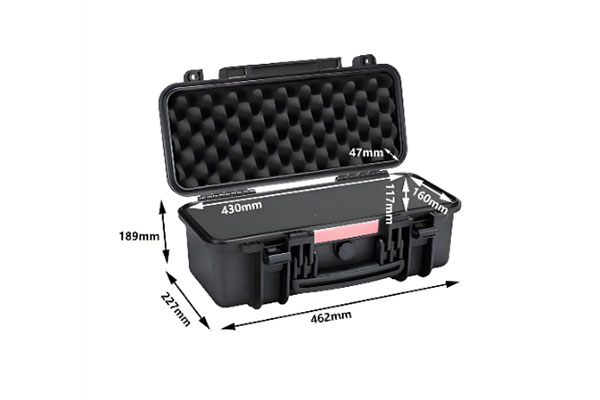
Toolboxes have both external and internal dimensions. External dimensions mainly affect transportation, storage, and placement, while internal dimensions determine whether tools or equipment can actually fit inside.
Wall thickness, reinforcement structures, trays, sealing components, and protective inserts can reduce usable internal space. Therefore, two toolboxes with similar external dimensions may offer different usable capacities.
Leave Room for Future Expansion
The number of tools often increases as work requirements change. If a toolbox is already completely full, adding just a few new tools may require purchasing another storage solution.
For professional users, leaving some additional space can make the toolbox more practical over the long term. Modular or stackable toolbox designs can also provide greater flexibility by allowing storage capacity to expand as tool collections grow.
What Toolbox Size Is Suitable for Different Applications?
Home Repair and DIY
Home users generally do not need to carry large quantities of professional equipment. A small or medium toolbox is usually sufficient for screwdrivers, wrenches, pliers, measuring tapes, and other everyday tools.
The focus should be on portability, clear organization, and easy access rather than maximum storage capacity.
Automotive Repair and Mobile Work
Automotive repair often involves sockets, wrenches, power tools, adapters, and various accessories. Compared with basic household tools, these items require more storage space.
A medium-sized toolbox or rolling toolbox can be more suitable for automotive technicians. When tools need to be moved frequently between workstations, a rolling toolbox can reduce the physical effort required for transportation. Large mobile tool storage is also useful for professional technicians with extensive tool collections.
Industrial Equipment and Precision Instruments
Industrial testing equipment, measuring instruments, and electronic testing devices require stronger protection in addition to sufficient storage space.
Foam or EVA inserts can be customized according to the shape of the equipment, helping keep devices securely positioned during transportation. For these applications, users should determine the required internal space first and then select the appropriate toolbox size.
Is a Larger Toolbox Always Better?
A large toolbox can hold more tools, but it may also increase weight, take up more storage space, and add transportation costs. If the user only has a limited number of tools, an oversized toolbox can result in wasted space and poor organization.
On the other hand, a toolbox that is too small may force users to stack tools together. This makes individual tools harder to access and can increase the risk of tools or equipment hitting each other during transportation.
The right toolbox size should meet three basic requirements: enough space for existing tools, sufficient room for protective materials, and reasonable capacity for future expansion.
Building the Right Toolbox Selection Strategy
From small hand tools to large industrial equipment, toolbox selection should follow a practical sequence: tool dimensions → tool quantity → application → transportation method → protection requirements.
If the toolbox is mainly used for small hand tools, a compact portable toolbox may be the right choice. For complete repair tool sets, a medium or rolling toolbox can provide better organization and mobility. For large equipment, precision instruments, or professional testing devices, users should pay closer attention to internal dimensions, foam inserts, shock resistance, waterproofing, and dust protection.
For equipment with unusual dimensions or specialized structures, a standard toolbox may not provide the best fit. Customized internal layouts and dimensions can offer better protection and storage efficiency.
Siphia Tool Box provides different toolbox and protective case solutions for various applications, including portable toolboxes, rolling toolboxes, stackable storage solutions, and professional protective cases.
From a single screwdriver to large industrial equipment, toolbox size selection should always be based on actual storage and working requirements. A larger toolbox does not automatically mean a more professional solution. A toolbox that matches the size, quantity, and protection requirements of the tools can deliver much better efficiency.By considering internal dimensions, external dimensions, tool quantity, transportation requirements, protection needs, and future expansion, users can select a toolbox that provides the right combination of storage, protection, and portability.