
As the demand for home repairs, equipment maintenance, and engineering tasks continues to increase, the general maintenance basic toolbox has become a common configuration in many scenarios. Whether for daily home repairs, electrical appliance installation, equipment troubleshooting, or on-site engineering maintenance, a well-structured and clearly organized toolbox significantly improves work efficiency. Tools that are chronically disorganized affect repair progress and also lead to tool loss or inconvenience during use. A scientifically designed general maintenance basic toolbox solution not only optimizes the tool management process but also helps users complete tasks more efficiently in various repair scenarios.
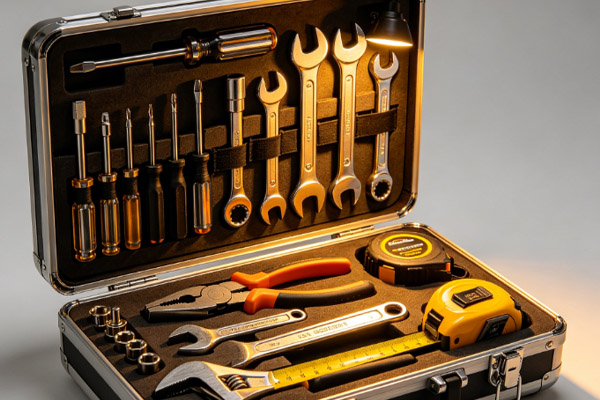
The Growing Importance of the General Maintenance Basic Toolbox
As maintenance needs become more diverse, the toolbox is no longer just a simple storage container but an important component of repair efficiency and on-site management. A reasonable configuration helps users quickly complete different types of repair tasks.
Improves repair work efficiency and reduces tool search time
During repairs, frequently searching for tools significantly impacts overall operational efficiency. Tools that are chronically disorganized also increase on-site confusion.
- Quick access to commonly used tools: High-frequency tools such as screwdrivers, wrenches, and pliers should be placed in the most accessible locations for rapid basic operations.
- Separate management for different tool categories: Electrical tools, measuring tools, and fastening tools should be in independent zones to reduce confusion during use.
- Centralized storage for small parts: Small accessories like screws, washers, and connectors need to be managed together to avoid loss or misplacement.
Reasonable tool classification significantly reduces repetitive operations during repairs and improves overall workflow smoothness.
Improves on-site management standardization and optimizes user experience
Whether for home repairs or engineering tasks, standardized tool management directly affects the user experience.
- Neater tool placement: With clear classification, the repair site becomes more organized, reducing temporary searching.
- Reduces risk of tool damage: When tools are independently fixed, collisions and wear are reduced, improving long-term usability.
- Improves multi-person collaboration efficiency: In scenarios where multiple people are repairing together, unified management facilitates quick task division and tool sharing.
Standardized tool management not only improves efficiency but also enhances the overall sense of professionalism.
How to Scientifically Configure a General Maintenance Toolbox
A maintenance toolbox is not about having the largest capacity possible; rather, a reasonable structure and clear functionality are more important. Scientific configuration improves actual use efficiency and facilitates future expansion.
Basic Maintenance Tool Configuration to Meet Common Repair Needs
The basic tool area is the most core part of the entire maintenance toolbox. It can handle most daily repair operations.
- Common hand tools: Screwdrivers, adjustable wrenches, needle-nose pliers, and hammers are basic high-frequency tools and should be permanently configured.
- Measuring tools: A tape measure, voltage tester, and spirit level help improve repair accuracy.
- Fastening and disassembly tools: Hex keys, socket tools, and small wrenches are suitable for equipment installation and disassembly.
- Small parts area: Screws, cable ties, and insulating tape should be stored centrally for quick access when needed.
Once the basic tool configuration is complete, it can meet most home and basic engineering repair needs.
Layered and Modular Design Improves Tool Management Efficiency
A Reasonable structural design makes the maintenance toolbox more efficient and suitable for long-term use.
| Configuration Area | Main Function | Common Tools |
| Hand Tool Area | Basic repairs | Wrench, screwdriver |
| Measuring Tool Area | Precision inspection | Tape measure, voltage tester |
| Accessory Storage Area | Small parts organization | Screws, cable ties |
| Electrical Tool Area | Circuit repair | Insulated tools |
- Prioritize high-frequency tools: Frequently used tools should be placed in the outer layers to reduce repeated searching.
- Clearer layered structure: Different layers for different purposes improve overall storage efficiency.
- Label management improves identification: Text or color coding allows for quick tool location confirmation.
After scientific zoning, the entire repair process becomes more stable and orderly.
Different Repair Scenarios Suit Different Toolbox Solutions
Different usage scenarios have different requirements for a toolbox. Adjusting the configuration based on actual needs further improves practicality.
Home Repair Scenarios Emphasize Portability and Basic Functionality
Home repairs typically focus on simple installations and daily maintenance, so practicality is key.
- Keep high-frequency basic tools: Daily home use mainly involves screwdrivers, pliers, tape measures, etc.The configuration doesn’t need to be overly complex.
- Control overall size: A home toolbox needs to be easy to store without taking up too much space.
- Improve mobility: Adding a handle design allows for quick movement between different rooms.
After optimization for home scenarios, overall use becomes easier and more convenient.
Engineering Repair Scenarios Emphasize Durability and Expandability
Engineering repairs often face more complex working environments, so the toolbox needs greater stability.
- Add professional tool configurations: Electrical tools or equipment repair tools can be added based on work requirements to improve adaptability.
- Improve load-bearing and impact resistance: In high-frequency transport environments, a pressure-resistant structure is more important.
- Support modular expansion: When adding tools later, the internal layout can be flexibly adjusted to improve long-term usability.
Professional configurations are more suitable for long-term engineering repair and equipment maintenance scenarios.
Modern Maintenance Toolboxes Focus More on Specialization and Durability
As the maintenance industry continues to develop, toolbox design is also upgrading towards greater specialization. More and more people are beginning to value tool management efficiency and long-term user experience.
Modular Structure Improves Multi-Scenario Adaptability
Modular design allows for flexible adjustment of the internal structure based on different maintenance needs.
- Supports quick detachment for use: Core tool modules can be carried separately, suitable for temporary repairs.
- Easier future expansion: When adding new tools, the layout can be flexibly adjusted to improve long-term storage capability.
- Improves tool organization efficiency: With different areas managed independently, tool confusion is reduced.
Modular structure is becoming an important trend in modern maintenance tool management.
Protection and Durability Performance Upgrades to Adapt to Complex Work Environments
Repair environments are complex, so the stability of the toolbox itself is increasingly important.
- Waterproof and dustproof structure: Reduces ingress of dust and moisture, improving protection for internal tools.
- Pressure-resistant materials are more durable: Less likely to be damaged during long-term transport and handling, more suitable for high-frequency use.
- Portable mobility design: Some toolboxes include wheels or shoulder straps for easy movement during prolonged use.
A more stable structural design allows the maintenance toolbox to provide long-term value.
A scientifically designed general maintenance basic toolbox improves repair efficiency and helps establish a more standardized and orderly tool management system. From basic hand tools to professional repair configurations, from home scenarios to engineering maintenance needs, every detail affects the actual user experience. As maintenance demands continue to increase, professional and systematic tool storage solutions are gaining more attention. SIPHIA BOX focuses on high-quality tool storage solutions, providing more efficient and reliable support for modern maintenance and equipment management through reasonable structural design and professional storage concepts.