Musical instruments are highly susceptible to impacts, temperature changes, and humidity fluctuations during transportation, storage, and frequent movement. The role of an instrument case is to provide a stable and protective environment. Many types of damage don’t occur during performance but accumulate gradually during carrying or storage, such as cracks in the body, wear on the finish, and neck deformation. A well-designed instrument case can significantly reduce these risks, keeping the instrument stable in various usage scenarios. To truly reduce the probability of damage, attention must be paid to details such as cushioning structure, internal fixation, outer shell strength, and environmental control.
The Important Role of Internal Cushioning Structure in Protection
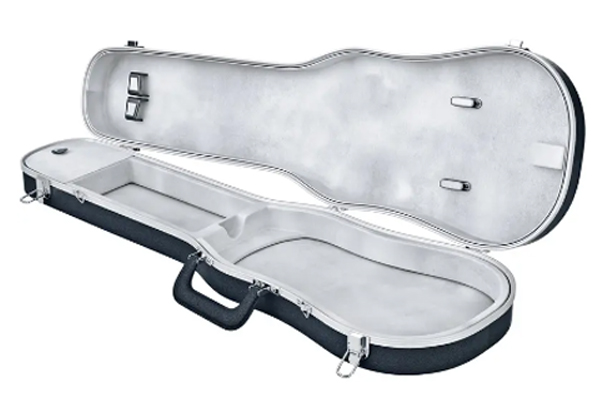
The internal cushioning layer of an instrument case is the first line of defense for the instrument, typically made of sponge, velvet, or high-density foam. High-quality cushioning materials absorb energy upon impact, reducing vibrations directly transmitted to the instrument, thus preventing cracks or structural loosening.
Different instruments have different cushioning needs. For example, guitars require soft support that conforms to the body’s curves, while violins require more precise positioning support. A cushioning layer that is too hard will cause pressure, while one that is too soft will not hold the instrument in place. Therefore, density and shape design are crucial.
When choosing a case, pay attention to:
- Whether it uses high-density memory foam
- Whether the lining conforms to the instrument’s contours
- Whether it has a multi-point support structure.
A reasonable cushioning design can effectively reduce impact damage during transportation.
Fixing Structure to Prevent Internal Displacement
Moving of the instrument inside the case is one of the common causes of damage, especially in bumpy environments. Without a fixing structure, the instrument will constantly collide with the case, leading to surface scratches or even structural loosening.
High-quality instrument cases are usually designed with special fixing slots, straps, or locking devices to keep the instrument stable inside the case, preventing it from moving even in tilted or vibrating environments.
When choosing a case, pay attention to:
- Whether it has a neck fixing structure
- Whether it has anti-slip straps or elastic fixing devices
- Whether there is significant room for movement after the instrument is placed inside.
A stable internal fixing structure can significantly reduce the probability of accidental damage during transportation.
Shell Strength and Impact Resistance
The instrument case shell provides the first layer of physical protection. Common materials include hard plastic, wood, and carbon fiber composites. Different materials exhibit significant differences in impact resistance. Hard shells effectively disperse external forces, reducing the impact directly transmitted to the interior.
Carbon fiber is lightweight and high-strength, suitable for frequent performances or long-distance transport; wood structures offer good stability but are heavier; hard plastic strikes a balance between cost and protection, suitable for everyday use.
Pay attention to the following details:
- Does the shell have a pressure-resistant structure design?
- Are the corners reinforced?
- Has it passed drop tests or impact tests?
The higher the shell strength, the stronger the overall protection for the instrument.
Humidity and Temperature Control for Instrument Protection
Instruments, especially wooden ones, are very sensitive to environmental changes. Excessive humidity can easily lead to expansion and deformation, while excessively low humidity may cause cracking. Instrument cases can isolate the instrument from external environmental changes to some extent, but high-end models often incorporate humidity control designs. Some instrument cases have space reserved for desiccants or employ a more airtight design to reduce the impact of air exchange. This design is especially important in environments with large temperature differences.
When using an instrument case, pay attention to:
- Whether it has a good sealing structure
- Whether it supports the placement of humidity control devices
- Whether the case is easily deformed by temperature differences
Stable environmental control can extend the overall lifespan of the instrument.
Relationship between Daily Usage Habits and Protective Effect
Even with a well-designed instrument case, improper use can reduce its protective effect. For example, excessive pressure, overloading, or improper closure of the case can lead to internal structural failure, increasing the risk of instrument damage.
Maintaining proper storage and handling methods is crucial in daily use. Avoiding prolonged exposure of the instrument case to high temperatures or humidity can also reduce the rate of material aging.
Some suggestions include:
- Ensure the latches are fully closed after each use
- Avoid placing heavy objects on the instrument case
- Regularly check for deformation of the internal cushioning materials
Good usage habits combined with a reasonable structural design can minimize the probability of instrument damage.