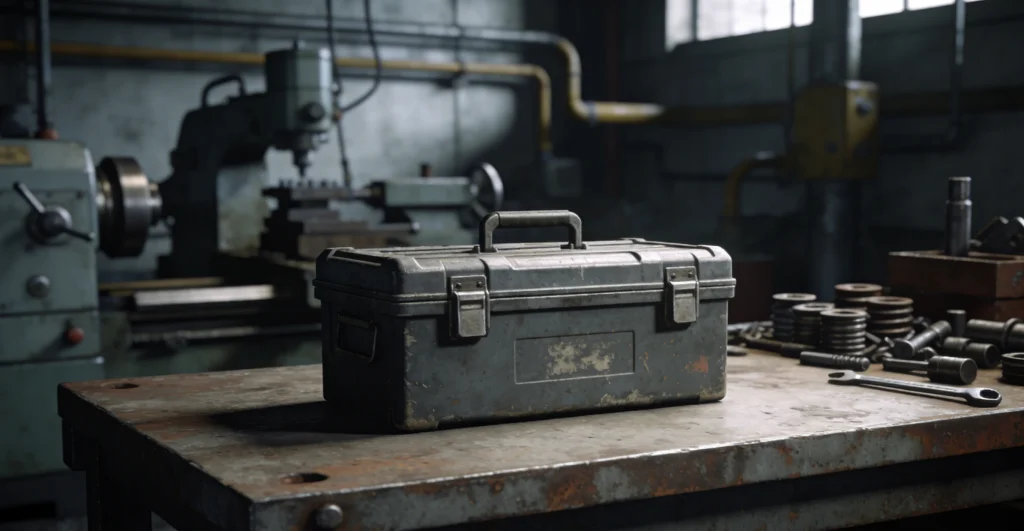
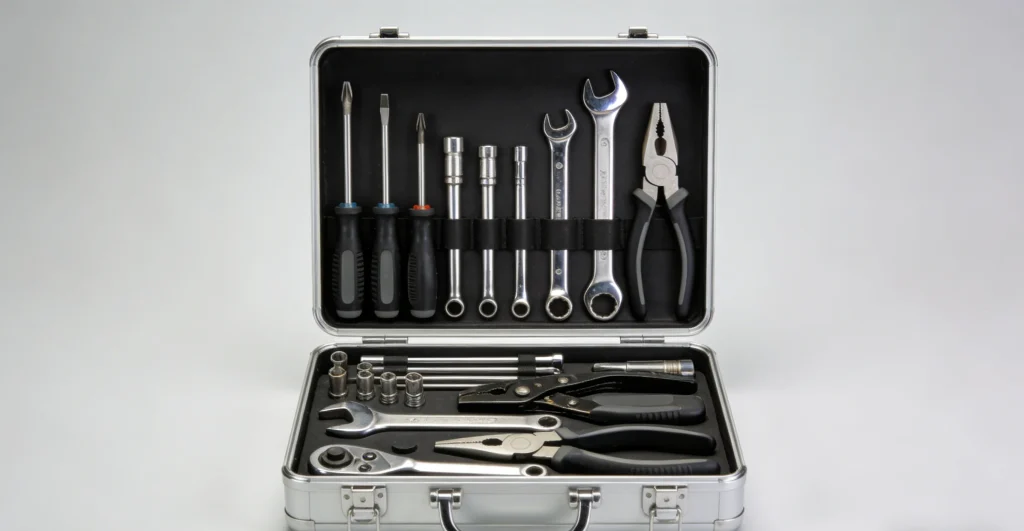
Large equipment maintenance projects often last for extended periods and involve tasks such as disassembly, measurement, commissioning, and component replacement. Maintenance personnel need to prepare a large number of tools while also dealing with dispersed workstations, tool transportation, and on-site organization. Rolling toolboxes can centralize tools of different specifications and coordinate with maintenance workflows through mobile structures, making it easier for workers to prepare, access, and transfer tools during complex projects.
Why Do Large-Scale Maintenance Projects Need Rolling Toolboxes?
Large maintenance tasks usually involve multiple continuous processes, with significant changes in tool types and frequency of use. A well-designed mobile storage method can reduce the time spent preparing and transferring tools, making maintenance workflows more continuous.
Reduce Repeated Trips to Retrieve Tools
During large equipment maintenance, workers may need to use wrenches, sockets, screwdrivers, pliers, power tools, and inspection equipment continuously. If all tools are stored in a fixed location, maintenance personnel may need to make frequent trips back and forth.
- Frequently used tools can be placed in the rolling toolbox in advance.
- The toolbox can be moved directly to the equipment being serviced.
- When the work location changes, the toolbox can be pushed to the new position.
- Time interruptions caused by searching for and transporting tools can be reduced.
Bringing tools directly to the maintenance area can make transitions between different work processes smoother.
Centralize the Management of Large Maintenance Tool Sets
Large maintenance projects usually require many tools with different specifications, making organized storage particularly important.
- Wrenches, sockets, and screwdrivers can be arranged in different drawers according to specifications.
- Power tools and larger equipment can be placed in deeper storage areas.
- Small items such as screws, washers, and fittings can be managed using compartmentalized storage.
- Low-frequency tools can be separated from frequently used tools.
Fixed storage positions make it easier for maintenance personnel to identify required equipment and facilitate inventory and tool return after the project.
How Can Rolling Toolboxes Improve Efficiency at Large Maintenance Sites?
Maintenance efficiency depends not only on operator speed. Tool preparation, access, movement, and positioning at the worksite can also influence the overall execution schedule.
Arrange Tool Positions According to the Maintenance Workflow
Different maintenance tasks require tools in different sequences, so internal storage can be planned around the actual workflow. Frequently used wrenches and screwdrivers can be placed in easily accessible drawers; inspection instruments can have dedicated areas to reduce contact with metal tools; backup tools and low-frequency equipment can be stored in lower drawers or other storage areas. Arranging tools according to the work sequence can reduce repeated searching and help workers move more quickly to the next maintenance operation.
Adapt to Mobile Maintenance Between Different Equipment
Large maintenance projects may involve several pieces of equipment, requiring workers to change locations repeatedly. Rolling toolboxes combine tool storage with on-site mobility.
- They can be moved between different maintenance workstations in workshops.
- They can be pushed directly to the target equipment during industrial maintenance.
- Their parking position can be adjusted according to different engineering work areas.
- During temporary repairs, only the core tools needed for the day’s task can be carried.
For maintenance tasks across multiple areas, mobile storage can reduce repeated transfers between fixed cabinets and work locations.
How Can Safety Structures Reduce Movement and Tip-Over Risks in Large Maintenance Projects?
Large rolling toolboxes become significantly heavier when loaded with large quantities of metal tools. Safety design should therefore consider more than locking mechanisms and should pay particular attention to drawer interlocks, center of gravity, caster brakes, and movement across complex floor conditions.
Anti-Tip Interlock Is an Important Safety Structure for Heavy-Duty Multi-Drawer Toolboxes
When multiple deep drawers are pulled out at the same time, heavy sockets, power tools, and inspection equipment inside the drawers can shift the toolbox’s center of gravity forward, increasing the risk of tipping. For heavy-duty, multi-drawer industrial toolboxes, buyers should pay particular attention to the single-drawer anti-tip interlock mechanism.
- Opening one drawer can restrict other drawers from being opened simultaneously, reducing sudden forward loading.
- Heavy tools should preferably be stored in lower drawers to reduce high-level concentrated loads.
- Drawer loads should be distributed as evenly as possible and remain within the specified load capacity.
- The interlock mechanism should work together with the toolbox base, casters, and overall center-of-gravity design.
An anti-tip interlock cannot replace proper loading and safe operation, but it is an important safety configuration to evaluate when purchasing heavy-duty mobile toolboxes.
Braking and Caster Structures Need Attention on Slopes and Uneven Floors
Large maintenance sites may include ramps, thresholds, floor joints, oil-contaminated surfaces, or uneven concrete floors. The inertia and pushing resistance of a fully loaded toolbox can increase under these conditions. During purchasing, buyers can pay attention to:
- Centralized braking: Makes it easier to lock the casters together when parking and reduce unintended movement.
- Directional wheel locks: Can improve straight-line stability during long-distance transportation where maintaining a fixed direction is important.
- Wheel diameter and width: Should be selected according to thresholds, floor gaps, and load requirements.
- Wheel material: PU wheels can be used in applications requiring a balance of wear resistance and some vibration absorption, while metal wheels may be suitable for certain heavy-duty environments, subject to floor conditions.
- Parking on slopes: Caster brakes should not be relied on as the only measure. On significant slopes, additional anti-slip or blocking measures should be adopted according to site safety requirements.
Casters, brakes, the base frame, and the toolbox body need to form a complete mobile support system rather than being evaluated only by the load capacity of individual casters.
How Should the Right Rolling Toolbox Be Selected for Large-Scale Maintenance Projects?
Large maintenance projects can have very different tool configurations. Purchasing decisions should consider capacity, load bearing, safety structures, mobility conditions, and future expansion requirements.
Determine Capacity According to Tool Quantity and Weight
When there are many tools, buyers can focus on drawer quantity, depth, and internal layout. Heavy-duty sockets, power tools, and inspection equipment need drawers with suitable load capacities. After fully loading the toolbox, the overall load capacity of the casters, base frame, and toolbox body should also be verified. If the number of tools is expected to increase, some expansion capacity can be reserved, while corresponding tool configurations can be established for different maintenance positions to reduce the pressure of replacing the entire storage system later.
Determine Mobility and Protection Structures According to the Maintenance Environment
Workshop maintenance places greater emphasis on caster maneuverability, drawer access, and overall stability, while outdoor engineering maintenance requires greater attention to ramps, floor conditions, dust, moisture, and equipment protection. Before purchasing, the toolbox can be tested under realistic loading conditions, including full-load pushing, turning, parking on slopes, and drawer opening. Precision inspection equipment can also be protected with customized inserts, allowing the mobile structure and internal protection system to work together.
When selecting a rolling toolbox for a large maintenance project, the actual maintenance workflow should be translated into specific configuration requirements, with drawer load capacity, single-drawer interlock, caster braking, and internal protection evaluated individually. For projects involving large numbers of tools, high-value equipment, and long-term mobility, customized internal layouts can also provide dedicated storage positions for different types of equipment. SIPHIA BOX specializes in toolboxes, protective cases, aluminum cases, and customized storage solutions, and can plan internal structures and mobility configurations according to the equipment specifications and operating conditions of large maintenance projects.