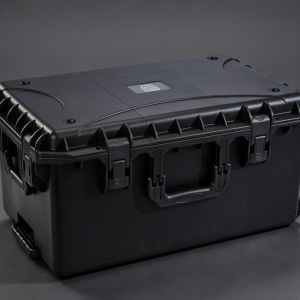
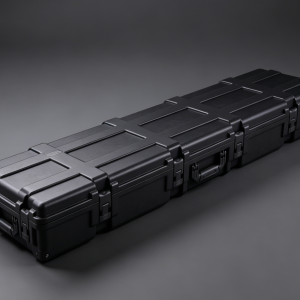
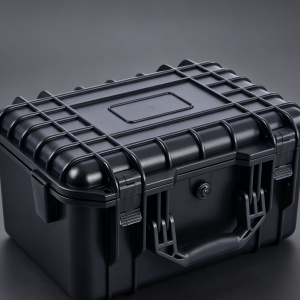
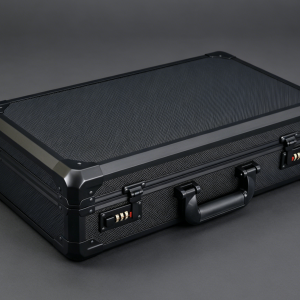
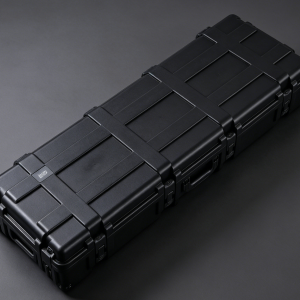
Metal toolboxes are widely used in automotive repair, industrial manufacturing, equipment maintenance, and warehouse management. Welding quality affects not only the appearance of a toolbox but also its structural strength, load-bearing capacity, and service life. If welds contain cracks, pores, or weak connections, the toolbox may deform or experience structural failure when carrying heavy tools, being moved, or stacked. Evaluating welding quality therefore requires a comprehensive assessment of welding processes, weld appearance, and structural reliability.
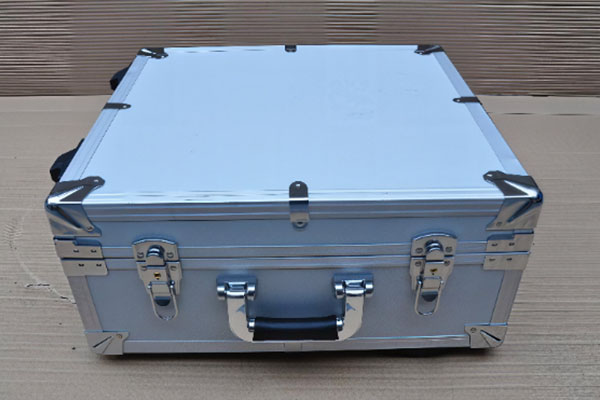
Why Is Welding Quality Important for Metal Toolboxes?
Impact on Structural Strength
Metal toolboxes typically consist of bottom panels, side panels, frames, and other metal components. Welding joins these parts together to create a stable structure. If the welds lack sufficient strength, the connections may crack or loosen under prolonged loading, reducing the toolbox’s load-bearing capacity.
Impact on Appearance and Corrosion Resistance
Uneven welds, excessive spatter, and localized burn-through can affect product appearance and increase the difficulty of grinding and surface finishing. For powder-coated or painted metal toolboxes, improper weld preparation may also affect coating adhesion and increase the risk of localized corrosion.
What Welding Processes Are Commonly Used for Metal Toolboxes?
Gas Metal Arc Welding
Gas metal arc welding is suitable for joining various metal sheets and enclosure components. It offers relatively high welding efficiency and is well suited to automated production. During welding, manufacturers must control current, voltage, travel speed, and shielding gas flow to reduce defects such as porosity, lack of fusion, and irregular weld formation.
Resistance Spot Welding
Resistance spot welding can be used to join overlapping sections of sheet metal in certain toolbox designs. Weld quality depends on electrode pressure, welding current, welding time, and the fit between the metal sheets. Spot welds should be distributed according to structural loading requirements. Insufficient weld points or inappropriate spacing can compromise connection stability.
Matching Welding Processes to Metal Sheets
Different material types, sheet thicknesses, and structural designs require different welding parameters. Excessive heat input may cause burn-through or panel distortion, while insufficient heat input may result in incomplete fusion. Manufacturers should validate the welding procedure before production and maintain consistent operating conditions throughout the manufacturing process.
How to Inspect Welding Quality in Metal Toolboxes
Examine Weld Appearance
Inspect welds for consistency and continuity, paying particular attention to visible cracks, pores, slag inclusions, undercut, burn-through, and incomplete weld filling. Check whether welding has caused noticeable panel warping and whether excessive spatter interferes with the edges or moving components of the toolbox.
However, a neat-looking weld does not necessarily guarantee adequate strength. Critical load-bearing areas, such as structural frames and handle brackets, require additional inspection methods where appropriate.
Check Connections and Enclosure Dimensions
Inspect the connections between the bottom panel and side panels, the frame and enclosure, and the handle brackets and main body. Look for loose joints, visible gaps, or other signs of poor assembly. After welding, measure the toolbox’s length, width, diagonal dimensions, and key mounting positions to verify that the overall geometry meets the specified drawing requirements.
Use Appropriate Inspection Methods
For general-purpose metal toolboxes, visual inspection and dimensional measurement can identify many common defects. For critical load-bearing areas, validated load testing may be performed according to product requirements to evaluate deformation under specified loads.
If internal weld defects require further investigation, suitable nondestructive testing methods may include liquid penetrant testing, magnetic particle testing, or other applicable techniques, depending on the material thickness, joint configuration, and quality requirements. Testing should be conducted by qualified personnel in accordance with applicable standards.
How to Ensure Welding Quality Through Production Management
Control the Welding Process
Manufacturers should establish clear welding procedures covering material cleanliness, joint gaps, welding parameters, and operating methods. Welding equipment and fixtures should also be inspected regularly. Stable production conditions help reduce quality variations between batches.
Perform Post-Weld Treatment and Maintain Traceability
After welding, remove spatter and treat sharp edges according to the specified manufacturing procedures. Inspect the welded areas to ensure they are suitable for subsequent painting, powder coating, or other surface treatments.
For batch production, manufacturers should record key welding parameters, inspection results, and corrective actions. These records make it easier to identify recurring defects and implement targeted improvements.
Conclusion
Evaluating welding quality in metal toolboxes requires more than checking whether the welds look attractive. Manufacturers should also assess welding defects, connection reliability, enclosure dimensions, and load-bearing performance. By selecting appropriate welding processes, controlling critical parameters, and implementing a comprehensive inspection procedure, manufacturers can improve structural stability and provide more reliable metal toolboxes for industrial maintenance, automotive repair, and everyday tool storage.