
Dental treatment spaces typically need to manage a wide range of instruments, from routine examination tools and specialized treatment instruments to portable equipment and auxiliary accessories. These items vary considerably in size, shape, and frequency of use. If they are stored together without proper organization, they can be difficult to locate and may be exposed to collisions or wear during transportation. A storage solution designed around the clinic’s layout and treatment routines can provide dedicated storage positions for different instruments while improving daily transportation and management efficiency.
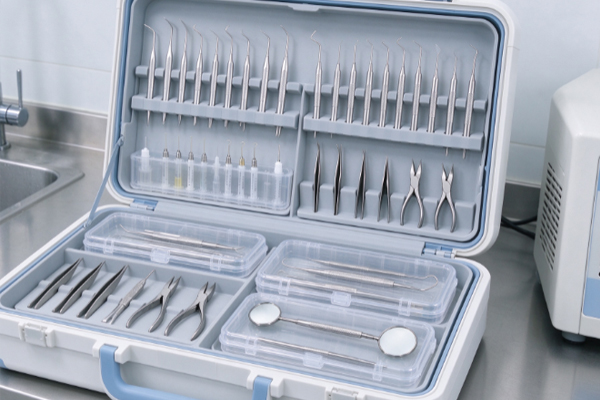
Plan Instrument Storage Space According to Treatment Procedures
Dental treatment involves different procedures with specific instrument requirements. Storage areas can be organized according to instrument types and usage frequency, making it easier for staff to locate the required items during daily work.
Create Dedicated Areas According to Instrument Types
Different instruments vary in size, purpose, and usage. The internal storage space can therefore be divided according to their specific characteristics.
- Examination Instruments: Common tools such as dental mirrors, probes, and tweezers can be grouped together for convenient access during routine examinations.
- Treatment Instruments: Instruments used for root canal treatment, periodontal treatment, and other specialized procedures can be assigned to dedicated areas according to the treatment type.
- Auxiliary Supplies: Small accessories, supporting tools, and miscellaneous items can be stored in separate compartments to reduce mixing between different items.
Clear classification makes it easier to locate instruments and also simplifies their return to the correct positions after use.
Arrange Storage Positions According to Frequency of Use
Frequently used instruments can be placed in easily accessible areas, while specialized instruments, backup tools, and less frequently used items can be stored separately. Dedicated instrument sets can also be prepared for different treatment procedures, reducing the amount of temporary organization required by staff.
Improve Instrument Fixation and Protection with Custom Liners
Some dental instruments are slender, sharp, or precision-made, making it difficult for an empty case to adequately restrict movement. Custom internal structures can be designed according to the shape of each instrument to keep items relatively stable and reduce the possibility of collision during transportation.
EVA Liners Are Suitable for Precise Positioning
Custom EVA liners can be shaped according to the contours of the instruments, creating dedicated slots that correspond more accurately to the actual equipment.
- Dedicated Slots: Separate positions can be designed for different instrument sizes to reduce sliding and collisions during transportation.
- Cushioning Areas: Appropriate cushioning space around instruments can help reduce impact during movement.
- Small-Item Compartments: Small accessories can be assigned individual compartments to prevent loose items from becoming mixed together.
- Contour Identification: Arranging storage positions according to instrument shapes makes it easier for staff to check quantities and placement conditions.
This type of liner design can improve space utilization, instrument positioning, and daily inventory efficiency at the same time.
Different Instruments Require Different Protection Methods
Standard handheld instruments and precision portable equipment have different protection requirements. For equipment that is more sensitive to impact or has fragile structures, independent fixation and cushioning structures can be used to reduce direct contact with other items during transportation. For instruments involved in cleaning, disinfection, or sterile processing, storage cases should mainly serve storage and transportation purposes, while the actual processing procedures should continue to follow the clinic’s existing protocols and facilities.
Design Portable Storage Solutions Around Clinic Space
When instruments need to be moved between treatment rooms, storage areas, and other workspaces, the storage case needs to accommodate not only the instruments but also the clinic’s corridors, cabinets, and working areas.
Dedicated Instrument Sets Are Suitable for Multiple Treatment Areas
Different treatment areas can be equipped with corresponding instrument sets according to their actual tasks.
- Routine Examination Set: Concentrates the tools required for daily examinations and reduces preparation time before each use.
- Specialized Treatment Set: Configures instruments according to specific treatment procedures, allowing staff to prepare directly for the assigned task.
- Backup Instrument Set: Manages backup equipment separately for easier inventory checks and timely replenishment.
Creating dedicated sets according to treatment areas can reduce repeated disassembly and reorganization when instruments are moved between rooms.
Portable Structures Facilitate Daily Transportation
Instruments that need to be moved frequently can use handles, shoulder straps, or portable case structures according to their actual weight and dimensions. Case specifications should also take clinic corridors, storage cabinets, and workbench space into consideration to prevent oversized cases from interfering with daily movement. When precision equipment needs to be transported, the external case should also work together with internal cushioning structures.
Establish a Sustainable Instrument Storage Management System
Treatment programs, staffing arrangements, and instrument quantities may change over time. The storage system therefore needs to retain a certain degree of flexibility. Standardized identification and adjustable structures can make it easier to incorporate new equipment into the existing management system.
Labeling Systems Help Identify Instruments Quickly
Cases, drawers, and internal modules can be clearly labeled according to instrument categories, treatment procedures, or usage areas. When equipment is shared by multiple staff members, consistent labeling rules make storage locations easier to identify and also support inventory checks and proper return after use.
Modular Structures Adapt to Changes in Instrument Quantities
When a clinic adds new treatment procedures or purchases new instruments, the existing internal layout may need to be adjusted. A modular structure can provide greater flexibility.
- Adjustable Dividers: Reconfigure internal areas according to the dimensions of newly added instruments to reduce wasted space.
- Additional Compartments: Add dedicated storage areas for newly introduced small instruments and accessories.
- Replaceable EVA Liners: Redesign positioning slots for new instruments so that the internal structure matches their shapes.
- Reserved Expansion Space: Keep some additional capacity available for future equipment, reducing the need to frequently replace the entire storage solution.
An expandable storage system can adapt to changes in instrument requirements while helping clinics continuously improve their internal organization.
An oral clinic instrument storage solution should combine treatment procedures, instrument structures, available space, and transportation requirements. Frequently used tools can be organized into dedicated areas, precision instruments can be secured with custom liners, and labeling and modular structures can support long-term adjustments. Instruments involving cleaning, disinfection, or sterile processing should also remain integrated with the clinic’s existing facilities and operating protocols. SIPHIA BOX specializes in toolboxes, protective cases, aluminum cases, and customized storage solutions, and can design internal structures according to instrument dimensions, quantities, and application environments to provide oral clinics with practical instrument storage and protection solutions.