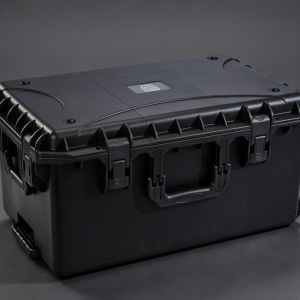
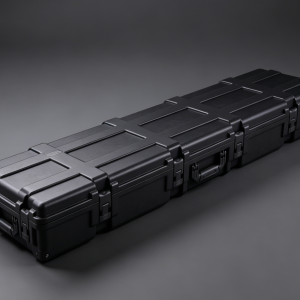
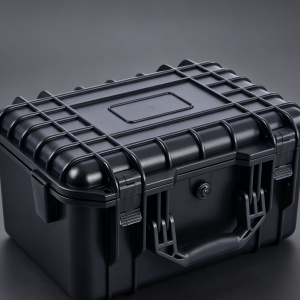
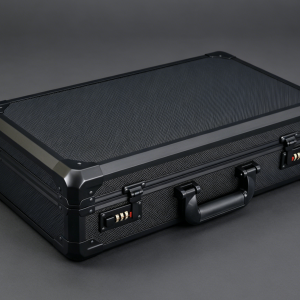
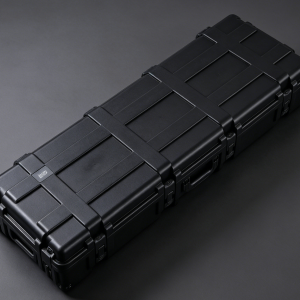
Roadside vehicle assistance involves many types of tools, changing work locations, and frequent tool access. Rescue vehicles may need to handle battery power loss, tire problems, basic vehicle repairs, emergency towing, and other situations. Therefore, the tool box should not be selected based only on external dimensions. The number and size of tools, vehicle installation location, and actual load capacity should also be considered. Common equipment for roadside assistance vehicles includes tool kits, portable power supplies, test instruments, cross wrenches, tire levers, jacks, wheel chocks, tow ropes, tire pressure gauges, battery jumper cables, OBDⅡ diagnostic tools, and tire repair tools.

Aluminum tool boxes feature relatively low weight, corrosion resistance, and stable construction, making them suitable for roadside assistance vehicles, service vehicles, pickup trucks, vans, and other mobile work vehicles. Aluminum tool boxes on the market cover a wide range of capacities, from small boxes of approximately 30L to large boxes with capacities of several hundred liters. By determining which tools are required for roadside assistance tasks and then organizing them according to their dimensions, a certain amount of space can also be reserved for commonly used consumables. This can prevent tools from being stacked in an undersized box while also reducing wasted space and vehicle load pressure caused by an oversized box.
Determine Capacity Based on Roadside Assistance Tasks
Small Tool Boxes Are Suitable for Basic Rescue Tools
If a roadside assistance vehicle mainly handles common problems such as battery jump-starting, tire inspections, and basic mechanical repairs, a smaller aluminum tool box can be selected. Common tools include wrenches, sockets, screwdrivers, pliers, multimeters, tire pressure testing tools, tire repair tools, and some small electrical testing equipment. These tools are generally small in size but numerous in type, so the internal space needs to be used efficiently. Rather than simply increasing the box height, it is more suitable to use tool trays, foam inserts, or adjustable dividers to organize the tools, keeping wrenches, sockets, electrical tools, and testing equipment stored separately. If the number of tools is limited to basic repair requirements, a box in the range of approximately 30L–70L can be considered. The actual capacity should still be adjusted according to the size and quantity of the tools rather than being determined solely by a fixed liter capacity.
Comprehensive Roadside Assistance Requires More Storage Space
Comprehensive roadside assistance vehicles generally need to carry more equipment, such as battery jump starters, diagnostic instruments, tire repair tools, towing accessories, and repair tools in different specifications. Small tool boxes can easily become crowded with stacked tools, significantly reducing access efficiency. A capacity of approximately 70L–150L is generally more suitable for medium-sized rescue tool configurations. Commercial aluminum tool boxes on the market are also available in capacities of approximately 63L, over 100L, and even larger sizes, which can be selected according to the vehicle installation space. It should be noted that heavy or bulky equipment such as jump starters, jacks, and air compressors does not necessarily need to be stored in the same tool box. Roadside assistance vehicles can use a combination of a “large box + small box,” placing frequently used small tools in the aluminum box while securing larger equipment separately to improve space utilization.
Professional Rescue Vehicles Should Be Customized According to Equipment Combinations
If a vehicle handles more complex roadside assistance tasks, the tool box capacity should be designed according to the complete equipment set. Professional service vehicles often need to carry repair tools, testing equipment, safety warning supplies, power equipment, and auxiliary tools in different specifications at the same time. Some professional roadside assistance vehicles also use multiple storage areas, managing equipment with dividers, drawers, and separate compartments. In these situations, it is not recommended to simply select one oversized box. Instead, multiple storage units should be planned according to the equipment list. This can reduce the possibility of tools colliding with each other and also make it easier for rescue personnel to quickly locate the required equipment.
Consider Tool Dimensions and Vehicle Space
External Box Dimensions Cannot Replace Actual Usable Capacity
When selecting an aluminum tool box for roadside vehicle assistance, the length, width, height, and internal usable dimensions should all be confirmed. A tool box contains structural components such as frames, locks, hinges, and liners, so two tool boxes with the same external dimensions may have different usable internal spaces. For example, when storing long tools, box length is more important than simply increasing height. When storing power tools and diagnostic instruments, the space occupied by screens, plugs, and cables should also be considered. For small tools such as sockets and wrenches, trays can improve the utilization of vertical space. The vehicle installation location should also be measured in advance. The installation conditions on the side of the cargo area, rear storage area, chassis side, and inside the cargo compartment are different, and the opening direction of the tool box should also be coordinated with the vehicle structure.
Pay Attention to Tool Box Weight and Mounting Method
The larger the capacity, the more tools can be stored, but the fully loaded weight will also increase. Aluminum boxes themselves have the advantage of being lightweight, but tools, jacks, power equipment, and metal accessories can still create considerable loads. Therefore, the size should be determined according to the vehicle’s actual load capacity. Aluminum tool boxes are commonly used in commercial vehicles, service vehicles, and mobile work vehicles, and their lightweight and corrosion-resistant properties can help reduce some weight pressure. During installation, the strength of the brackets, number of mounting points, road vibration, and available opening space should also be considered. If the tool box will remain on the vehicle for long-term travel, it should be securely mounted and designed to reduce collisions between tools during driving.
Proper Internal Organization Improves Capacity Utilization
Use Compartments to Reduce Inefficient Space
A large-capacity empty box without proper internal organization can cause wrenches, sockets, screwdrivers, and testing tools to become mixed together, requiring more time to locate tools during roadside assistance. Aluminum tool boxes for roadside vehicle assistance can be equipped with customized liners and dividers according to tool categories. For example, frequently used wrenches can be placed on the upper layer, sockets can be stored together, electrical testing equipment can be separately protected, and independent storage areas can be provided for cables, tape, fuses, and other small items. Frequently used tools can be positioned where they are immediately visible after opening the box. Larger tools can make use of the bottom space. A well-designed internal structure allows the available box capacity to be used more efficiently.
Reserve Space for Future Tool Updates
A tool box should not be designed based on a completely full load. Roadside assistance work often requires additional diagnostic equipment, sockets in different specifications, cables, and repair consumables. If no spare capacity is available from the beginning, adding new tools later may require replacing the entire tool box. Therefore, when determining capacity, some storage space can be reserved according to the current tool list, while the position of liners and dividers can be adjusted according to actual usage frequency. Adjustable divider systems can also be added when higher storage efficiency is required. For companies that need to configure multiple roadside assistance vehicles, aluminum tool boxes with different capacities can be customized according to vehicle models, rescue tasks, and tool lists. The box dimensions, locks, handles, liners, and exterior configuration can also be standardized to simplify vehicle management.
Frequently Asked Questions
Q1: What capacity aluminum tool box is suitable for a roadside assistance vehicle?
There is no single capacity suitable for all roadside assistance vehicles. Basic repair tools can use approximately 30L–70L, while medium-sized tool configurations can use approximately 70L–150L. If the box also needs to store a large number of testing instruments, repair tools, and auxiliary equipment, the capacity should be increased further according to the actual equipment list.
Q2: Is a larger aluminum tool box always better?
No. An oversized box will occupy limited vehicle storage space, and its weight will increase when fully loaded. If the actual number of tools is small, a large-capacity box may also allow tools to move around internally and cause wasted space. A more suitable approach is to select the capacity according to the number and size of tools, vehicle installation location, and load requirements.
Q3: Does a roadside vehicle assistance tool box need a customized liner?
If there are many types of tools, a liner or divider structure is recommended. For testing instruments, precision tools, and high-value equipment, customized foam inserts can create separate storage areas and reduce collisions during transportation. In automotive after-sales and mobile repair applications, aluminum cases are also commonly used for storing testing equipment and precision repair tools.
Q4: Can an aluminum tool box store both repair tools and testing equipment?
Yes, but they should be separated into different sections. Common tools such as wrenches and sockets can be stored together, while electronic testing equipment such as multimeters and OBDⅡ diagnostic devices should have separate protected areas. Roadside assistance equipment includes mechanical tools, testing instruments, and power equipment, so categorized storage makes it easier to access the required equipment quickly on site.
Choosing the right capacity for an aluminum tool box for roadside vehicle assistance requires a reasonable combination of box capacity, tool quantity, internal organization, and available vehicle space. Basic roadside assistance can use a small aluminum tool box to centrally store wrenches, screwdrivers, pliers, testing tools, and tire repair supplies. Comprehensive rescue vehicles can use medium-capacity tool boxes with trays, dividers, and dedicated liners. Professional rescue vehicles with more equipment can use multiple boxes to separately organize repair tools, testing equipment, and larger rescue supplies.
Aluminum tool boxes can also be customized according to vehicle installation locations, including length, width, height, opening method, locks, handles, and internal structure. For roadside assistance companies that require bulk procurement, standardized configurations can be established according to vehicle models and tool lists, making tool placement more consistent across rescue vehicles. By combining capacity with actual work requirements, tool access efficiency can be improved while reducing wasted vehicle space and providing a more stable tool storage solution for roadside vehicle assistance.