
During sports events and daily training, venues face different risks such as injuries, collisions, sudden illness, and cardiac arrest due to large crowds and varying levels of physical activity. Emergency management should not rely solely on a single medical room. Instead, AEDs, trauma care supplies, life-support equipment, and portable first-aid kits should be arranged according to the venue layout, spectator distribution, activity areas, and medical staffing, ensuring that each area has emergency resources appropriate to its risk level.
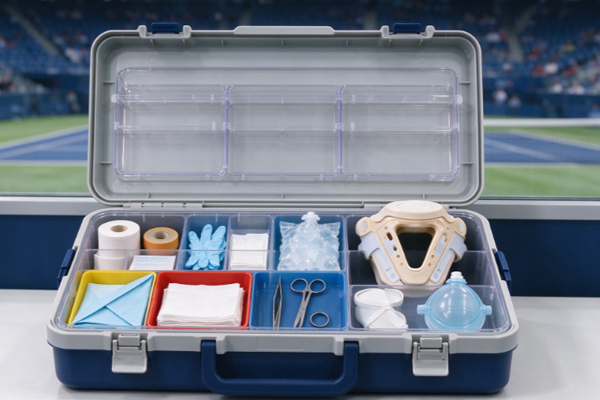
Planning Emergency Equipment and Supplies According to Venue Areas
Sports venues often cover large areas, so medical supplies need to be arranged in different levels based on the venue layout and the distribution of people, preventing all equipment from being concentrated in one location and delaying emergency response.
Centralized Management in Core Medical Areas
Medical rooms or fixed first-aid stations can serve as centralized locations for managing major equipment and backup supplies.
- Life-Support Equipment: AEDs should be placed in clearly visible and easily accessible locations with appropriate signage. Depending on medical requirements and professional configurations, oxygen, airway equipment, and bag-valve masks may also be provided.
- Trauma Care Supplies: Tourniquets, hemostatic dressings, gauze, bandages, cold packs, gloves, and other supplies can be categorized according to the risks associated with different sports activities.
- Monitoring and Auxiliary Equipment: Basic equipment such as blood pressure monitors, pulse oximeters, thermometers, and stethoscopes can be stored centrally for convenient access by medical personnel.
Centralized management facilitates inventory checks and allows supplies to be replenished at other first-aid points within the venue.
Quick-Access Points in Sports Areas
Distributed first-aid points can be established around the sidelines, training areas, and large spectator areas according to the venue’s medical emergency plan.
- Rapid AED Access: AED locations should be easy for staff and trained responders to identify, avoiding areas that are difficult to access or where the equipment is not readily visible.
- Portable First-Aid Kits: Sideline areas can be equipped with basic trauma care supplies and sport-specific materials according to risk requirements, allowing trained personnel or medical staff to access them quickly.
- Clear Signage: First-aid kits, AEDs, and medical rooms should use consistent and highly visible identification so staff can quickly determine where emergency equipment is located.
Distributed placement can reduce the distance between different areas of the venue and emergency resources, improving overall emergency coverage.
Configure Life-Support and Trauma Care Supplies According to Risk
Different sports involve different types of risks, so emergency supplies should be adjusted according to the sport, venue size, event attendance, and medical needs assessment.
| Emergency Category | Main Supplies | Management Priorities | Suitable Areas |
| Life Support | AED, oxygen, airway equipment, bag-valve mask | Check equipment status, battery condition, and consumable expiration dates; ensure rapid access | Medical rooms, fixed first-aid stations |
| Major Bleeding Control | Tourniquets, hemostatic dressings, gauze, bandages | Organized storage, regular inspection, use by trained personnel | Medical stations, sideline first-aid points |
| Sports Injuries | Splints, triangular bandages, cold packs, etc. | Adjust configuration according to sports and on-site risks | Sidelines, training areas |
| Basic Protection | Medical gloves, masks, etc. | Regular inventory checks and timely replenishment | Medical rooms, portable first-aid kits |
| Monitoring & Support | Blood pressure monitors, pulse oximeters, thermometers, etc. | Check equipment condition and assign dedicated personnel for management | Medical rooms, first-aid stations |
The supplies listed in the table can be adjusted according to venue size, sports activities, and medical needs, with priority given to maintaining critical equipment in working condition, keeping locations clearly identified, and ensuring rapid access for appropriately trained personnel.
Special Management of Cardiac Arrest-Related Equipment
Cardiac arrest is a high-risk emergency during sports activities, making AED accessibility and equipment status important parts of routine venue management.
- AED Status Checks: Regularly check the device’s self-test status, battery, and electrode expiration dates, and maintain the equipment according to the manufacturer’s instructions.
- Oxygen and Airway Equipment: Professional medical areas may be equipped with oxygen, airway equipment, and bag-valve masks according to the medical configuration. Such equipment should be used by personnel with appropriate training and competence.
- Emergency Route Management: Equipment locations should be coordinated with the venue’s emergency communication, personnel assembly, and patient transfer routes to prevent access difficulties during emergencies.
The effective management of life-support equipment depends on the coordination of location, equipment condition, and personnel capabilities.
Consider Special Trauma Equipment for High-Risk Sports
Football, basketball, rugby, gymnastics, and certain extreme sports involve risks such as collisions, falls, and high-impact injuries, so trauma equipment can be adjusted according to the specific activity. Major bleeding management may include tourniquets and professional hemostatic dressings; spinal and cervical protection may include spinal boards, head immobilization devices, cervical collars, and transport equipment; limb injury management may include splints and triangular bandages. All such equipment should be used by trained personnel according to established emergency procedures.
Establish Portable First-Aid Kits for Different Scenarios
Sports venues host competitions, training sessions, and large-scale events, so portable configurations can help extend medical coverage to areas where conditions and activity locations change temporarily.
Establish Dedicated First-Aid Kits for Event Days
During large sporting events, crowd density and activity areas may change, making it necessary to prepare portable first-aid kits in advance according to the medical plan.
- Sideline First-Aid Kit: Primarily equipped with frequently used trauma care supplies and sport-specific equipment for medical personnel working near the field of play.
- Training Area First-Aid Kit: When training areas are located away from the main venue, appropriate first-aid supplies can be prepared according to the specific training activity.
- Backup Kit for Large Events: Backup first-aid kits and related equipment can be placed in high-density spectator areas according to the event plan, reducing pressure on a single medical point.
Using different configurations for different activities allows medical resources to better match actual operating environments.
Case Structures Should Support Frequent Transportation
Portable first-aid cases need to balance equipment protection, internal organization, and quick access, particularly when storing electronic devices or specialized equipment.
- Dedicated Fixed Compartments: AEDs and other equipment should be secured in appropriately sized storage areas to reduce movement and collision during transportation.
- EVA Foam Inserts and Dividers: First-aid supplies can be organized with dedicated slots and compartments to keep different items clearly separated.
- Portable Design: Handles, shoulder straps, or other carrying structures can make it easier for medical personnel to transport equipment between sidelines and training areas.
A well-designed internal structure can reduce movement and mixing of supplies while making it easier for staff to quickly verify the contents of the case.
Establish Personnel Responsibilities and Pre-Event Inspection Procedures
The effectiveness of emergency equipment also depends on personnel management and maintenance procedures. Venues should define inspection responsibilities, training requirements, and equipment-use guidelines in advance.
Define Usage Responsibilities According to Training and Competence
Venues should establish equipment-use requirements based on local regulations, medical emergency plans, and personnel training: trained staff, first-aid responders, or authorized personnel may participate in basic first aid and AED procedures; professional assessment, medication management, and the operation of professional medical devices should be handled by appropriately qualified medical personnel; equipment management personnel should check AED batteries, electrodes, oxygen supplies, first-aid kit inventories, and expiration dates while recording any abnormalities. Clear responsibilities can reduce equipment misuse and management omissions.
Conduct Pre-Event Inspections and Inventory Records
Before major sporting events, equipment and supplies should be inspected according to the venue’s medical plan.
- Equipment Status Check: Confirm that AEDs are in normal standby condition and inspect relevant consumables and equipment expiration dates.
- Emergency Supply Inventory: Check tourniquets, dressings, gloves, cold packs, and other specialized supplies, replenishing missing items promptly.
- Maintenance Records: Establish equipment lists and inspection records documenting inspection dates, abnormalities, and corrective actions.
A standardized inspection and record-keeping system helps venues maintain visibility of supply status and facilitates subsequent replenishment and maintenance.
Emergency medical storage in sports venues needs to address equipment protection, identification, and on-site deployment. AEDs and life-support equipment require secure storage and convenient access, while bleeding-control supplies, trauma equipment, and sport-specific materials can be organized according to the risks of different activities. Supplies intended for sidelines, training areas, or temporary event zones can be managed with customized cases, EVA foam inserts, dividers, and labeling systems to improve transportation and organization. SIPHIA BOX can develop internal storage structures based on equipment dimensions, supply quantities, and actual operating environments, providing sports venues with flexible solutions for emergency medical supply storage and protection.