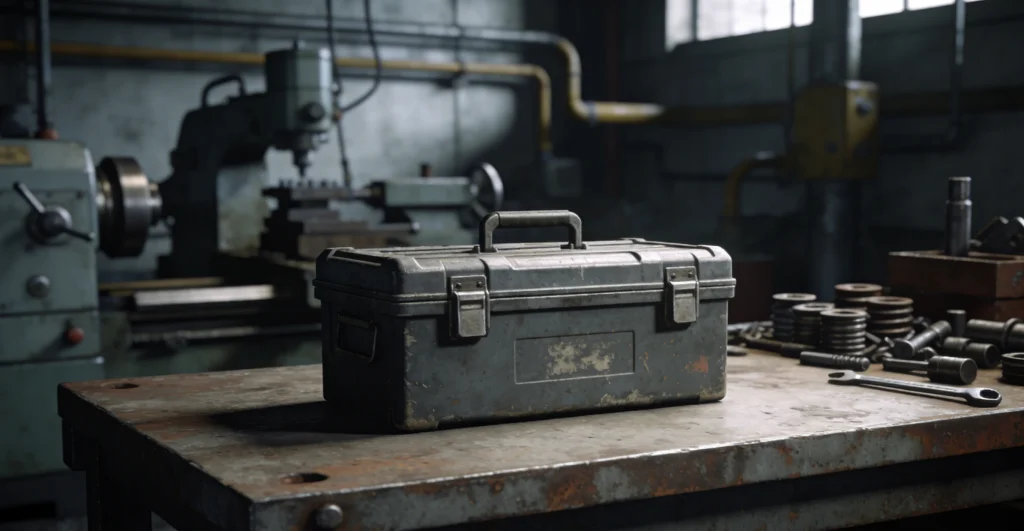
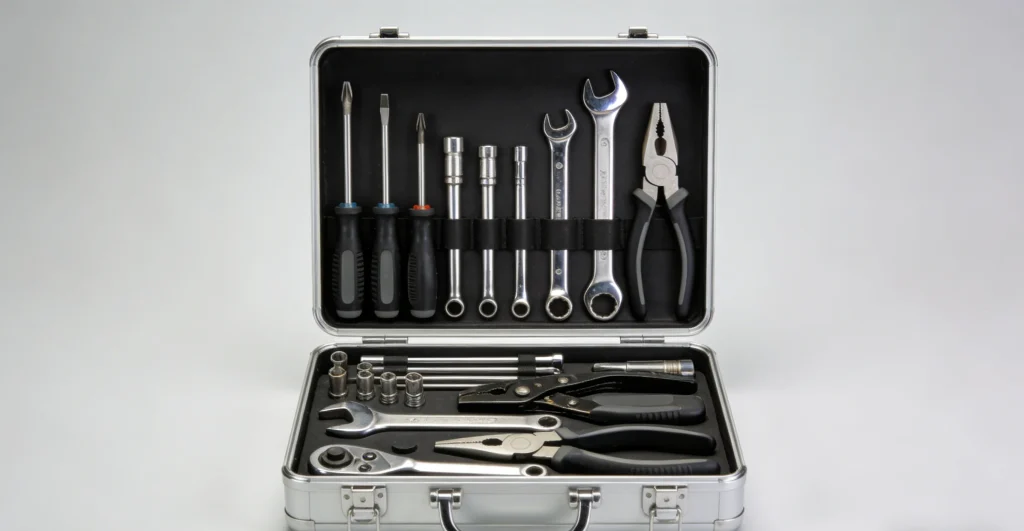
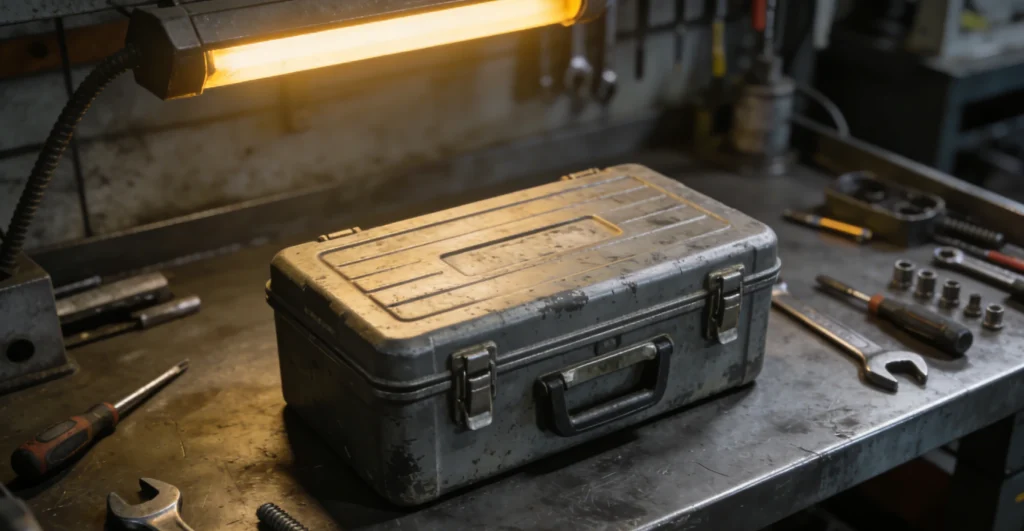
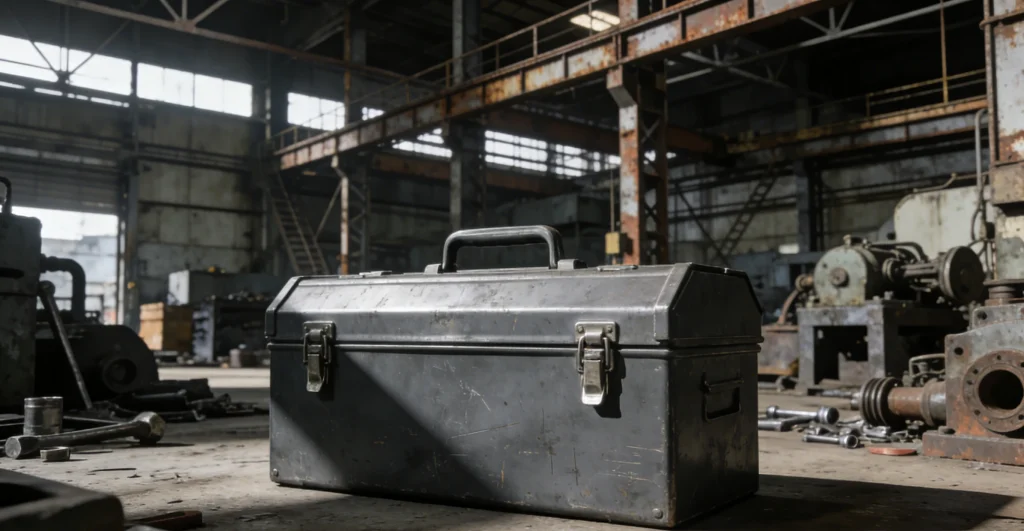
Homes, offices, workbenches, and everyday living environments often require basic repair tasks such as tightening loose screws, securing components, assembling furniture, and adjusting small parts. These jobs usually do not require large professional equipment, but they do require several common hand tools that can be quickly accessed when needed. A mini toolbox can keep screwdrivers, wrenches, pliers, measuring tapes, hex keys, screws, nuts, and other small accessories together as a convenient basic repair tool kit. Compared with keeping tools separately in drawers or cabinets, a mini toolbox gives frequently used tools a fixed storage location and makes it easier to adjust the contents according to different repair tasks. For users who mainly handle everyday minor repairs, a mini toolbox with a suitable capacity and practical internal structure can meet many basic maintenance requirements.
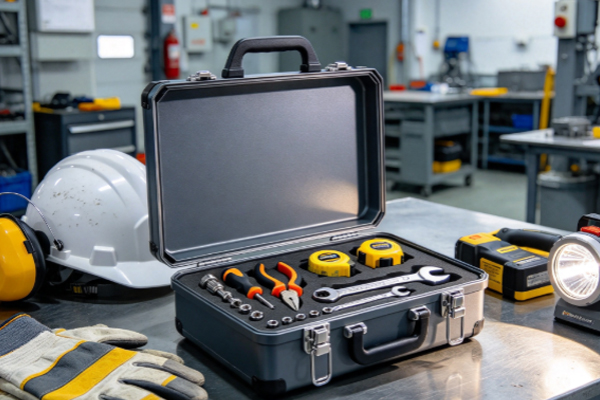
A Mini Toolbox Is Suitable for Furniture Assembly and Fastening Repairs
Furniture assembly is one of the most common basic repair tasks in a household. Tables, chairs, cabinets, shelves, and other household products may develop loose screws, shifted connectors, or components that need to be secured again after long-term use. A mini toolbox can keep different screwdrivers, hex keys, small adjustable wrenches, and pliers together, allowing users to carry the required tools directly to the furniture being repaired. When a furniture connection needs to be tightened, the appropriate tool can be selected according to the fastener specification. For small metal components that require adjustment, pliers can provide additional assistance. Because of its compact size, a mini toolbox eliminates the need to move a large tool cabinet for a simple furniture repair. For households that frequently assemble furniture themselves, a set of commonly used tools can be prepared in advance, making future installation, disassembly, and fastening tasks more convenient.
A Mini Toolbox Can Handle Simple Door, Window, and Hardware Adjustments
Doors and windows may develop loose handles, detached screws, or shifted hardware after long-term use. These issues often require basic tools such as screwdrivers, wrenches, or hex keys for adjustment. A mini toolbox can keep these tools together, allowing users to quickly prepare the necessary equipment when a problem occurs. For example, when a door handle becomes loose, an appropriate screwdriver can be used to tighten it. When cabinet hinges need adjustment, a suitable screwdriver can help secure the hardware. If a small hardware component needs to be replaced, pliers and spare screws can also be taken from the toolbox for assistance. Keeping tools in a fixed location reduces the time spent searching for them and helps prevent interruptions caused by missing basic equipment. For ordinary households, a mini toolbox is particularly suitable for simple hardware maintenance tasks that involve limited work and uncomplicated structures.
A Mini Toolbox Is Suitable for Daily Bicycle and Small Equipment Maintenance
Bicycles, scooters, and certain small devices may require basic bolt tightening, component adjustment, and routine inspection during everyday use. A mini toolbox can be equipped with hex keys, screwdrivers, adjustable wrenches, pliers, and measuring tools according to actual requirements. These tools can be used for common light-duty maintenance tasks. Adjusting bicycle seat height, securing handlebars, and installing certain external accessories may require different types of hand tools. For small household equipment, a mini toolbox can also be used for external screw inspections, connector tightening, and basic component adjustments. Different devices use different fastener specifications, so the tool configuration should be selected according to the actual equipment. A mini toolbox is more suitable for routine inspections and light maintenance. Repairs involving complex mechanical structures, electrical faults, or high-load components should be performed with appropriate professional tools and according to the equipment’s safety requirements.
A Mini Toolbox Can Support Simple Maintenance of Electronic and Office Equipment
Homes and offices contain many small electronic devices, including computer peripherals, routers, printers, desk lamps, and other accessories. Some devices may require precision screwdrivers, tweezers, or small pliers when performing basic casing disassembly, screw replacement, or bracket adjustment. A mini toolbox can provide dedicated storage for these tools and reduce contact between precision tools and larger hand tools. For small equipment maintenance around an office desk, the toolbox can be kept nearby and accessed directly when needed. Users can also organize tools according to their specifications, storing different screwdriver sizes, hex keys, and small accessories separately to avoid repeated searching during maintenance. When electronic equipment involves internal circuits, power supplies, or complex faults, the repair should be performed by appropriately experienced personnel according to relevant safety requirements. The mini toolbox primarily serves as a tool storage and basic maintenance aid.
A Mini Toolbox Is Suitable for Emergency Repairs and Small DIY Projects
Everyday life also brings many temporary repair requirements, such as replacing screws, installing hooks, adjusting small hardware components, securing loose parts, and completing simple DIY projects. A mini toolbox can be prepared with a set of frequently used tools and carried directly to the work area when these tasks arise. Compared with searching through different drawers for individual tools, centralized storage can make repair preparation faster and also makes it easier to check the tools after the task is completed.
Common tools can be configured according to different repair requirements:
- Screwdrivers: Suitable for common screws used in furniture, hardware components, and certain equipment.
- Small wrenches: Useful for basic adjustment of nuts, bolts, and other fasteners.
- Pliers: Suitable for gripping, holding, and handling certain small components.
- Hex keys: Commonly used for hex fasteners found in furniture, bicycles, and some equipment.
- Measuring tape: Useful for furniture assembly, space measurements, and dimension checks during DIY projects.
- Spare fasteners: Screws, nuts, washers, and other small accessories can be stored in separate compartments for quick access during repairs.
With proper configuration, a mini toolbox can serve as a basic repair tool kit for households and individual users. It can support common tasks such as furniture fastening, hardware adjustment, bicycle maintenance, simple office equipment repairs, and DIY projects while also making tools easier to transport and organize. When choosing a mini toolbox, users can consider repair frequency, the number of commonly used tools, internal compartments, toolbox dimensions, and load capacity. For users whose repair tasks are relatively simple and whose tool collection is limited, a well-designed mini toolbox can handle a wide range of basic tool storage needs and make everyday minor repairs more organized and convenient.