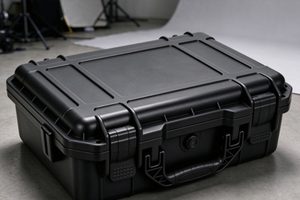
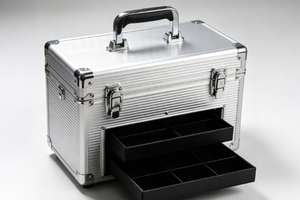
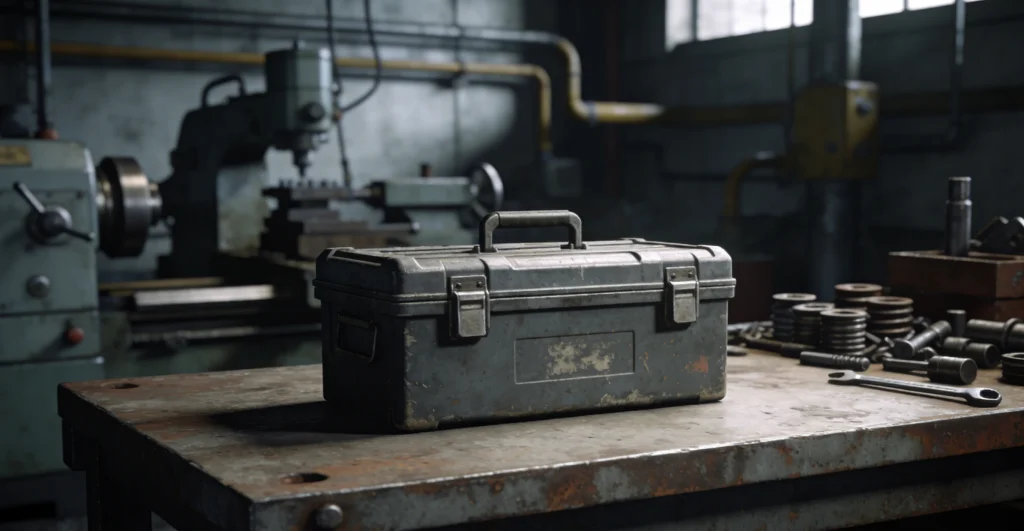
In repair workshops, automotive maintenance, engineering construction, and home DIY environments, both rolling tool boxes and tool carts can be used for tool storage and mobility, but their practical positioning is not exactly the same. A more accurate way to compare the two is to examine their storage capacity, load-bearing capability, mobility, tool access habits, and application scenarios.
What Are the Structural Differences Between Rolling Tool Boxes and Tool Carts?
Both types of products may feature casters, drawers, cabinets, and top work surfaces, so there is no absolute structural boundary between them. When selecting a product, it is more useful to focus on its primary function.
Rolling Tool Boxes Emphasize Centralized Storage
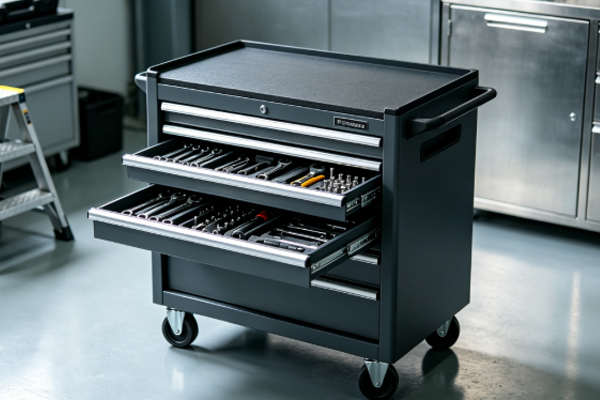
Rolling tool boxes or rolling tool cabinets typically combine multiple drawers, tiered storage spaces, and casters to organize a large number of tools in one place.
- Drawer Organization: Wrenches, sockets, screwdrivers, and other tools can be stored separately according to size and type.
- Deep Storage: Deeper drawers are suitable for power tools, large socket sets, and other relatively bulky equipment.
- Centralized Management: Multiple tools can be stored in the same unit, making it easier to establish fixed storage locations.
This type of structure is generally suitable for workshop environments with large numbers of tools that require long-term organization and management.
Tool Carts Emphasize Mobility and On-Site Use
Tool carts are generally designed around the idea of bringing tools directly to the work location, but this does not mean they must have an open structure. Depending on the product, they can also include drawers, cabinets, shelves, and top platforms.
- Flexible Access: Frequently used tools can be placed in easily accessible locations according to the tasks of the day.
- Work Platform: The top can temporarily hold parts and tools or serve as a simple working area.
- Combined Storage: Drawers, cabinets, and open storage areas can be combined according to work requirements.
This type of design is more suitable for working environments where tools need to be repositioned between different workstations, while some products can also provide relatively complete enclosed storage.
What Are the Differences in Tool Storage and Load Capacity?
The difference between tool storage equipment cannot be determined simply by the number of drawers. Tool weight, dimensions, and long-term usage intensity also need to be considered.
Rolling Tool Boxes Usually Focus More on Overall Load Capacity
Large rolling tool cabinets are generally used to centrally store a large number of hand tools and power equipment, making load capacity an important consideration.
- Heavy-Duty Tools: Deep drawers are suitable for sockets, impact wrenches, and other heavier equipment.
- Drawer Load Capacity: The specifications of the drawer slides and the rated load capacity of individual drawers need to be considered.
- Bottom Support: When fully loaded, the frame and casters need to support the overall weight together.
These products are more suitable for establishing a stable tool storage system rather than simply pursuing lightweight mobility.
Tool Carts Need to Balance Load Capacity and Flexibility
Tool carts can also use heavy-duty drawers and cabinets, but when frequent movement is required, the overall weight, caster design, and rolling resistance can affect the actual user experience.
- Light-Duty Configuration: Suitable for carrying commonly used tools needed for the day’s tasks.
- Heavy-Duty Configuration: Drawers and cabinets can be added, but the frame and caster load capacity also need to be increased accordingly.
- Mobility Structure: Caster size, brakes, and handles can all affect ease of operation.
A tool cart does not necessarily have a low load capacity. Heavy-duty tool carts are also available on the market, although their product positioning may place greater emphasis on mobile work.
What Are the Differences in Mobility and Work Scenarios?
Both rolling tool boxes and tool carts can be moved, but travel distance, floor conditions, and frequency of movement are more important factors to consider when choosing between them.
Rolling Tool Boxes Are Suitable for Centralized Movement Within Workshops
Large rolling tool cabinets are relatively heavy and are suitable for short-distance movement on flat floors. They can be used for repositioning around repair stations, centralized storage of automotive repair tools, and equipment maintenance storage. When selecting one, users need to consider the fully loaded weight, caster load capacity, floor conditions, and movement frequency.
Tool Carts Are More Suitable for Adjusting Position According to Workstations
Tool carts generally place greater emphasis on flexible movement and can be moved closer to vehicles, equipment, or workbenches according to the day’s tasks.
- Multi-Station Maintenance: Tools can move with workers to different pieces of equipment.
- Equipment Maintenance: Maintenance personnel can gather the required tools and push them directly to the target location.
- Temporary Tasks: The tool configuration inside the cart can be quickly adjusted according to the task, reducing repeated trips to retrieve tools.
Light-duty tool carts are generally easier to push than large tool cabinets, but actual mobility still depends on product dimensions, fully loaded weight, and caster configuration.
What Factors Should Be Considered When Choosing a Product?
There is no fixed boundary that applies to every rolling tool box or tool cart. Businesses and individuals can evaluate products based on the number of tools, load requirements, movement frequency, and usage methods.
Tool Quantity and Weight Determine the Storage Configuration
When managing large numbers of tools in different sizes, it is useful to focus on drawer dimensions, the number of levels, drawer slide load capacity, and internal layout.
- Large Number of Tools: A multi-drawer, high-capacity storage structure is suitable.
- Large Number of Heavy Tools: Drawer and overall load capacity need to be considered.
- Precision Equipment: Foam liners, positioning slots, and other protective structures can be added.
- Many Small Accessories: Compartment boxes or customized dividers can be used.
Different tools require different storage spaces, and a well-planned internal layout is more practical than simply increasing overall capacity.
Movement Frequency Determines Product Positioning
If the main task is to centrally store a large number of tools in a workshop and only occasionally reposition them, a large-capacity rolling tool cabinet may be worth considering. If workers frequently need to bring tools to different pieces of equipment or workstations, greater attention can be paid to the overall weight, casters, and pushing structure of a tool cart.
During procurement, factors such as work surface height, number of drawers, caster load capacity, locks, internal dividers, and customization space can also be considered. SIPHIA BOX specializes in tool boxes, protective cases, aluminum cases, and customized storage solutions. Internal structures can be planned according to tool dimensions, weight, and application environments, providing more flexible tool storage solutions for maintenance, engineering, inspection, and professional work.