In work environments such as repair workshops, automotive maintenance, and industrial servicing, tool chests need to carry a large number of tools over long periods. When users open a drawer, one of the key factors affecting the operating feel and stability is the slide structure hidden on both sides of the drawer. High-quality drawer slides allow drawers to open and close more smoothly, support the weight of tools, reduce shaking, and extend the service life of the tool chest. Understanding the function of drawer slides can help users choose tool storage equipment that meets their actual work requirements.
Drawer Slides Are an Important Load-Bearing Structure of a Tool Chest
Tool chests typically need to store tools such as wrenches, sockets, screwdrivers, pliers, and testing equipment. Drawer slides are responsible not only for opening and closing the drawers but also for withstanding the continuous pressure caused by the weight of the tools.
Supporting Drawer Weight
After a drawer is filled with a large number of metal tools, its overall weight increases significantly. Therefore, the drawer slides need to have sufficient load-bearing capacity.
- Load-bearing capacity affects drawer stability: High-strength drawer slides can better support heavier drawers and reduce problems such as sagging or jamming after long-term use.
- Deep drawers rely more heavily on slide strength: Deep drawers are usually used to store power tools, heavy-duty tools, or larger accessories, which places higher demands on the load-bearing performance of the drawer slides.
- Frequent long-term use tests structural quality: Repair technicians open and close drawers repeatedly every day. A stable slide structure can reduce the effects of long-term wear.
A properly configured drawer slide system can help a tool chest maintain reliable storage performance in high-frequency work environments.
Keeping Drawers Running Smoothly
In addition to load-bearing capacity, drawer slides also affect how smoothly drawers open and close.
- Reducing side-to-side movement: Structurally stable drawer slides guide the drawer in a fixed direction, reducing shaking during opening and closing.
- Preventing drawer misalignment: High-quality drawer slides maintain precise alignment between the drawer and the cabinet, reducing misalignment after long-term use.
- Improving the operating experience: When drawers run smoothly, repair technicians can take out and store tools more quickly, reducing the need for repeated adjustments.
High-performance drawer slides help a tool chest maintain smooth and stable operation during long-term, high-frequency use.
High-Quality Drawer Slides Can Improve Tool Access Efficiency
One of the key values of a tool chest is helping repair technicians quickly find and retrieve tools. The performance of the drawer slides directly affects this process.
Smooth Opening and Closing Reduces Operating Time
Repair work usually requires tools to be taken out and put away frequently. Excessive resistance when opening and closing drawers can affect the work rhythm.
- Ball-bearing slides provide smoother operation: The ball-bearing structure reduces friction, allowing drawers to maintain a good opening and closing experience even under load.
- Frequently used tools are easier to access: Common tools such as screwdrivers, wrenches, and sockets can be stored in easily accessible drawers to improve retrieval efficiency.
- Reducing operating fatigue: Drawers that run more easily can help reduce the operating burden on workers during long repair tasks.
Choosing drawer slides that operate smoothly and provide stable load-bearing performance allows a tool chest to better meet the needs of high-frequency repair work and professional tool management.
Full-Extension Design Makes Internal Tools Easier to View
Some tool chests use full-extension drawer slides, allowing the drawers to extend completely outward. This not only makes tools at the back clearly visible but also reduces obstruction, stacking, and difficulty locating tools caused by the limited opening range of deep drawers. Workers can check the contents of the drawers more quickly, improving the efficiency of tool classification, organization, and inventory inspection. For repair environments with a large number of tools, full-extension drawer slides also help make full use of the internal drawer space.
Slide Design Affects the Safety and Durability of a Tool Chest
Drawer slides remain under load and undergo repeated movement for long periods. Their quality affects not only the opening and closing experience but also the long-term stability of the tool chest.
Reducing the Risk of Drawer Derailment and Jamming
The drawer slides and drawers need to maintain a good fit, and structural precision affects long-term operating performance.
- Stable structures reduce jamming: High-quality drawer slides keep drawers moving along their normal tracks and reduce the risk of sudden jamming during opening and closing.
- Secure installation improves stability: Reliable connections between the drawer slides and the cabinet help reduce loosening after long-term use.
- Proper loading prevents excessive wear: Storing tools according to the load-bearing capacity of the drawers can extend the service life of the drawer slides.
Properly controlling drawer loads during daily use is also an important measure for maintaining a tool chest.
Improving Mobility Safety with Locking Structures
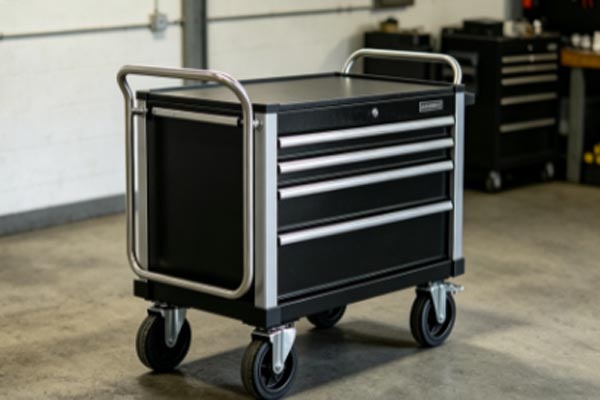
Tool chests are designed to move on casters, so drawer stability during movement also deserves attention.
- Reducing the risk of drawers sliding open accidentally: Stable drawer slides combined with locking structures can reduce the risk of drawers opening on their own while the tool chest is being moved.
- Preventing tools from falling out: Keeping drawers closed helps reduce tool drops and keeps the repair area more organized.
- Improving mobility stability: Drawers that do not shake or slide out frequently help maintain the overall balance of the tool chest.
Together, drawer slides and locking mechanisms provide safer and more reliable tool storage during daily movement.
Do Not Overlook Drawer Slide Configuration When Choosing a Tool Chest
For companies and repair technicians who need to use tool chests over long periods, drawer slides are an important structural detail that deserves close attention. In addition to considering the number and capacity of drawers, users should also evaluate tool weight, frequency of use, and the working environment.
Match Drawer Slide Load Capacity to Tool Types
Different drawers carry different tool weights, so the drawer slide configuration should match the intended use.
- Shallow drawers are suitable for lightweight tools: Screwdrivers, sockets, and small accessories can be stored in shallow drawers to improve space utilization.
- Medium-sized drawers are suitable for commonly used hand tools: Wrenches, pliers, hammers, and similar tools are suitable for medium-depth drawers, making classification and organization easier.
- Deep drawers are suitable for large equipment: Power tools, testing equipment, and heavier accessories require more space and greater load-bearing capacity.
Dividing tools into zones according to their types can help distribute the load on the drawer slides more evenly.
Pay Attention to Drawer Slide Quality and Overall Structure
When choosing a tool chest, drawer slide performance should be evaluated together with the cabinet structure. Through actual operation, users can check whether the drawers open and close smoothly, whether their movement remains stable, and whether jamming, sagging, or noticeable shaking occurs under load. For drawers used to store heavy-duty tools, it is advisable to prioritize stronger load-bearing drawer slides and confirm that their connections to the cabinet are secure. At the same time, the tool chest’s load-bearing, mobility, and storage requirements should be evaluated comprehensively according to different scenarios, such as automotive repair, industrial maintenance, and home garages.
When choosing a tool chest, drawer slide configuration is an important reference for evaluating product practicality and durability. Proper drawer slide design enables the tool chest to accommodate different tool weights and usage frequencies while improving overall storage efficiency. SIPHIA BOX focuses on professional tool storage solutions and provides reliable, organized tool management support for automotive repair, industrial maintenance, construction, and other professional work environments.