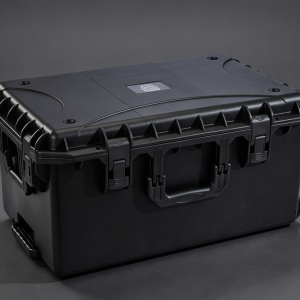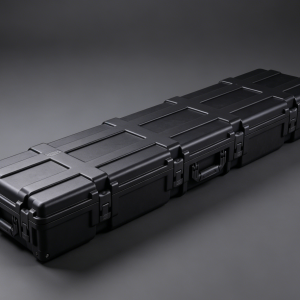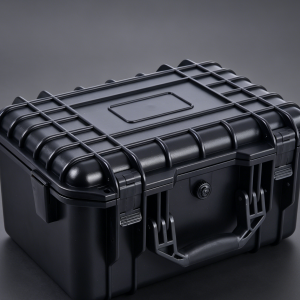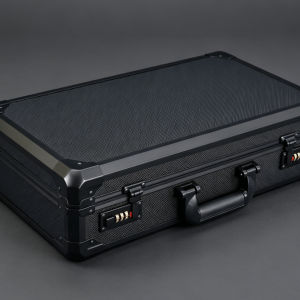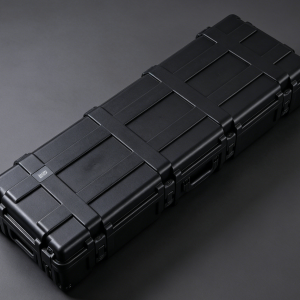
The size of your toolbox directly impacts daily user experience and tool management efficiency. A toolbox that’s too small won’t be able to hold all your tools, and frequent stacking can damage them; a toolbox that’s too large will increase carrying burden and take up too much storage space. Different users have different needs regarding the number and types of tools they need, as well as the usage scenarios. Therefore, you need to consider your specific needs when choosing a toolbox. A suitable size not only improves storage efficiency but also extends the lifespan of your tools and makes tool management more organized.
Determine the Basic Capacity Based on the Number of Tools
The number of tools is the most direct reference standard when choosing a toolbox size. Users with fewer tools are suitable for small toolboxes, while users with more types of tools or those including power tools need larger capacity models.
The usage scenarios corresponding to different capacities are generally as follows:
- Small toolboxes are suitable for basic repair tools, such as screwdrivers, pliers, and measuring tapes.
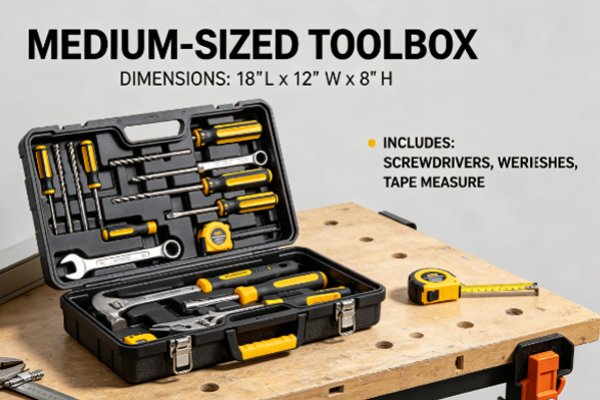
- Medium-sized toolboxes are suitable for home repair and vehicle emergency tool combinations.
- Large toolboxes are suitable for professional repair or multi-device tool management.
- Multi-layered structures are suitable for storing tools with many categories.
When choosing a toolbox, ensure there is still adequate space after placing the tools inside to avoid excessive compression between tools. A good capacity match can reduce tool wear and tear while improving retrieval efficiency.
Choosing the Size Based on the Usage Scenarios
The usage scenario of the toolbox directly affects the size selection. Different environments have significantly different requirements for portability and storage capacity. Home use prioritizes stable storage, while outdoor or vehicle use emphasizes portability and shock resistance. Common usage environments and their corresponding size requirements include:
- Fixed home use: medium to large-sized toolboxes are suitable.
- Vehicle emergency tools: compact toolboxes are suitable.
- Construction sites or repair sites: rugged, large-capacity toolboxes are suitable.
- Frequently moved tools: lightweight, small to medium-sized toolboxes are suitable.
Appropriately matching the usage environment can avoid problems such as inconvenience in carrying or wasted space, while improving tool usage efficiency.
Determining Space Requirements Based on Tool Type
Different tools have significantly different space requirements. Simply choosing a toolbox based on quantity can easily lead to unreasonable storage. For example, power tools are larger and require more spacious storage, while small hand tools are more suitable for a compartmentalized structure.
When choosing a size, you can refer to the characteristics of the tool type:
- Power tools require a larger independent space.
- Socket tools are suitable for layered storage designs.
- Precision tools require shockproof and fixed structures.
- Long tools require a horizontal space layout.
Properly planning the internal space is more important than simply increasing the external size. This can improve overall storage efficiency and reduce damage caused by tool movement.
Considering Carrying Frequency and Movement Method
Whether the toolbox needs to be carried frequently will directly affect the size selection. High-frequency movement is more suitable for lightweight sizes, while fixed storage allows for larger capacity models.
The impact of different carrying methods on size is as follows:
- Walking is suitable for small, lightweight toolboxes
- Vehicle transport is suitable for medium-sized toolboxes with handles
- Long-distance transport is suitable for reinforced structural designs
- Fixed storage is suitable for large-capacity, multi-layer toolboxes
- Larger sizes offer greater storage capacity, but reduced mobility.
A suitable balance needs to be found between capacity and portability when choosing a toolbox.
Reserved Space and Long-Term Usage Planning
The number of tools is usually not fixed; as usage time increases, the variety of tools may gradually increase. If the toolbox size only meets current needs, space shortages may occur later. Properly reserving space when selecting a toolbox can lead to a better long-term user experience:
- Reserving space for expansion facilitates the addition of new tools
- Avoiding structural stress caused by long-term full load
- Improving the flexibility of tool classification and organization
- Extending the overall lifespan of the toolbox
A reasonable size plan not only meets current needs but also adapts to future usage changes, making tool management more stable and orderly.