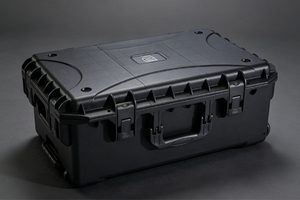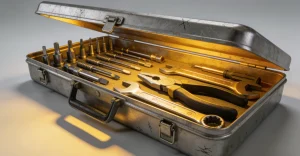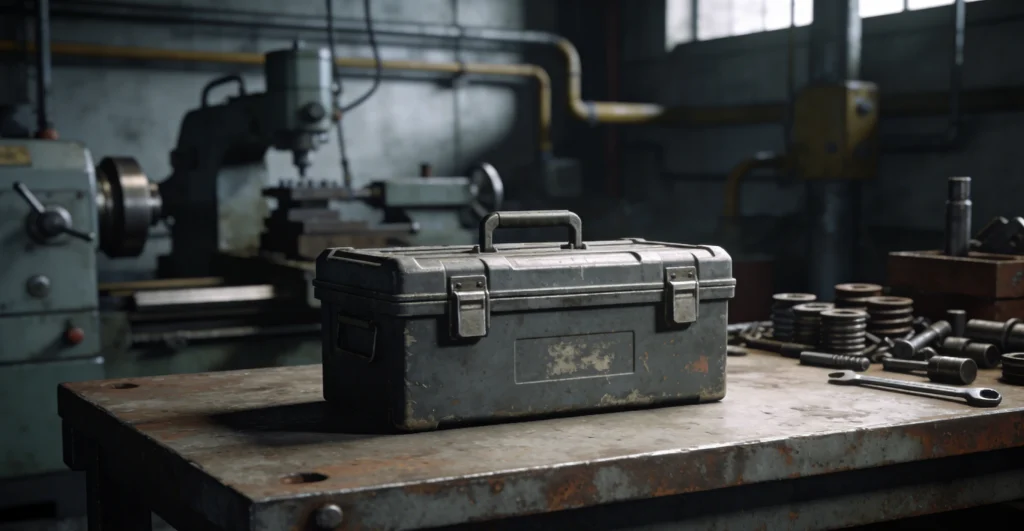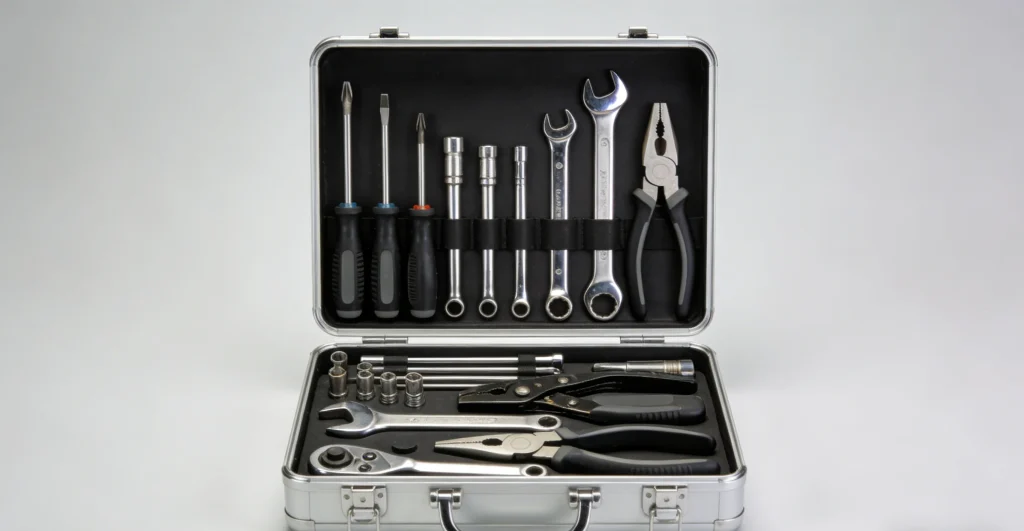
When choosing a tool box, many people focus on the overall size and storage capacity, but the drawer design is often the key factor that affects daily use. Especially for drawer tool boxes, unreasonable drawer dimensions can cause small tools to become mixed together while larger tools may not fit properly, making it inconvenient to find what is needed. For industries such as automotive repair, mechanical processing, and factory maintenance, tool boxes are used frequently every day. A well-planned drawer layout helps organize tools more clearly and improves work efficiency. Different tools require different storage spaces, so understanding common drawer dimensions can help businesses choose a more suitable tool box.
What Are the Common Sizes of Drawer Tool Boxes?
The size of a drawer tool box is usually designed based on different application needs. Common sizes range from compact portable tool boxes to large industrial tool cabinets. Before purchasing, users can understand common size ranges and choose a tool box that matches their tool quantity and working requirements.
- Small drawer tool boxes. Common sizes are around 400-600mm in length, 200-350mm in width, and 300-500mm in height. They are suitable for storing screwdrivers, pliers, small wrenches, and other basic repair tools.
- Medium-sized tool boxes. Common sizes are about 600-900mm in length, 400-500mm in width, and 700-1000mm in height. They are suitable for automotive repair, equipment maintenance, and workplaces requiring more tools.
- Large tool boxes or tool cabinets. These are usually over 900-1200mm in length, 500-700mm in width, and more than 1000mm in height. They are suitable for factories, mechanical workshops, and industrial environments with large numbers of tools.
Different tool box sizes mainly vary in storage capacity and mobility. Small tool boxes are easier to carry, while medium and large tool boxes are better suited for fixed work areas and large-scale tool organization.
How Should Tool Box Drawer Heights Be Designed?
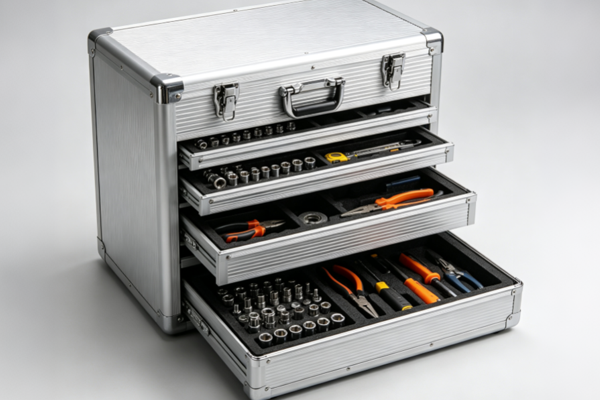
Drawer height plays an important role in tool storage. Drawers that are too shallow may not fit larger tools, while drawers that are too deep can waste internal space. Drawer tool boxes usually use a combination of different drawer heights to make better use of storage space.
- Shallow drawers are usually around 50-80mm high. They are suitable for screws, bits, measuring tools, and small parts that require quick access.
- Medium drawers are usually around 100-150mm high. They are suitable for wrenches, sockets, pliers, and other commonly used repair tools.
- Deep drawers are usually around 180-300mm high. They can store electric drills, tool kits, and larger accessories.
- Special tools may require customized deeper storage areas. Automotive repair and industrial maintenance industries often design drawers based on specific equipment sizes.
A reasonable combination of drawer heights allows better use of the internal space. Many professional tool boxes do not use the same drawer height for every level. Instead, they combine different drawer sizes to improve practicality.
What Drawer Sizes Do Different Industries Need?
Different working environments use different types of tools, so the design focus of drawer tool boxes also varies. Automotive repair, mechanical manufacturing, and electronic maintenance industries all have different storage requirements.
- Automotive repair industry. Tools such as sockets, wrenches, and inspection equipment are commonly used. Medium and large tool boxes with drawer depths of around 100-200mm are usually more convenient.
- Mechanical manufacturing industry. Cutting tools, measuring tools, and maintenance equipment are often stored. Drawer load capacity is important, and each drawer may need to support around 30-80kg.
- Electronic repair industry. Tools are usually smaller, so multiple shallow drawers are more suitable for organizing components and precision tools.
- Industrial production workshops. Large numbers of tools require larger tool cabinets with multiple drawer sizes to improve management efficiency.
For businesses, a larger tool box is not always the best choice. The key is whether the drawer space matches the actual tools used. When the storage design fits the tools, workers can operate more efficiently.
What Details Should Be Considered When Planning Drawer Tool Box Dimensions?
Besides drawer size, the overall structure and usage habits also affect the final performance of a tool box. A well-designed drawer tool box needs to balance storage capacity, load strength, and operating convenience.
- Count the number of tools in advance. Frequently used tools, backup tools, and large equipment should have different storage areas.
- Pay attention to drawer load capacity. Heavy tools require stronger slides and reinforced structures to support long-term use.
- Leave room for future expansion. The number of tools may increase over time, so extra storage space can be helpful.
- Consider mobility and installation methods. Mobile tool boxes need suitable wheels and handles, while fixed tool cabinets require better stability.
In the hardware industry, a tool box is more than a simple storage product. It is also an important solution for improving workplace efficiency. Proper drawer dimension planning can reduce the time spent searching for tools and make maintenance and production processes smoother.
Planning tool box drawer dimensions requires consideration of tool types, working environments, and storage quantity. Generally, small repair jobs are suitable for 400-600mm tool boxes, medium repair and maintenance work often use 600-900mm sizes, while large industrial applications are better suited for tool boxes over 900mm. Choosing the right drawer tool box size not only improves space utilization but also makes tool management more organized, providing efficient storage solutions for different working environments.