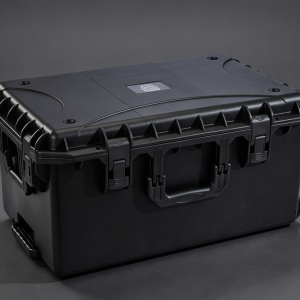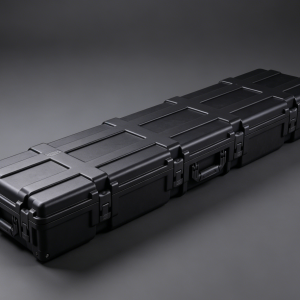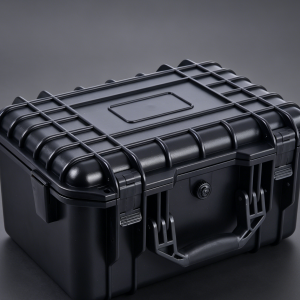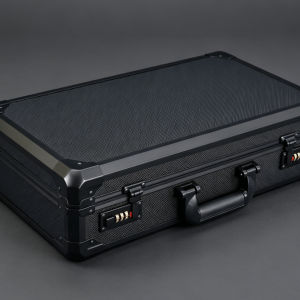
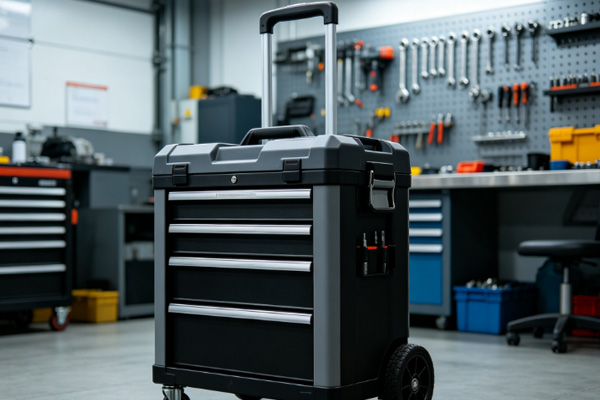
In work environments such as automotive repair, industrial maintenance, equipment servicing, and engineering construction, tools often need to move along with the working position. Traditional fixed storage systems have certain limitations in mobility efficiency and centralized tool management. A mobile box-type tool cart combines storage space, classification structure, and mobility functions, allowing technicians to use tools more flexibly between different workstations. Multi-layer drawers, large-capacity storage, roller structures, and stable load-bearing design make it a common tool management solution in professional maintenance scenarios. Understanding its main features helps users choose a more suitable tool storage solution based on actual work needs.
Mobile Box-Type Tool Carts Feature Flexible Mobility
Mobility is one of the key design advantages that distinguishes box-type tool carts from traditional fixed storage cabinets, especially in environments where work locations change frequently.
Roller Structure Reduces Handling Effort
In professional maintenance work, manually carrying a large number of tools can easily increase workload.
- Multi-directional movement for greater flexibility: The bottom casters allow the tool cart to move quickly across workshop floors, making it easy to follow changes in workstations.
- Easier push-and-pull operation: With a handle design, technicians can directly move the entire tool set, reducing repeated carrying.
- Adaptability to different work areas: Automotive repair, equipment maintenance, and industrial servicing all require high mobility.
The roller structure shifts tool management from fixed storage to mobile usage, improving on-site operational convenience.
Centralized Tool Management During Movement
When the tool cart is moved, it can transport multiple tools in a centralized way, reducing the need for carrying multiple boxes. A large number of tools such as wrenches, sockets, and screwdrivers can be stored together, while also reducing the risk of tool loss. Centralized management helps prevent tools from being scattered across different work areas. The combination of mobility and storage makes the maintenance workflow more continuous.
Multi-Layer Structure Improves Tool Classification Efficiency
A mobile box-type tool cart not only emphasizes mobility, but its internal structure also determines the actual user experience.
Drawer Layering Makes Tool Classification Clearer
Different types of tools can be arranged in different zones according to their usage.
- Independent storage for hand tools: High-frequency tools such as wrenches, pliers, and screwdrivers are centrally placed for quick access.
- Organized management of sockets and small accessories: Different sizes of sockets, screws, and washers are sorted using compartmentalized structures.
- Proper planning for power tools: Electric drills, batteries, and related accessories can be placed in larger drawers or dedicated areas.
The layered structure reduces tool mixing and makes tool locations more intuitive.
Frequently Used Tools Are Easier to Access
Certain tools are used repeatedly in maintenance work.
- Common tools placed on upper layers: This reduces bending and searching, improving operational efficiency.
- Low-frequency tools placed on lower layers: Spare and specialized tools can be stored in lower positions, freeing up upper space for high-frequency use.
A clear hierarchical layout helps form stable usage habits.
Large Capacity and Load-Bearing Design for Professional Use
Professional technicians usually need to manage a large number of heavy tools, making load capacity a critical factor.
Large Storage Capacity for Multiple Tools
Compared with ordinary portable toolboxes, mobile box-type tool carts offer significantly more storage space. As the number of tools increases, the existing space can still be organized effectively, reducing the need for additional storage equipment. Multi-layer space can also be reconfigured as tool types expand, making large-capacity design especially suitable for automotive repair and industrial maintenance environments.
Stable Structure Enhances Long-Term Use Experience
High-frequency usage environments place higher demands on structural strength.
- Reinforced cabinet body improves stability: It can withstand long-term pressure from heavy tools.
- Durable drawer structure: Frequent opening and closing operations remain smooth and stable.
- Surface protection reduces wear: Enhances durability during long-term movement and use.
A stable structure helps extend the service life of the tool cart.
Mobile Box-Type Tool Carts Adapt to Multiple Professional Scenarios
Different working environments have different requirements for tool carts, and mobile designs provide more flexible solutions.
Automotive Repair Scenarios
In automotive repair, there are many types of tools, and working positions often change. The tool cart can be pushed directly to the corresponding repair location, following the vehicle to reduce time spent retrieving tools. Different types of tools can be stored and managed separately for clearer and more efficient access. After centralized storage, the workspace can also be kept cleaner, reducing clutter on the workbench.
Industrial Maintenance and Equipment Servicing Scenarios
Maintenance work in industrial environments usually involves a wide range of specialized equipment.
- Suitable for multi-station operations: The tool cart can move quickly between different machines.
- Supports large-scale tool management: Multi-layer space meets the storage needs of different trades.
- Improves on-site efficiency: Centralized transport and categorized management reduce time spent searching and carrying tools.
Further enhances overall workflow continuity and efficiency.
Compared with traditional fixed storage systems, mobile box-type tool carts are more suitable for work scenarios requiring frequent tool movement. They also improve tool organization and access efficiency through rational zoning. SIPHIA BOX focuses on professional tool storage solutions, providing more efficient tool management support for automotive repair, industrial maintenance, and equipment servicing through practical structures and flexible designs.