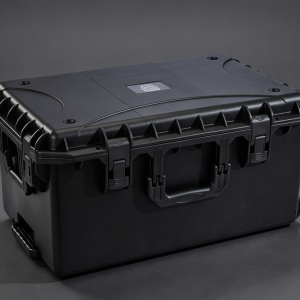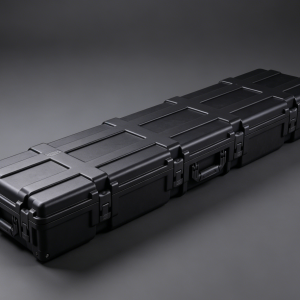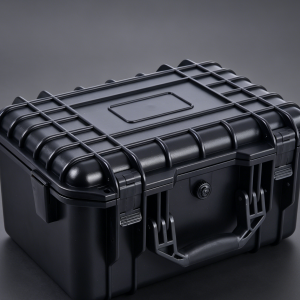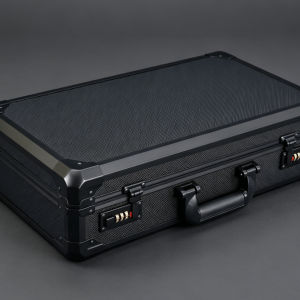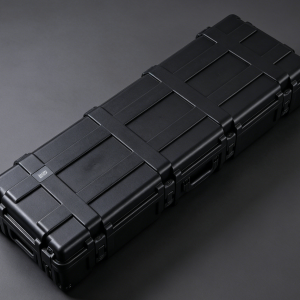
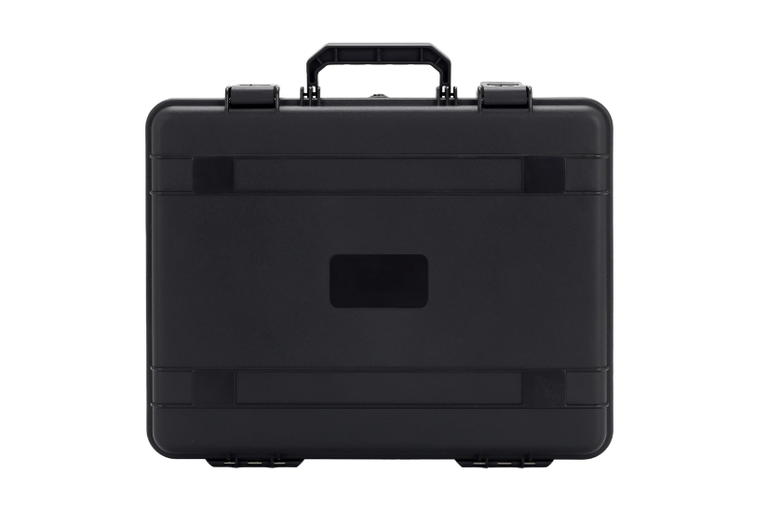
In workshops, factories, automotive repair shops, and equipment maintenance areas, a toolbox does more than simply store tools. It can directly affect tool accessibility, workplace organization, and mobility. Compared with household toolboxes, professional toolboxes need to accommodate more types of wrenches, sockets, screwdrivers, pliers, measuring tools, and sometimes power tools. As a result, they have higher requirements for size, structure, and load capacity.
When choosing an industrial toolbox, many users focus only on whether it has enough capacity. However, it is equally important to consider whether the toolbox dimensions fit the actual working environment. A suitable professional toolbox should provide a practical balance between storage capacity, accessibility, and available workspace.
Common Size Ranges for Professional Toolboxes
Small Professional Toolboxes
Small toolboxes are generally suitable for basic hand tools such as screwdrivers, wrenches, pliers, tape measures, and hex keys.
These toolboxes are relatively compact and easy to carry, making them suitable for equipment inspections, mobile maintenance work, and jobs that require technicians to frequently move between work areas. If you only use a limited number of tools, there is no need to choose a large toolbox simply for additional capacity.
Medium Professional Toolboxes
Medium-sized toolboxes are a common choice for workshop maintenance. They can accommodate a wider selection of hand tools as well as some small equipment.
For automotive repair, mechanical maintenance, and assembly work, a medium toolbox often provides a good balance between storage capacity and portability. Models with drawers, trays, and compartments can also improve tool organization and accessibility.
Large Industrial Toolboxes
Large toolboxes are designed for professional users who work with a large number of tools or handle more complex tasks. In addition to hand tools, they may need to store socket sets, power tools, measuring instruments, and various accessories.
These toolboxes typically offer greater internal capacity and stronger load-bearing performance. Some models also feature wheels and handles, making them easier to move around workshops and industrial facilities.
How Should You Determine the Right Toolbox Size?
Choose Capacity Based on the Number of Tools
Before choosing a toolbox, it is better to count and organize the tools that need to be stored instead of simply selecting a toolbox based on its appearance.
If you mainly use basic hand tools, a compact toolbox may be sufficient. If you have a large and diverse tool collection, a multi-drawer or modular toolbox may be more suitable. It is also recommended to leave some additional space for future tools.
Consider the Size of Your Largest Tools
Toolbox size depends not only on the number of tools but also on the length, width, and height of the largest tools.
For example, long-handled wrenches, large socket sets, and power tools can require significant storage space. If the toolbox is not long or deep enough, some tools may not fit properly even when the overall toolbox appears large.
Therefore, when determining the right professional toolbox size, measure your key tools first and then determine the required internal storage space.
What Toolbox Dimensions Matter in Workshop Applications?
Toolbox Width and Available Workspace
Workshops usually have fixed areas around workbenches, equipment, and aisles. Therefore, toolbox size should not be determined solely by internal capacity.
If the toolbox will be placed near a workbench, measure the available width in advance to ensure it does not take up too much operating space. For mobile toolboxes, also consider aisle width and turning space.
Toolbox Height and Drawer Accessibility
Large toolboxes often use multiple drawers, and overall height directly affects storage capacity and ease of use.
Although a taller toolbox can provide more storage space, the upper sections may be difficult to access. For technicians who frequently retrieve tools, a practical height can be more valuable than simply maximizing capacity.
Industrial Toolboxes Also Need Adequate Load Capacity
Tool Weight Should Not Be Overlooked
Industrial maintenance tools are often heavier than household tools. Socket sets, metal measuring instruments, and power tools can add significant weight. Therefore, an industrial toolbox needs not only sufficient storage space but also reliable load-bearing performance.
If a toolbox will regularly carry heavy tools, pay attention to the material of the toolbox, drawer construction, slide rails, and bottom support structure.
Drawer Dimensions Should Be Properly Planned
Multi-drawer toolboxes are particularly useful for professional maintenance workers. Drawers with different heights can be used to store screwdrivers, wrenches, socket sets, and larger tools separately.
Well-designed drawer dimensions help prevent tools from being mixed together and make it easier for workers to quickly find the tools they need.
Choosing Toolbox Sizes for Different Industrial Applications
Automotive Repair Workshops
Automotive repair usually involves a wide range of wrenches, sockets, screwdrivers, and diagnostic tools. Medium or large toolboxes and rolling tool carts are often suitable. For applications that require frequent movement, models with durable wheels can be particularly useful.
Mechanical Manufacturing Workshops
Mechanical manufacturing and equipment maintenance involve a wider variety of specialized tools. A multi-drawer industrial toolbox can be a practical choice. Different drawer sizes can be used to organize measuring instruments, assembly tools, and maintenance equipment separately.
Factory Equipment Maintenance
Factory maintenance technicians often need to carry tools between different production areas. Therefore, the toolbox should not be unnecessarily bulky or heavy.
For this type of application, a portable professional toolbox designed around frequently used tools can help reduce unnecessary weight while keeping essential equipment organized.
What Dimensions Should You Check Before Buying?
Before purchasing a professional toolbox, pay attention to several key specifications, including overall length, width and height, usable internal dimensions, drawer dimensions, individual drawer load capacity, and total load capacity.
You should also measure the actual location where the toolbox will be used. If it needs to fit underneath a workbench, height is important. If it needs to be transported in a vehicle trunk, length and width should be checked carefully. If it will be moved around a workshop, make sure its overall dimensions are compatible with available aisles and working areas.
There is no single toolbox size that works for every industrial application. Different workshops, tool collections, and working methods have different storage requirements.
When choosing an industrial toolbox, do not focus only on maximum capacity. Instead, consider tool dimensions, tool quantity, drawer configuration, load capacity, mobility, and available workspace. When the toolbox dimensions match the actual working requirements, it can improve tool management, make maintenance tasks more organized, and help professional technicians work more efficiently.