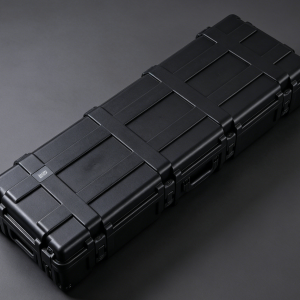
In automotive repair, industrial maintenance, equipment installation, and professional workshops, the large number and variety of tools make it difficult for a single storage method to meet daily work requirements. A box-type tool cart combines components such as the cabinet body, drawers, slides, casters, and locks to provide clear, stable, and mobile storage space for different types of tools. Understanding the basic structure of a box-type tool cart can help businesses and maintenance personnel choose more suitable products according to their actual work requirements. A professional tool storage solution can help users improve tool management efficiency and the overall work experience.
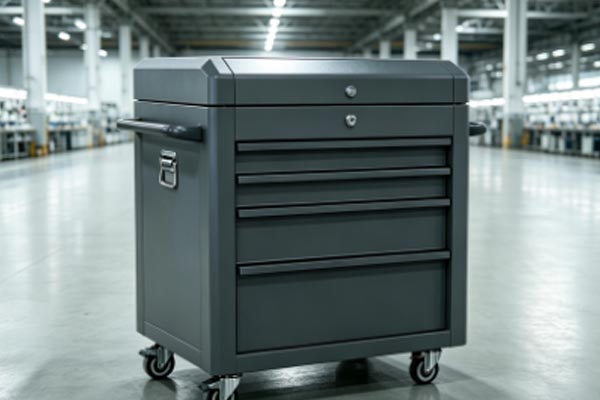
Main Structure of a box-type tool cart
The main body of a box-type tool cart provides tool storage, load-bearing, and overall support. Its structural design directly affects storage capacity, stability, and durability.
Cabinet Frame
The cabinet frame is the foundation of a box-type tool cart and is usually made of metal sheets or high-strength composite materials.
- Supporting the Overall Weight: The frame must bear the combined weight of the drawers, tools, and accessories. A stable structure can reduce deformation during long-term use.
- Improving Cabinet Stability: Properly designed columns, base plates, and side panels help the tool cabinet remain balanced during movement and parking, making it suitable for workshops, warehouses, and other work environments.
- Adapting to Different Capacity Requirements: Compact box-type tool carts are suitable for personal repair work, while large-capacity models are more suitable for auto repair shops, industrial workshops, and equipment maintenance teams.
A stable cabinet frame is the foundation for ensuring the safe load-bearing capacity and long-term use of a box-type tool cart.
Top Workbench
The top workbench is located above the tool cabinet and can be used to temporarily place tools, parts, and maintenance equipment.
- Providing Temporary Operating Space: Maintenance personnel can place screws, wrenches, testing instruments, and other items on the workbench, reducing the need to repeatedly bend down to retrieve or store tools.
- Facilitating Tool Classification: Frequently used tools can be temporarily placed on the top area and returned to their corresponding drawers after the work is completed, helping keep the work area organized.
- Enhancing Daily Practicality: Some workbenches include anti-slip mats, wear-resistant surfaces, or raised edges to reduce the risk of tools slipping off and the work surface being scratched.
Proper use of the top workbench can further improve the operating convenience and space utilization of a box-type tool cart.
Drawer and Internal Storage Structure
Drawers are the core storage components of a box-type tool cart. Drawers with different heights and capacities can accommodate tools of various sizes.
Drawers in Multiple Sizes
Box-type tool carts are typically equipped with shallow drawers, medium-height drawers, and deep drawers to meet the needs of classified tool storage. Shallow drawers are suitable for storing small items such as screwdrivers, sockets, bits, measuring tools, and fasteners, making them easy to identify and access. Medium-height drawers are suitable for common hand tools such as wrenches, pliers, hammers, and maintenance accessories, making it convenient to organize tools according to their frequency of use. Deep drawers are suitable for storing power tools, pneumatic tools, testing instruments, and longer tools, providing greater vertical space for larger equipment and reducing compression and collisions. Drawers in multiple sizes allow tools of different dimensions and purposes to be stored more efficiently.
Drawer Slides
Slides connect the drawers to the cabinet body. They determine whether the drawers open smoothly and also affect the load-bearing performance of the tool cabinet.
- Ball-Bearing Slides Improve Smoothness: High-quality ball-bearing slides reduce pulling resistance, allowing maintenance personnel to open drawers easily even when the tools inside are heavy.
- Heavy-Duty Slides Enhance Load-Bearing Capacity: Drawers used to store large tools require stronger slides to reduce the possibility of sagging or jamming after long-term loading.
- Full-Extension Design Facilitates Access: When the drawers are fully extended, the tools inside are clearly visible, reducing the chance of items in the corners being blocked from view.
High-quality slides affect not only the operating feel of the drawers but also the load-bearing capacity and service life of the tool cabinet.
Drawer Liners and Dividers
The inside of drawers is often equipped with anti-slip mats, foam liners, or adjustable dividers.
- Reducing Tool Collisions: Soft liners cushion friction between tools, reducing noise and damage caused by metal tools hitting each other.
- Keeping Tools in Place: Dividers can be adjusted according to tool size, helping wrenches, sockets, and accessories remain relatively fixed and reducing disorder during movement.
- Supporting Customized Management: Businesses can design dedicated layouts according to job roles and tool types, allowing each drawer to follow clear tool storage standards.
Properly configured liners and dividers help protect tools and establish a more organized storage system.
Mobility and Safety Structure
A box-type tool cart must not only provide storage capacity but also meet the requirements for movement, parking, and safety management in workshops.
Caster System
Casters determine the mobility and parking stability of the tool cabinet.
- Swivel Casters Improve Steering: Front swivel casters help the tool cabinet turn flexibly in narrow aisles and between maintenance workstations.
- Fixed Casters Enhance Straight-Line Movement: Rear fixed casters help maintain the direction of movement and are suitable for pushing the tool cabinet over longer distances through workshop aisles.
- Braking Devices Ensure Parking Stability: Casters with brakes can secure the cabinet during maintenance and reduce safety risks caused by unintended movement.
The caster system should be selected according to the tool cabinet’s load, floor conditions, and daily moving distance.
Push Handle
The push handle is usually installed on the side or top of the cabinet to help workers control the direction of movement. An ergonomic design with a suitable height and gripping angle can reduce strain on the wrists and lower back during pushing while improving mobility efficiency. Maintenance personnel can quickly move the tool cabinet to vehicles, equipment, or construction workstations, reducing the time spent going back and forth to retrieve tools. A comfortable and sturdy push handle makes the tool cabinet easier to operate in high-frequency movement scenarios.
Central Lock
The lock protects tools and accessories and is suitable for storing high-value, precision, or restricted-access equipment.
- Locking Multiple Drawers at Once: A central lock can control multiple drawers simultaneously, reducing the need to lock each drawer individually.
- Reducing the Risk of Tool Loss: In public workshops, warehouses, or collaborative work environments, a locking mechanism helps strengthen tool management.
- Facilitating Job Handover: When a tool cabinet is assigned to a specific person, the lock can work with key or access management to improve clarity during handovers.
A well-designed locking system enhances tool security and helps businesses implement a management approach with clearly assigned responsibility.
How the Structure of a box-type tool cart Affects the User Experience
Different structural components work together to determine the storage efficiency, mobility, and long-term value of a box-type tool cart.
Structural Configuration Should Match the Work Environment
Automotive repair requires many sockets, wrenches, and testing tools. Industrial maintenance places greater emphasis on load-bearing capacity and drawer capacity, while construction work focuses more on mobility and flexibility in tool combinations.
- Compact Designs Are Suitable for Personal Repair Work: Compact cabinets occupy less space and are suitable for personal garages, repair benches, and work areas with limited space.
- Large-Capacity Designs Are Suitable for Professional Workshops: Multiple drawers and heavy-duty frames can accommodate more tools, making them suitable for centralized management by maintenance teams.
- Multiple Users Require Clear Zoning: Dividing drawers according to job type, equipment, or frequency of use helps establish consistent standards for returning tools to their proper places.
Only by configuring the structure according to the actual work environment can the storage and mobility advantages of a box-type tool cart be fully utilized.
Detail Design Determines Long-Term Performance
The sheet thickness, welding quality, slide quality, caster load capacity, and lock structure of a box-type tool cart all affect its durability.
- Pay Attention to Overall Load-Bearing Capacity: When storing a large number of tools, selection should be based on both the total load capacity of the cabinet and the load capacity of individual drawers.
- Pay Attention to Surface Protection: Powder coating, baking paint, or rust-proof treatments can improve the cabinet’s resistance to oil, moisture, and daily wear.
- Pay Attention to Maintenance and Expansion Convenience: Replaceable casters, adjustable dividers, and modular accessories allow the tool cabinet to adapt to changing work requirements.
Paying attention to these structural details can help reduce future maintenance costs and extend the service life of a box-type tool cart.
The core purpose of a box-type tool cart is to help maintenance personnel establish a clear and organized tool usage system. During the selection process, it is necessary to consider tool dimensions, storage quantity, retrieval habits, working environment, and daily mobility requirements. At the same time, attention should be paid to overall load-bearing performance, drawer operation, caster flexibility, safety protection, and space layout. Properly configuring these elements can make tool retrieval and storage more convenient, reduce on-site organization time, and improve management efficiency during long-term use.