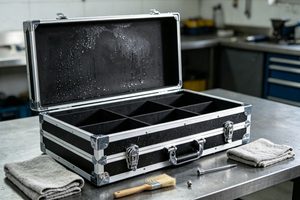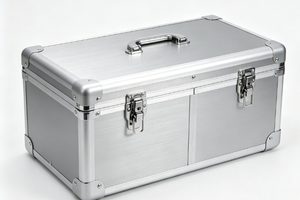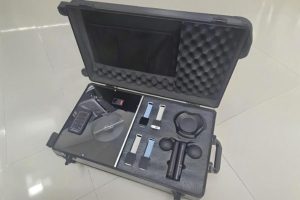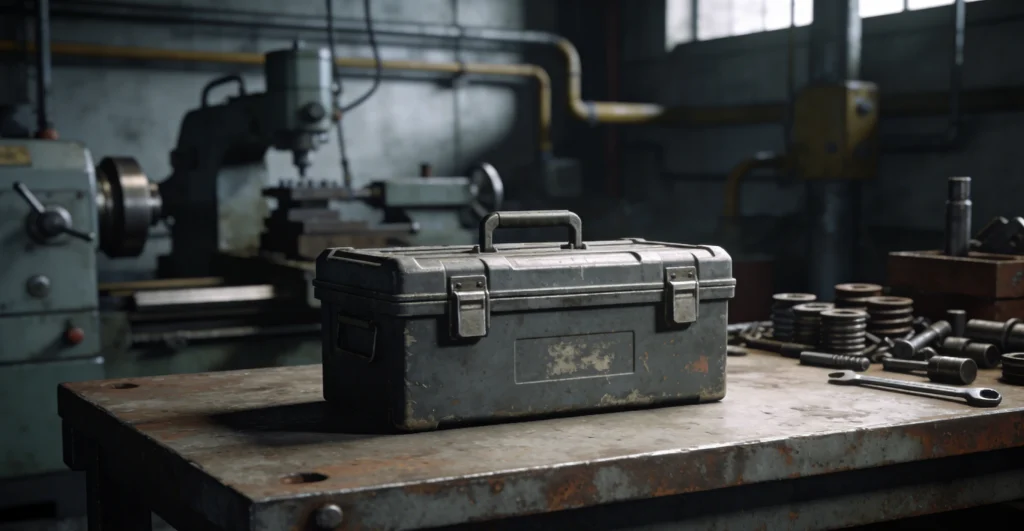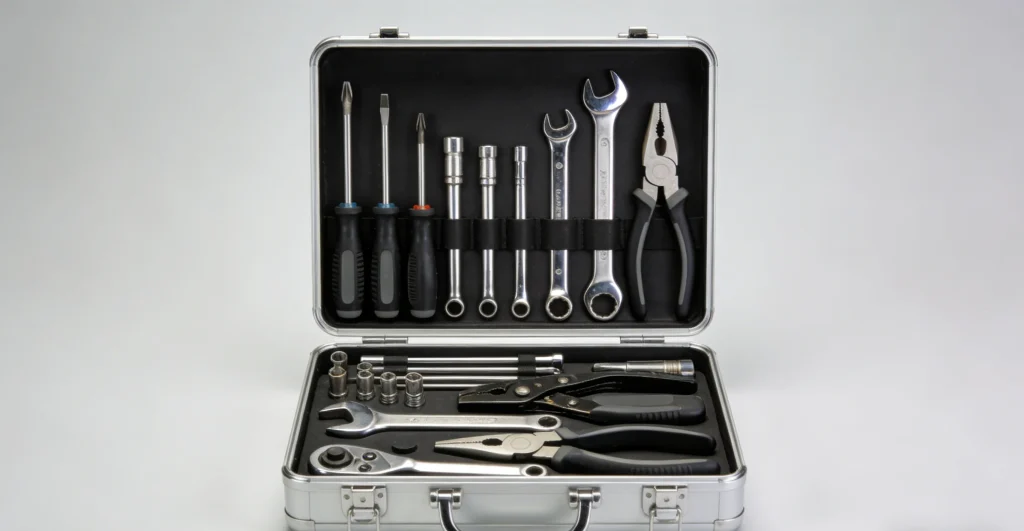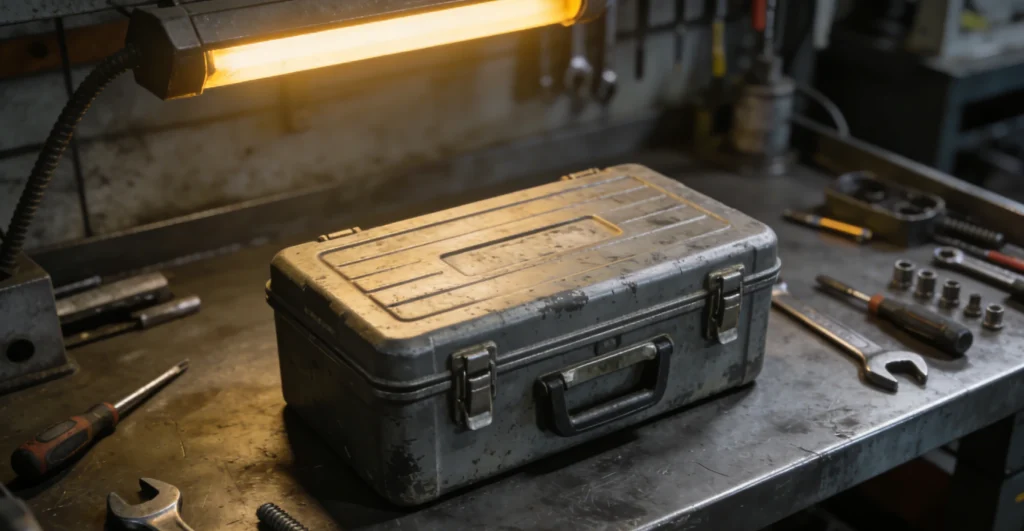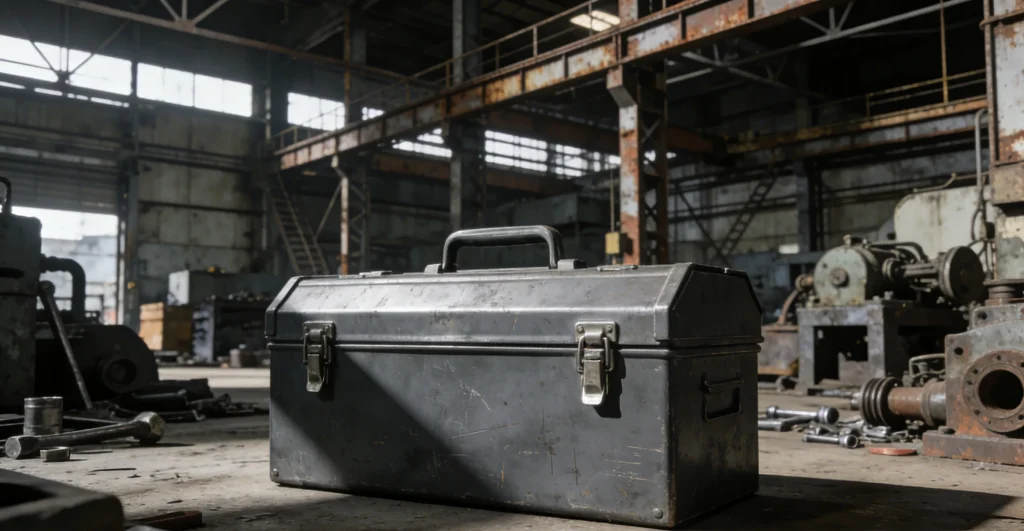
The capacity of a portable tool box is not necessarily better when it is larger, nor is a smaller box always more convenient. The right capacity should be selected according to the number of tools, tool sizes, application scenarios, and carrying method. If the capacity is too small, wrenches, screwdrivers, pliers, measuring tapes, electrical tools, and other equipment cannot be properly arranged, making tools easy to stack and difficult to access during use. If the capacity is too large, it increases the weight of the tool box itself and takes up more space in a vehicle, on a workbench, or in a storage area. It can also become a burden when carried frequently. Therefore, when purchasing or customizing a portable tool box, it is necessary to first understand which tools need to be carried on a daily basis and then determine the appropriate box dimensions and internal space.
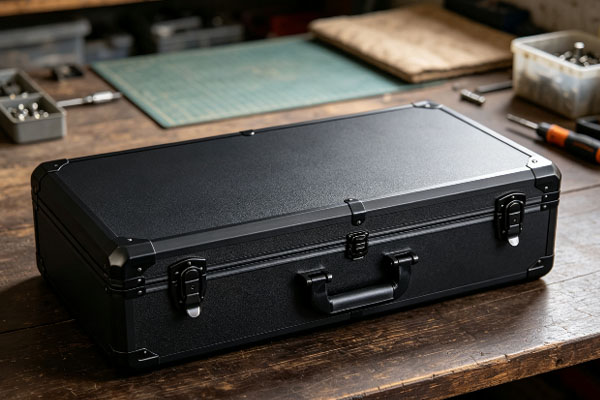
For household repairs, small-scale installation, equipment maintenance, outdoor work, and other scenarios, the number of tools required can vary significantly. For example, routine household repairs may only require basic tools such as screwdrivers, adjustable wrenches, hammers, measuring tapes, and hex keys, so a small- or medium-capacity tool box can meet the requirements. If the tool box is used for electrical repairs, mechanical maintenance, or automotive maintenance, in addition to conventional hand tools, it may also need to accommodate multimeters, socket sets, ratchet wrenches, electric screwdrivers, measuring tools, and spare parts. In this case, more internal space is required.
How to Determine the Capacity of a Portable Tool Box?
Start by Counting the Tools Used Daily
Before choosing a tool box, gather the tools that are frequently used and roughly classify them according to their sizes. Do not only count the number of tools. Also check whether there are long wrenches, power tools, measuring instruments, or bulky accessories. If there are relatively few tools and most are small hand tools such as screwdrivers, pliers, and wrenches, a compact tool box can be selected. Such a box is generally easy to carry and suitable for household repairs, equipment inspections, and simple installation work. If there are more than a dozen types of tools, especially if they include larger socket tools, power tools, or repair accessories, the capacity should be increased appropriately. In particular, when maintenance personnel need to carry tools outside every day, the box should not only be large enough to hold everything. Some extra space should also be reserved to prevent the box from becoming overfilled.
Leave Space for the Tools
A tool box should ideally not be packed until there is no empty space left. If tools are squeezed too tightly together, it can affect accessibility and may prevent the lid from closing properly. Frequent opening and closing of an overcrowded tool box can also cause tools to collide with one another. Generally, after considering the space occupied by existing tools, some additional capacity should be reserved for commonly used consumables, spare screws, nuts, washers, tape, and other small items. This also means that adding a small number of tools later will not immediately require replacing the tool box with a larger one.
What Capacity Is Suitable for Different Applications?
The capacity of a portable tool box needs to be selected according to actual working habits. Household use and professional maintenance have significantly different space requirements, so capacity should not be determined simply by the number of tools.
Compact Capacity Is Suitable for Household Repairs
Tools used at home are generally basic hand tools, and there is usually no need to carry large quantities of professional equipment. Screwdrivers, pliers, hammers, adjustable wrenches, measuring tapes, electrical tape, and other tools take up relatively little space, so a small or medium portable tool box is usually sufficient. These tool boxes are lightweight and convenient to store in household cabinets, storage rooms, or vehicle trunks. If the tool box is only used for furniture assembly, door and window repairs, or simple appliance maintenance, there is no need to purchase an oversized box simply to pursue a larger capacity.
Electricians and Maintenance Personnel Need More Space
Electricians and equipment maintenance personnel often need to carry both hand tools and testing equipment, such as multimeters, voltage testers, wire strippers, crimping pliers, screwdrivers, and insulated tools. Although these individual tools may not necessarily be heavy, there are usually many of them, and their shapes can vary significantly. Therefore, a medium-sized tool box is generally more suitable. Different storage areas can be arranged internally to separate commonly used tools from measuring instruments and reduce mixed storage.
Automotive Maintenance Requires Greater Capacity
Automotive maintenance tools generally include socket sets, ratchet wrenches, torque wrenches, hex tools, screwdrivers, pliers, and various repair accessories in different specifications. Some tools are relatively long and can also be quite heavy. In this situation, the tool box should not focus only on portability. Load-bearing capacity and internal space must also be considered. A larger aluminum tool box or industrial-grade portable tool box is more suitable for centralized storage of automotive repair tools.
When making a selection, the following 4 points can be used as key references:
Number of Tools: The more tools there are, the greater the required usable volume. Do not select a capacity based only on the minimum number of tools currently being used.
Tool Dimensions: Long-handled tools, power tools, and large wrenches require greater horizontal or vertical space.
Frequency of Use: Tools used every day should be placed in easily accessible positions. Avoid excessive stacking simply to save space.
Carrying Method: If the tool box needs to be carried frequently by hand, its size and overall weight should be controlled. If it is mainly kept in a vehicle or work area, capacity can be given greater priority.
Is a Larger Tool Box Capacity Always Better?
A larger tool box can accommodate more tools, but this does not necessarily mean a better user experience. Increasing tool box capacity usually also increases its dimensions and weight. If there is no reasonable internal organization, a large-capacity tool box can easily become a “tool pile.” Although it can hold many items, finding a specific tool may require repeatedly searching through the contents.
A Reasonable Capacity Is More Practical Than Blindly Increasing Capacity
A suitable tool box should allow commonly used tools to remain in clearly defined positions. For example, screwdrivers can be placed in fixed tool slots, wrenches can be arranged according to their specifications, and small screws and accessories can be stored in separate compartments. In this way, even when there are many tools, work efficiency will not be reduced by disorganized storage. If the types and quantities of tools have already been determined, the tools can be arranged inside the box once, and the required length, width, and height can then be measured. Selecting a tool box based on these dimensions is more accurate than simply referring to a capacity measured in liters.
Capacity Also Depends on Box Structure
Two tool boxes with the same external dimensions may have different amounts of usable internal space because their internal structures are different. A tool box with fixed trays is suitable for storing small hand tools, while a large-capacity tool box with a more complete internal space is better suited for power tools or larger maintenance equipment. Therefore, capacity selection is not only about how large the box is. It is also necessary to check whether there are areas inside that cannot be effectively used. For users who need customized tool boxes, trays, dividers, and tool slots can also be designed according to tool dimensions to achieve higher internal space utilization.
Frequently Asked Questions
Q: If I Do Not Have Many Tools, Should I Buy a Larger Tool Box?
Answer: If you are likely to add more tools later, you can reserve some additional capacity, but it is not recommended to purchase a box that is significantly larger than your actual requirements. Excessive capacity can increase the carrying burden and may also allow tools to move around inside the box.
Q: Can a Small-Capacity Tool Box Hold Power Tools?
Answer: Yes, but it depends on the size of the power tool. If it is a small electric screwdriver or compact power tool, a small or medium-sized box may be able to accommodate it. If the box also needs to contain batteries, chargers, and spare accessories, additional space will be required.
Q: Should Capacity Be Based on Liters or Dimensions?
Answer: Both should be considered. The capacity measured in liters can help determine the overall volume, but length, width, and height are more direct measurements. For special tools such as long-handled wrenches and power tools, internal dimensions are often more important than the stated capacity.
Q: How Much Extra Space Should Be Left Inside a Tool Box?
Answer: It is recommended not to fill the box completely. Leaving some extra space makes tools easier to access and also allows room for additional small tools and consumables later. Especially for tool boxes used frequently, leaving some space is more convenient than pursuing maximum loading capacity.
The key to choosing the capacity of a portable tool box is not simply to pursue a “large” box, but to ensure that tools can fit properly, be accessed easily, and remain separated while maintaining a reasonable carrying weight. Household repairs generally do not require a large amount of space. Medium-sized tool boxes are suitable for electrical work, installation, and equipment maintenance, while automotive and mechanical maintenance, where there are usually more tools, is better suited to larger boxes. When selecting a tool box, organize the existing tools first, then measure the length and height of larger tools to determine how much usable internal space is required. For a larger number of tools, the impact of trays, dividers, and storage compartments on space utilization should also be considered.
If the tool box is mainly used for frequent transportation, a balance should be maintained between capacity and weight. If it is mainly kept in a vehicle, workshop, or work area, the capacity can be increased appropriately. A suitable tool box should be “large enough without being overcrowded.” A capacity that is too small limits storage, while a capacity that is too large increases weight and takes up more space. By selecting according to the number of tools, tool dimensions, frequency of use, and carrying method, a portable tool box can truly fulfill its role in organizing and transporting tools while also making daily maintenance work more orderly.