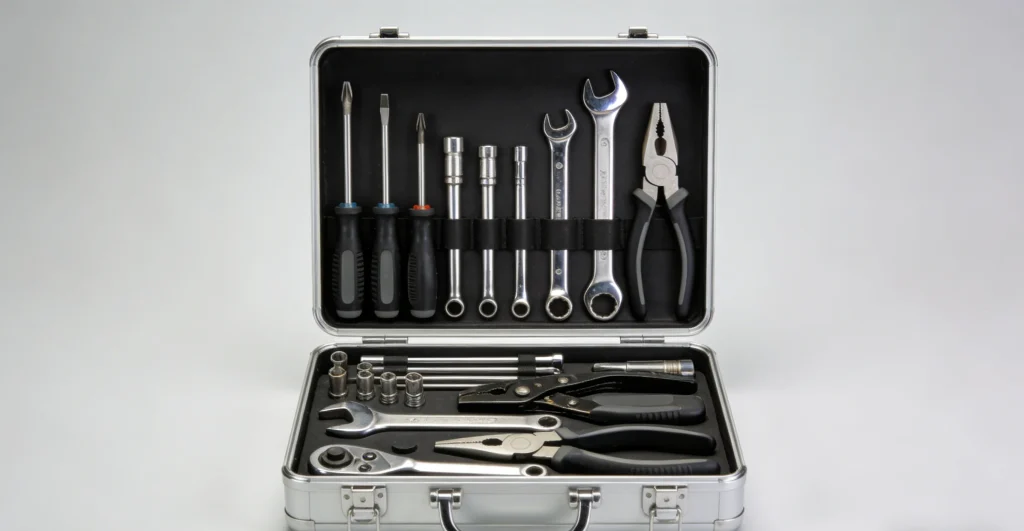
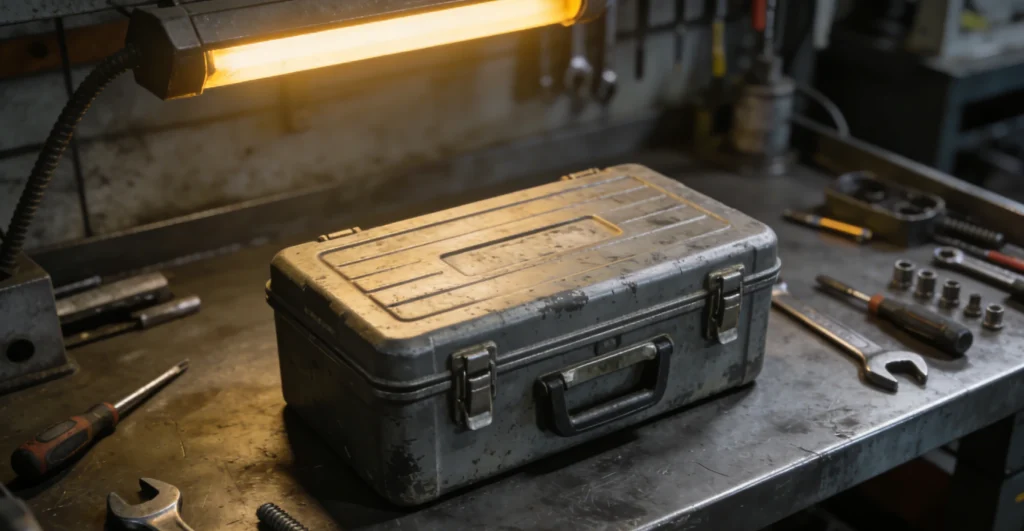
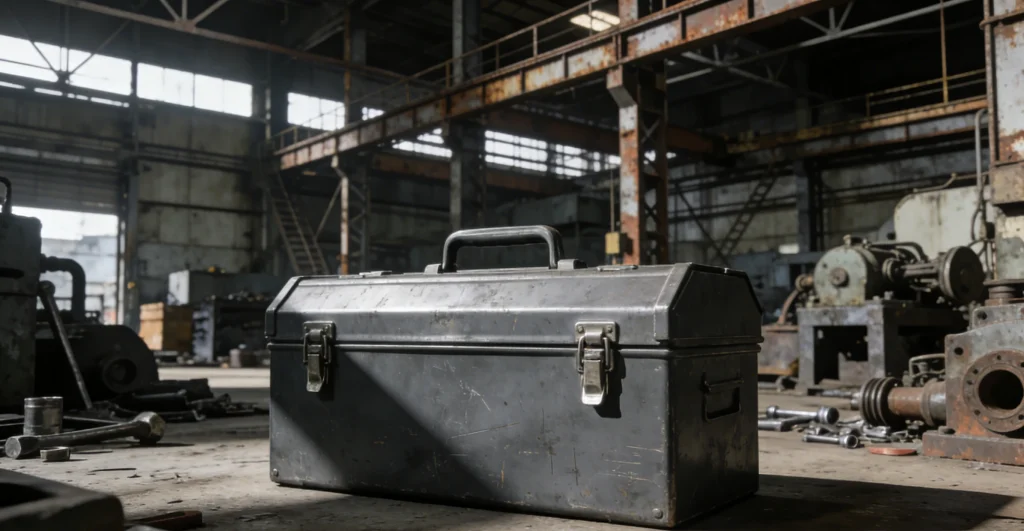
The selection of rolling tool box specifications essentially corresponds to a complete storage planning system. Home repairs mainly focus on basic hand tools, while auto repairs and equipment maintenance often involve sockets, power tools, measuring devices, and accessories. As the quantity of tools increases, box capacity, drawer structure, load-bearing capacity, and mobility conditions will all be affected. Before purchasing, you should sort out tools by size, weight, and usage scenario, and determine the appropriate specifications to more accurately match actual work needs.
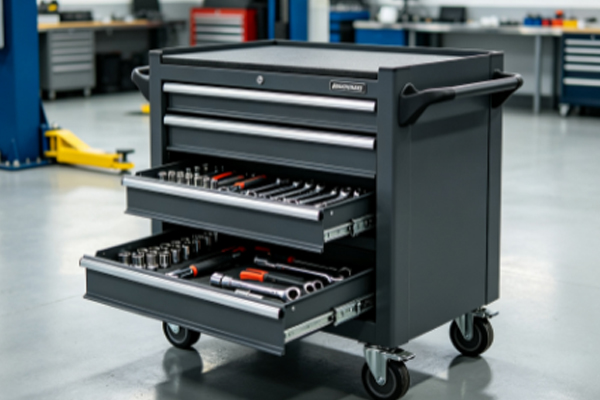
Different Tool Quantities Fit Different Rolling Tool Box Sizes
The quantity of tools helps determine the approximate capacity, but actual planning cannot just count “how many pieces” there are. The space occupied by different tools varies greatly, and the weight distribution will also affect the choice of box structure.
Small Quantities of Tools Fit Compact Sizes
Tools in home repair and simple installation scenarios are usually dominated by hand tools such as screwdrivers, wrenches, pliers, and tape measures.
- Fewer basic hand tools: Small drawers can meet categorized storage needs and reduce tool stacking.
- More small accessories: Screws, gaskets, cable ties, and connectors can be organized using compartment boxes without taking up large-sized drawers.
- Obvious mobility needs: Compact boxes have lower weight, making pushing and steering much more convenient.
Such scenarios are more suitable for rolling tool boxes with a smaller footprint and a moderate number of drawers.
Moderate Quantities of Tools Fit Multi-Drawer Structures
When the number of tools increases, drawers of different heights can be used for partitioning to avoid mixing various tools in the same space.
- Frequently used tools: Wrenches, screwdrivers, pliers, etc., can be placed in easily accessible locations.
- Tool sets: Sockets, bits, and hex tools are suitable for centralized organization according to specifications.
- Larger equipment: Power drills, chargers, etc., can be arranged in drawers with greater height or bottom storage areas.
Medium-sized rolling tool boxes are more suitable for users whose tool variety is gradually increasing while maintaining flexibility in the work area.
Large Quantities of Tools Require Comprehensive Consideration of Capacity and Weight
Professional repair scenarios involve many tools, and simply increasing the number of drawers is not enough; the overall status after loading must also be considered:
- Tool capacity: Determine the box size based on the total existing tools and leave space for future additions.
- Drawer load-bearing: Heavy sockets and power tools need drawers and slides with stronger load capacity.
- Weight distribution: Heavy objects should not be concentrated on the upper layers to avoid shifting the center of gravity.
- Box stability: After being filled, confirm that the box, casters, and bottom structure can withstand the actual load.
Large tool boxes are suitable for professional scenarios, but as capacity increases, load-bearing and stability must also be incorporated into specification judgments.
Tool Volume and Weight Determine Drawer Depth
With the same number of tools, the required storage space can be completely different. Slender tools are suitable for shallow spaces, while large power tools require taller drawers, so size planning needs to be implemented down to specific tools.
Small Tools Fit Shallow Drawers
The height of commonly used hand tools is usually not large, and the use of shallow drawers can reduce space waste and facilitate arrangement according to specifications.
- Wrench classification: Can be arranged horizontally according to length or specification to reduce mutual coverage.
- Screwdriver organization: Can use compartment structures to distinguish different bits and lengths.
- Socket storage: Paired with trays or dedicated slots, different sizes can be kept in fixed positions.
Shallow drawers are more suitable for undertaking storage tasks for tools with large quantities and small individual volumes.
Large Tools Require Adequate Internal Height
Impact wrenches, grinders, drills, and other items are significantly larger in volume than ordinary hand tools, and they are prone to being squeezed or failing to close when drawer height is insufficient.
- Confirm height: Measure the actual height of the tool and leave clearance for access.
- Check width: Long-handled tools and tool sets require sufficient horizontal space to avoid getting stuck.
- Observe depth: Large-volume equipment requires sufficient front and back space to prevent drawers from failing to close completely.
- Check load-bearing: Heavy equipment needs to match corresponding slides and rated loads.
Large tools should be preferentially matched with suitable storage heights and load-bearing ratings rather than simply pursuing more drawers.
Heavy Tools Require Attention to Weight Distribution
After large rolling tool boxes are loaded with a large number of metal tools, the overall weight will increase significantly. If the weight is concentrated at the top, the center of gravity of the tool box will rise, and stability during movement and steering will also be affected. Heavier tools can be preferentially arranged in lower drawers or bottom spaces, and lighter tools can be placed in the upper areas, which helps form a more reasonable weight distribution.
Drawer Layout Must Balance Operating Efficiency and Anti-Tipping
Multi-drawer structures can enhance categorization capabilities, but after large tool boxes are loaded with heavy objects, the drawer opening state will also change the stress conditions of the box. Specification selection needs to consider access efficiency and physical safety together.
High-Frequency Tools Placed in Easily Accessible Locations
If frequently used tools are placed in deep spaces for a long time, it will increase the frequency of searching and bending over to retrieve items, and locations can be arranged according to daily work processes:
- Common wrenches: Placed in easily visible drawers to reduce rummaging.
- Screwdrivers and pliers: Partitioned by usage frequency for more convenient access.
- Measuring tools: Tape measures, calipers, etc., should avoid being mixed with heavy tools to reduce collisions.
- Specialized tools: Low-frequency equipment can be arranged to the lower layers or independent areas.
Planning drawers according to actual usage frequency is more conducive to improving efficiency than simply allocating positions by tool category.
Heavy Tools Suitable for Lower Positions
The storage location of heavy tools will affect the weight distribution of the box, so you cannot just consider which drawer has more space.
- Bottom priority: Heavier repair equipment can be placed in lower storage areas.
- Distribute loads: Various heavy tools should be arranged in conjunction with drawer rated loads to avoid excessive concentration on a single layer.
- Avoid high-level weight stacking: The top area is not suitable for placing a large number of high-weight tools for a long time.
- Parking locks: When the tool box is used in a fixed position, caster locking functions can be used to reduce accidental movement.
Reasonably lowering heavier tools can improve the overall center of gravity position and make daily pushing smoother.
Pay Attention to Drawer Interlocks and Anti-Tipping Structures
When purchasing multi-layer heavy rolling tool boxes, focus on anti-tipping structures. Common ones include drawer interlocks and anti-tipping mechanisms to prevent multiple drawers from opening at the same time, causing the center of gravity to move forward and tip over; some products also enhance stability through bottom weighting, wide bases, caster layouts, and drawer limits. If used in heavy-duty environments such as auto repair and mechanical maintenance, judge based on tool weight, drawer load-bearing, and anti-tipping structures rather than just comparing the number of drawers.
Combine Workshop Space and Future Demands to Determine Final Sizes
After determining capacity, you also need to put the tool box back into the actual working environment for judgment. Passage width, drawer opening distance, movement routes, and future tool increments will all affect the final specifications.
Control Box Sizes Based on Actual Space
A tool box is not just something you put in; actual use must also leave space for personnel to stand, drawers to open, and movement to steer:
- Measure placement area: Confirm the width near walls, workbenches, and parking positions.
- Check passages: Passages must be wide enough to avoid collisions with equipment during pushing.
- Reserve opening distance: Drawers fully pulled out will occupy extra space and need to be calculated in advance.
- Consider steering areas: Boxes with casters need range of motion, and narrow areas require special attention.
Matching box sizes with site space can avoid situations where capacity is sufficient but normal work is affected.
Reserve Space for Future Tool Additions
If existing tools have already filled all drawers, subsequent additions of new tools will easily lead to mixed placement problems again. Appropriate expansion space can be reserved during purchase, and capacity can be determined based on the growth rate of future tools. For repair personnel whose tool variety changes greatly, models with more flexible drawer combinations can be prioritized.
Choose Specifications Based on Mobility and Load-Bearing Needs
Rolling tool boxes increase significantly in weight after being filled with tools, and casters, slides, and boxes must all bear actual loads. Movement conditions are also part of specification judgment:
- Caster load-bearing: Choose matching caster specifications based on full-load weight.
- Locking function: Parking locations must have reliable caster locking capabilities.
- Moving ground: When workshops have thresholds, unevenness, or slopes, pay attention to caster passing capabilities.
- Pushing methods: Scenarios with frequent movement need to pay attention to handle positions and box pushing stability.
The higher the movement frequency, the more obvious the requirements for casters and box structures, and capacity selection should also match actual working conditions.
Tool box sizes should be determined based on actual usage methods: prioritize compact specifications when tools are few, value multi-layer drawers and partitions when tools are complex, and balance load-bearing, anti-tipping, and mobility performance for heavy tools. When customized needs arise, internal structures can be planned according to tool sizes, equipment types, and usage environments. SIPHIA BOX provides tool boxes, protective cases, aluminum cases, and customized storage solutions to adapt to the storage and protection needs of different application scenarios.