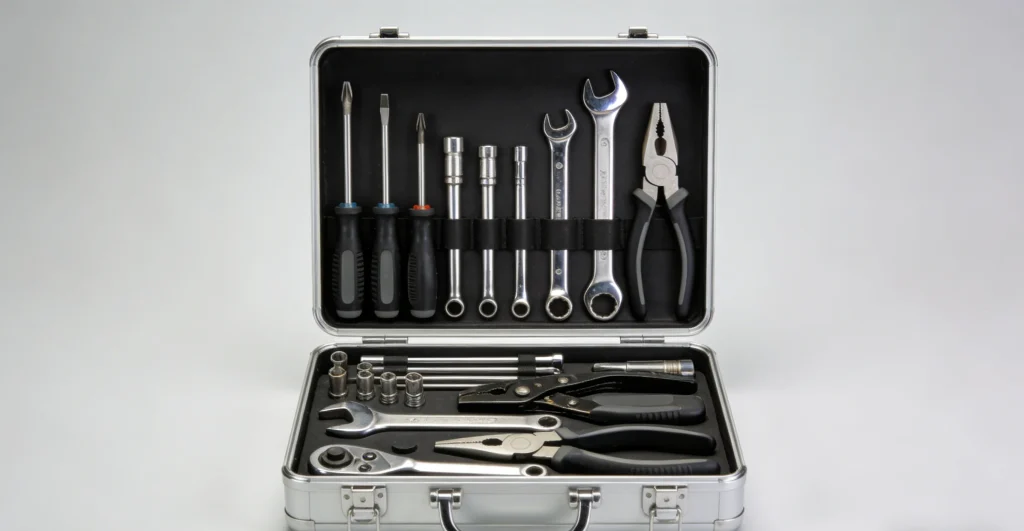
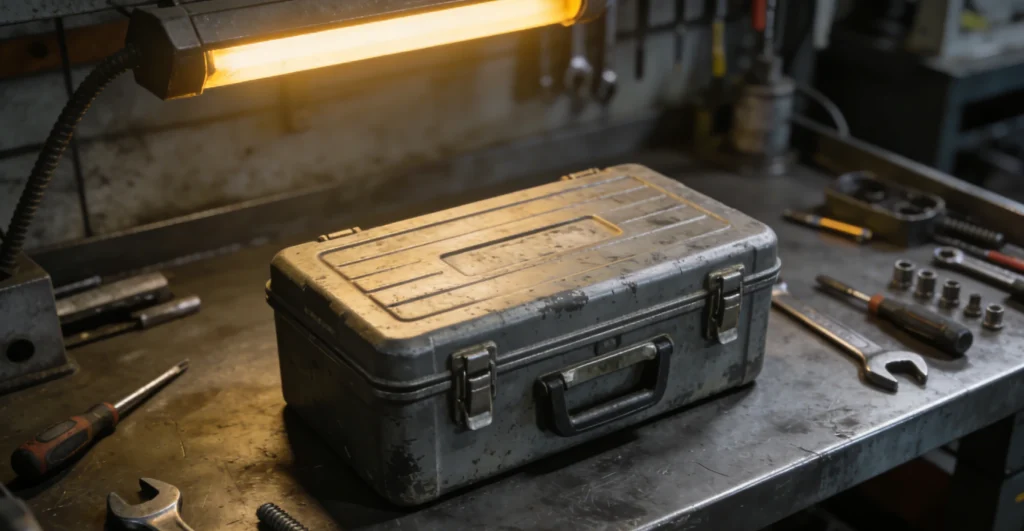
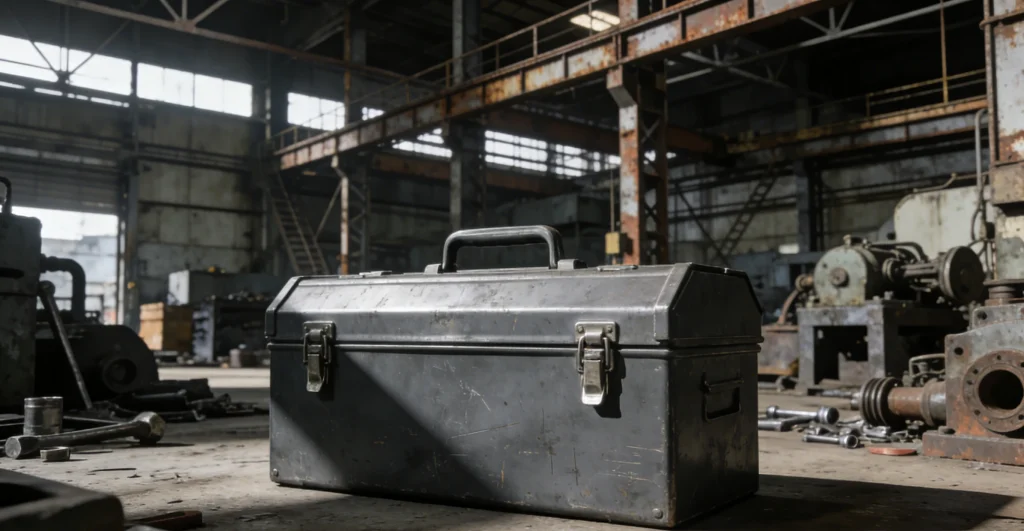
At repair, construction, and equipment maintenance sites, workers often need to carry multiple storage modules at the same time. Carrying several boxes separately can make organization and transportation more cumbersome, while simply stacking them may cause misalignment during movement. Stackable toolboxes use latches, positioning features, and box structures to create a connected system, allowing different modules to be configured according to actual tool quantities. For workers who frequently move between job sites, the latch design also affects assembly speed, carrying methods, and the overall convenience of using the tool set.
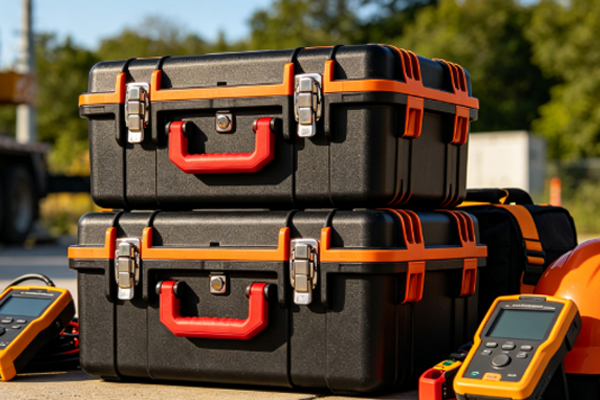
What Are the Main Functions of Latches in Stackable Toolboxes?
Latches are important connecting components between upper and lower boxes. They work together with positioning slots and locking features to connect multiple independent modules.
Securing the Upper and Lower Toolboxes
When multiple toolboxes are stacked vertically, latches can secure adjacent modules together instead of relying only on the weight of the boxes to keep them in position.
- Reduce the possibility of separation between upper and lower boxes.
- Eliminate the need to carry each box individually when transporting the complete tool set.
- Keep each module in a relatively fixed position after assembly.
For tool combinations that need to be moved as a complete unit, this connection method can reduce problems caused by loose or separated boxes during transportation.
Limiting Lateral Movement Between Boxes
Toolboxes may experience movement and vibration during vehicle transportation, floor movement, or manual handling.
- Relying only on surface contact between boxes may allow lateral displacement.
- Latches working together with positioning structures can limit relative movement.
- Multiple boxes can maintain a more orderly arrangement.
- Stackable toolbox designs emphasize reliable connections between modules and reduced movement after stacking.
The combination of latches and positioning structures helps improve stability during stacked transportation.
Making It Easier to Add or Remove Modules
One major advantage of stackable designs is the ability to adjust the configuration according to the number of tools. With a standardized connection method, users can add or remove corresponding modules according to different tasks. This design is suitable for repair and engineering teams whose tool quantities change over time and also makes it easier to expand storage capacity later.
What Practical Requirements Should Latch Designs Consider?
A practical latch structure should not focus only on locking strength. It also needs to consider workers’ daily operating habits, toolbox dimensions, and the location of the latch.
Opening and Closing Should Be Simple and Clear
Toolboxes are frequently used equipment, and their latches may be opened and closed many times a day. The operating process should therefore be straightforward.
- The operating position should be easy to locate.
- The latch should provide a clear locked position after closing.
- Removing a single module should not excessively affect the other boxes.
The more direct the operating process, the less time is needed to adjust the tool configuration on site.
The Latch Position Should Be Easy to Operate
Whether the latch is installed on the front, side, or another part of the box can affect the actual assembly and removal experience. For toolboxes placed in vehicles, on shelves, or inside equipment cabinets, the surrounding operating space is often limited. When the latch position matches the box layout, multiple connected modules can still remain convenient to operate.
The Latch Should Not Carry All the Load Independently
A well-designed stacking system usually allows the positioning structure and latch to work together.
- Slots, raised features, guides, or interlocking structures help accurately align the upper and lower boxes.
- The latch completes the securing function.
- The combination of positioning and latching allows forces to be distributed more appropriately around the connection.
- This can help reduce excessive loads on individual latches during long-term use.
Coordinated positioning and latching can improve the stability and durability of stacked connections.
What Latch Requirements Vary Between Different Applications?
Toolbox mobility, load weight, and working environments can differ considerably, so latch requirements also change according to the application.
Construction Work Requires Consideration of Frequent Transportation
Construction workers often need to move tools between warehouses, vehicles, and work areas.
- When multiple modules are connected, reliable connections can reduce the need to repeatedly carry individual boxes.
- Power tools, fasteners, and measuring tools can be organized in different modules.
- Organized configurations can make transportation and tool access more orderly.
A suitable combination of modules can improve tool transfer efficiency at construction sites.
Automotive Repair Requires Quick Separation When Needed
Automotive repair involves wrenches, sockets, screwdrivers, diagnostic equipment, and various accessories, and different tools are used at different frequencies.
- Stackable toolboxes can use different modules for different tool categories.
- Frequently used tools can be placed in easily accessible positions.
- Spare tools and small accessories can be stored in other boxes.
- When the job changes, only the required module can be carried instead of moving the entire storage system.
Configuring modules according to usage frequency and task requirements can improve tool access efficiency in automotive repair.
Outdoor Work Requires Attention to Transportation Conditions
Outdoor toolboxes may experience vehicle vibration, ground movement, and manual handling. The latches need to work together with box strength, connection points, and positioning structures.
- Vehicle vibration, ground movement, and manual handling all place demands on the latch and box connections.
- The latch needs to work together with box strength, connection points, and positioning structures.
- When the toolbox is exposed to moisture, dust, or complex environments for extended periods, the box material should be considered.
- Sealing structures and wear resistance should also be included in purchasing considerations.
- The appearance of the latch should not be the only focus.
Considering the latch, box structure, and environmental adaptability together can improve the long-term reliability of outdoor toolboxes.
How Should You Evaluate the Latch Design When Purchasing Stackable Toolboxes?
Latches are structural components that are operated repeatedly over a long period. During purchasing, combination testing and simulations based on actual usage conditions can help determine whether the design suits the workflow.
Check the Operating Feel of the Latch
Open and close the latch manually to determine whether there is noticeable sticking or excessive operating resistance.
- Check whether the latch remains secure after closing.
- Check whether the opening action can be completed quickly.
- Inspect whether the moving components are securely connected to the box.
- Understand the maintenance requirements of the latch under frequent long-term use.
Actual operation makes it easier to identify structural issues than simply examining the appearance.
Test Under Realistic Loading Conditions
Testing should not be limited to empty boxes. Tools can be loaded according to actual working conditions before stacking, carrying, and moving the modules. As the weight increases, the load on the connection structure also changes. Heavier modules are generally better placed at the bottom, while frequently used tools can be positioned where they are easier to access, improving the overall configuration.
Consider Future Expansion
If a company expects to add more tools in the future, it should also understand the compatibility between different modules when purchasing.
- A standardized latch interface allows new boxes to integrate into the existing system.
- Compatible designs can reduce the need to purchase an entirely new storage system.
- Understanding module compatibility in advance makes future expansion and configuration changes easier.
Considering module compatibility can help reduce long-term purchasing and expansion costs.
For professional repair, industrial maintenance, and construction teams, the key consideration is how well the latch works with the box structure, module dimensions, and actual workflow. When selecting a toolbox, testing it according to load weight, movement frequency, number of modules, and working environment can help determine the appropriate configuration. SIPHIA BOX provides modular tool storage solutions that can be configured with different functional modules for automotive repair, industrial maintenance, construction, and outdoor work, offering businesses and professional users a more flexible approach to tool organization.