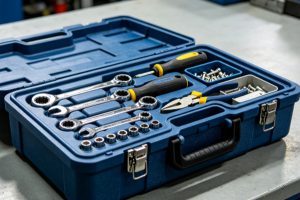
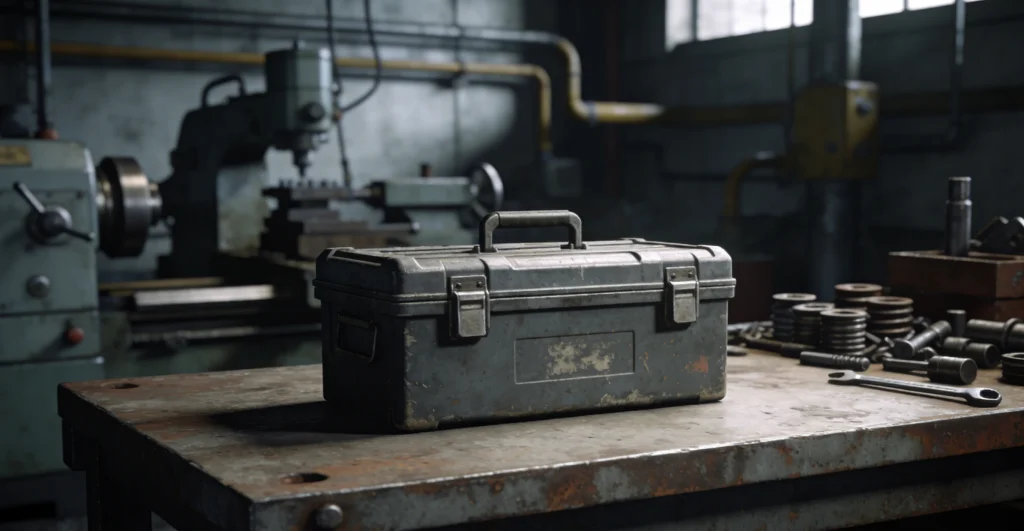
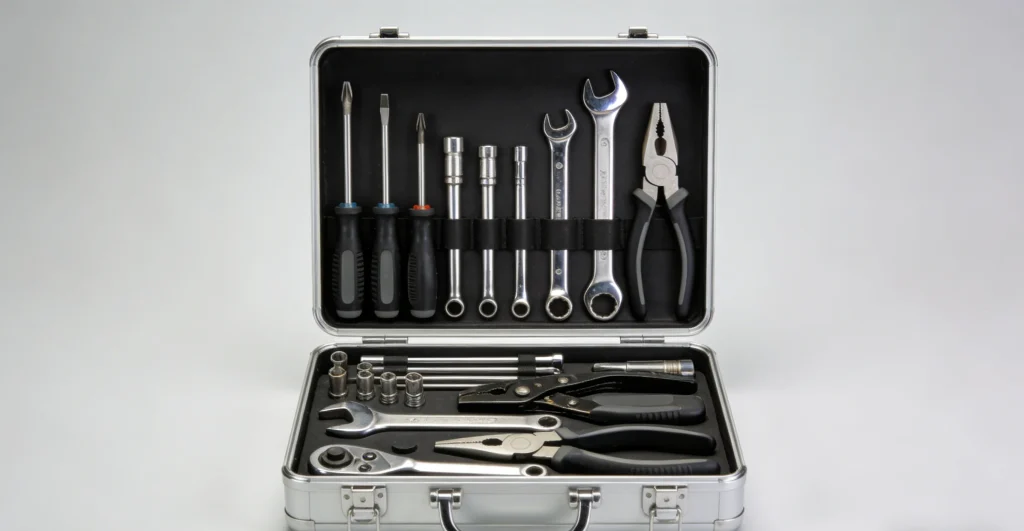
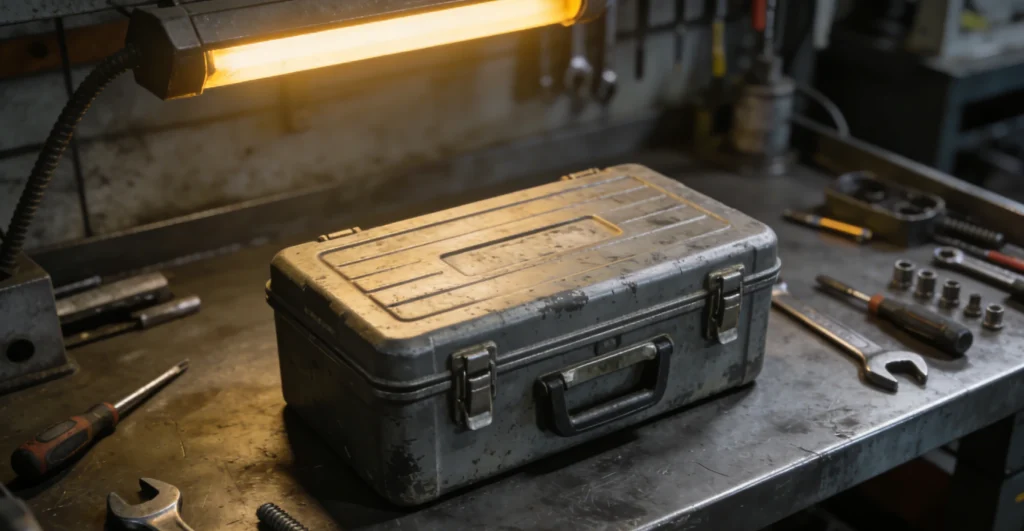
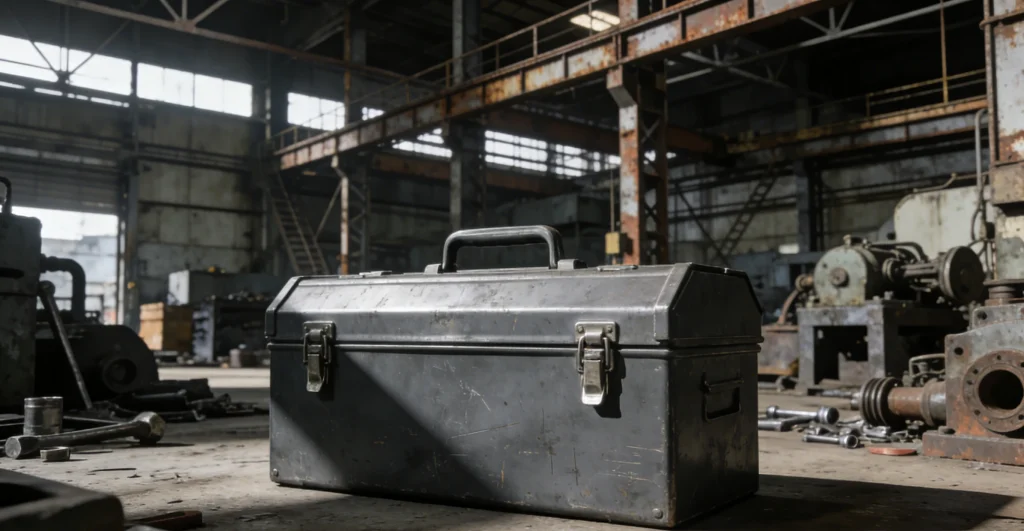
Toolboxes are common storage products used for everyday repairs, equipment maintenance, and tool organization. As user requirements have become more specialized, the market now offers toolboxes in different sizes, materials, capacities, and structural designs. Small toolboxes are popular because of their compact dimensions and convenient portability, making them suitable for household repairs, DIY projects, electronic equipment maintenance, and temporary work. Standard toolboxes generally provide more storage space and can accommodate a larger collection of tools, making them suitable for work environments where many tools are required. Although both types are designed for tool storage, they differ in dimensions, capacity, portability, tool configuration, and typical applications. Understanding these differences can help users select a storage solution that better matches their actual requirements.
Differences in Size and Storage Capacity
The most noticeable characteristic of a small toolbox is its relatively compact size. It is generally designed for a limited selection of frequently used tools, so the internal storage space is not unnecessarily large. A standard toolbox usually has a larger body and can accommodate a wider range of tools, including different sizes of wrenches, screwdrivers, hammers, pliers, sockets, and measuring equipment.
The difference in capacity directly affects how users configure their tools. A small toolbox is better suited to selecting tools according to a specific task and carrying only the equipment that is actually needed. A standard toolbox can accommodate a more complete tool collection and is suitable for maintenance workers and professionals who need access to many tools during their work.
For household users, a small toolbox may be sufficient if their regular tasks include furniture assembly, door and window adjustment, screw tightening, and other basic maintenance jobs. If the user needs to maintain machinery or manage a larger number of tools on a regular basis, a standard toolbox with greater capacity may be more suitable. Selecting an appropriate size can prevent wasted storage space while also ensuring that all necessary tools can be stored properly.
Differences in Portability and Transportation
Small toolboxes generally place greater emphasis on portability. Because their bodies are compact and relatively lightweight, they can be moved easily from one work area to another. Many models feature a top carrying handle, allowing users to carry them with one hand. Some compact tool storage boxes can also be placed inside backpacks, drawers, cabinets, or vehicle storage compartments.
Standard toolboxes are larger, and their total weight can increase significantly when fully loaded with tools. Some models require two-handed transportation, while others use wheels and telescopic handles to make movement easier. As a result, the two types of toolboxes are often used differently. Small toolboxes are particularly convenient for frequent short-distance transportation, while standard toolboxes are often used in fixed work areas or for centralized storage of larger tool collections.
For temporary repair tasks, a small toolbox can reduce the physical burden of transportation. For example, if a maintenance worker only needs to repair a simple issue on one piece of equipment, carrying a compact toolbox to the work site can be more convenient than transporting a fully equipped large toolbox.
Differences in Internal Organization and Tool Configuration
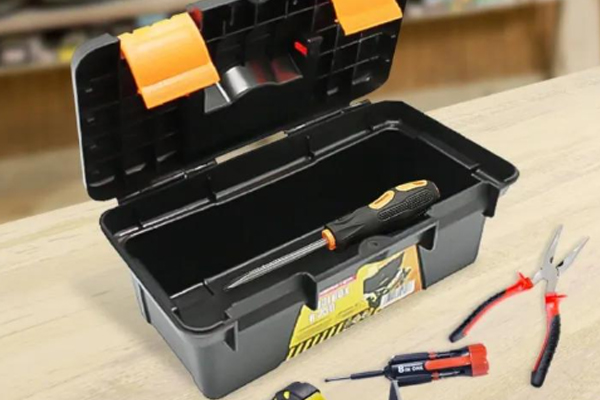
Although a small toolbox has limited internal space, it can use dividers, tool slots, and small storage compartments to improve space utilization. Its design generally focuses on arranging commonly used tools efficiently within a compact enclosure. Screwdrivers, hex keys, pliers, and small wrenches can be organized according to their dimensions, while screws, nuts, washers, and other components can be placed in separate compartments.
Standard toolboxes have more internal space and can therefore accommodate more complex storage layouts. Some models feature removable trays, multiple levels, drawers, deep storage compartments, and dedicated tool holders. For professional maintenance workers who need to transport a complete tool collection, these structures provide greater storage capacity and better classification options.
Neither design is universally suitable for every user. A small toolbox is useful for creating a compact tool set and keeping frequently used equipment together, while a standard toolbox is more appropriate for storing larger numbers of tools with different dimensions. The appropriate choice depends on the user’s regular work requirements.
Differences in Applications and Suitable Users
Small toolboxes are suitable for environments where the number of required tools is relatively limited. Common applications include household repairs, office maintenance, electronics repair, DIY projects, bicycle maintenance, and basic vehicle servicing. In these situations, users typically do not need to transport a large collection of equipment, making a compact toolbox a flexible storage solution.
Standard toolboxes are more suitable for workshops, repair stations, machinery maintenance sites, and other environments where many tools are required on a regular basis. Maintenance workers may need different sizes of wrenches, sockets, screwdrivers, and measuring instruments at the same time, so a larger toolbox can provide the necessary storage space.
Different users can select a toolbox according to their typical tool requirements:
- Household users: Suitable for storing basic tools needed for routine repairs.
- DIY enthusiasts: Useful for organizing tools for crafts, models, and small assembly projects.
- Electronics technicians: Suitable for precision screwdrivers, tweezers, bits, and other small tools.
- Automotive and bicycle users: Convenient for keeping tools needed for routine adjustments and maintenance.
- Professional maintenance workers: May require a standard toolbox when a larger tool collection needs to be carried and organized.
Matching the toolbox to the intended application can prevent users from choosing a product that is unnecessarily large or too small for their actual requirements.
How to Choose Between a Small and Standard Toolbox?
The decision between a small toolbox and a standard toolbox should be based on the number of tools, frequency of use, transportation distance, storage location, and working environment. If a user normally works with a relatively small collection of tools and frequently moves between different locations, a small toolbox can provide greater convenience. It reduces carrying weight while keeping commonly used tools together in a compact space.
If a user needs to manage many tools with significant differences in size, a standard toolbox may be more appropriate. Its larger capacity can accommodate more equipment and provide enough room for a complete tool organization system. For products intended to remain in workshops, repair rooms, or near workbenches, storage capacity may be more important than portability.
Material is another factor worth considering. Plastic small toolboxes are generally lightweight and suitable for household, office, and general maintenance environments. Metal toolboxes offer greater structural rigidity and can be suitable for applications requiring a stronger enclosure. Aluminum alloy toolboxes combine relatively low weight with structural strength and can be useful when tools need to be transported frequently.
Whether choosing a small toolbox or a standard toolbox, the product dimensions should be based on the actual tool collection rather than simply selecting the largest available capacity. Small toolboxes emphasize portability, compact storage, and quick access, while standard toolboxes focus more on capacity, classification, and comprehensive tool management. For toolbox suppliers and online stores, organizing products according to size, capacity, material, internal structure, and application can help customers understand the differences between products more clearly and select a toolbox that matches their repair and storage requirements.