
Mobile medical vehicles need to store supplies, transport equipment, and support on-site operations within limited interior space. Vibration, sudden braking, and turning during driving can also make storage more challenging. Medicines, nursing supplies, testing equipment, protective supplies, and medical waste have different storage requirements, making ordinary cabinets unsuitable for classification, fixation, and quick access at the same time. A practical storage solution should be planned around interior space, workflow, and driving conditions to keep medical supplies organized during transportation and use.
Plan Storage Areas According to Medical Supply Types
Interior space is limited, so storage should be divided according to item size, frequency of use, and workflow, giving different supplies clearly defined positions.
Set Up Quick-Access Areas for Frequently Used Supplies
Frequently used medical supplies should be placed where staff can easily reach them, reducing search time and repeated organization.
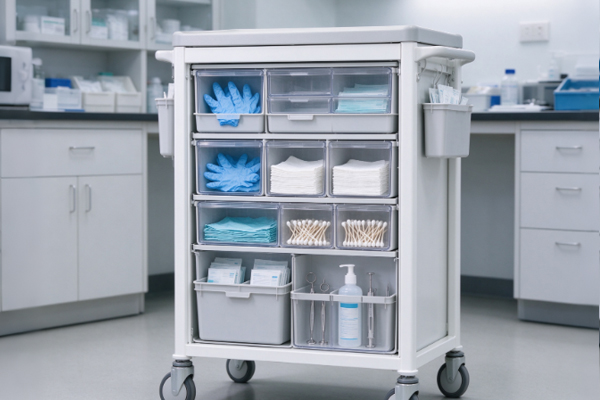
- Centralized Nursing Supply Storage: Gauze, medical gloves, cotton swabs, dressings, and similar items can be placed in dedicated compartments for convenient nursing procedures.
- Classified Protective Supply Management: Masks, protective clothing, and disposable supplies can be stored in layers according to purpose and frequency of use.
- Separate Storage for Small Accessories: Tape, scissors, sampling accessories, and similar items can be stored in small compartments to reduce the mixing of loose items.
Fixed storage positions help staff become familiar with the vehicle’s interior layout more quickly.
Separate Medical Equipment and Medical Waste
Clean supplies, medical equipment, and waste should have clearly separated areas to prevent mixing. Testing equipment can be placed in dedicated slots with anti-slip protection according to its shape. Electronic equipment should have sufficient space around interfaces and power connections to reduce compression. Sharps should be placed in puncture-resistant containers and secured close to the point of use. Other medical waste should be stored in suitable containers according to local requirements and kept separate from clean areas. Clear zoning can reduce the risk of mixed storage and facilitate routine inventory checks.
Improve Driving Safety Through Fixing and Cushioning Structures
Vibration, sudden braking, and turning can cause drawers to slide out, cabinet doors to open, or equipment to shift during vehicle movement. The storage system therefore needs to consider locking, limiting, and cushioning structures together.
Drawers and Cabinet Doors Need Reliable Locking
During vehicle movement, ordinary slides or damping structures alone may not sufficiently restrict item movement. Key storage areas need reliable securing measures.
- Prevent Drawer Ejection: Use mechanical latches, push locks, or limiting structures to reduce the risk of drawers sliding open during driving.
- Prevent Cabinet Doors from Opening: Use reliable locking structures to reduce the risk of doors opening during sudden braking or vibration.
- Strengthen Equipment Fixation: Use dedicated slots, straps, or fixing structures for heavier testing equipment to limit movement during transportation.
- Single-Drawer Interlock: Multi-layer heavy-duty drawers can use anti-tip interlocks that restrict multiple drawers from opening simultaneously, reducing the risk of forward tipping during operation after parking.
When locking structures work together with the case fixing system, the storage solution becomes more suitable for long-term vehicle movement.
EVA Liners Provide Shock Absorption and Equipment Protection
Medical equipment can be exposed to continuous vibration during transportation, while direct contact with rigid dividers may cause wear. Cushioning structures should therefore be designed according to equipment contours.
- Contoured Slots: Create dedicated slots according to equipment dimensions to reduce lateral movement.
- Elastic Cushioning: Use suitable materials such as EVA or rubber pads around equipment contact areas to reduce the transmission of vibration and impact.
- Soft Contact Layers: Add flexible layers between metal equipment and rigid dividers to reduce friction and scratching.
- Interface Clearance: Leave sufficient space around charging ports, data interfaces, and operating buttons to prevent the liner from pressing against the equipment.
Suitable interior liners can provide equipment fixation, shock absorption, and convenient daily operation at the same time.
Configure Storage Solutions According to Mobile Medical Scenarios
Different medical tasks require different equipment and supplies, so storage structures can be configured according to service requirements to make better use of the available space.
| Storage Area | Main Items | Protection Focus | Recommended Structure |
| High-Frequency Supply Area | Gloves, gauze, dressings | Quick access | Shallow drawers, dedicated compartments |
| Testing Equipment Area | Blood pressure monitors, pulse oximeters | Shock and slip protection | EVA liners, fixing slots, locking structures |
| Protective Supply Area | Masks, protective supplies | Classification | Layered drawers, storage boxes |
| Accessory Area | Probes, cables, chargers | Prevent mixing | Compartment boxes, modular dividers |
| Medical Waste Area | Sharps and other contaminated waste | Isolation, leak prevention | Sharps-container holders, sealed waste containers |
| Backup Supply Area | Replacement supplies | Centralized storage | Deep drawers, dedicated compartments |
Functional zoning allows clean supplies, equipment, and waste to remain relatively separated within the limited vehicle space.
Mobile Clinics and Community Healthcare Place Greater Emphasis on Portability
Mobile clinic vehicles frequently change locations, so supply storage needs to balance quick access with mobility.
- Keep Frequently Used Supplies Near the Operating Area: Reduce the time staff spend searching for items inside the vehicle.
- Modular Storage: Set up independent modules for testing, nursing, and protection, and adjust the carried configuration according to the task.
- Lightweight Design: Use portable storage modules for frequently used supplies to reduce the burden of frequent movement.
Portable structures are suitable for medical service scenarios that require frequent relocation.
Testing and Specialized Medical Vehicles Place Greater Emphasis on Equipment Protection
Vehicles equipped with testing instruments or specialized equipment need to focus on equipment fixation, accessory organization, and clean-area separation.
- Secure Precision Equipment Separately: Create dedicated spaces according to equipment dimensions to reduce movement during driving.
- Organize Accessories Together: Store probes, data cables, and auxiliary tools together with their corresponding main equipment for convenient on-site operation.
- Keep Clean Areas Separate: Store used items separately from clean supplies according to the actual management process to reduce mixed storage.
Clear separation of equipment and supplies can make on-site operations more organized.
Establish a Long-Term Storage Management System for Mobile Medical Vehicles
Vehicle storage needs to adapt to equipment changes, supply replenishment, and structural maintenance during long-term use. Ongoing management helps keep the storage system aligned with the workflow.
Customize Internal Structures for Different Equipment Combinations
Medical vehicle equipment configurations often change, while fixed storage structures can waste space. Customized structures can be designed according to actual equipment requirements. Dedicated slots can be created according to equipment dimensions to improve space utilization. Equipment and supplies used continuously can be placed in adjacent areas to reduce unnecessary movement. Storage capacity can be planned according to consumption, with high-frequency consumables separated from low-frequency backup supplies. Fixing structures can also be strengthened according to vibration conditions, with locks, limiters, and cushioning added for heavy equipment and drawers to reduce movement during driving. Customized structures allow the interior space to better match actual equipment configurations.
Manage Medical Waste and Perform Routine Maintenance
During long-term use, the storage system needs to address hygiene, structural stability, and inventory management.
- Sharps Container Inspection: Confirm that containers remain intact and securely fixed, and seal and dispose of them according to local requirements.
- Waste Area Separation: Keep medical waste separate from clean supplies and testing equipment to reduce the risk of leakage and cross-contamination.
- Check Fixing Components: Regularly inspect liners, dividers, locks, and drawer limiters, and address looseness promptly.
- Regular Inventory Organization: Replenish consumables and remove expired or discontinued items according to internal procedures.
Ongoing maintenance helps keep the storage structure stable while making routine replenishment and inspection easier.
The storage design of a mobile medical vehicle needs to integrate supply classification, equipment protection, vehicle movement, and on-site operations. Through modular and secure storage, limited interior space can support a clearer medical supply management system. SIPHIA BOX can plan customized storage structures according to vehicle space, equipment dimensions, supply quantities, and workflows, providing toolboxes, protective cases, and professional storage solutions for mobile clinics, testing, nursing, and specialized medical service applications.