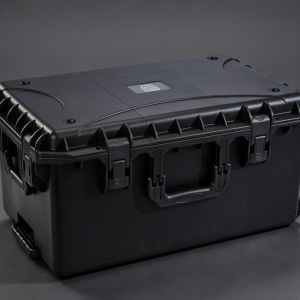
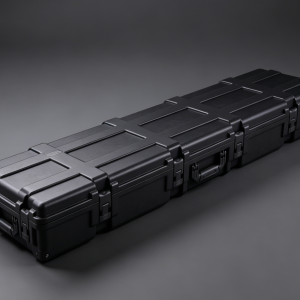
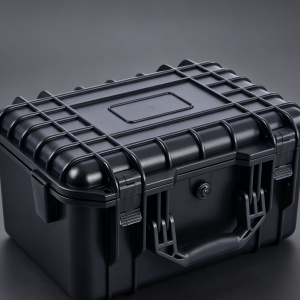
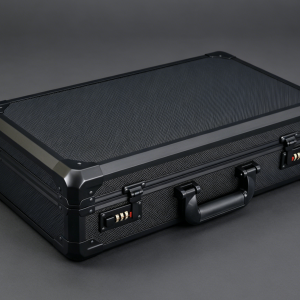
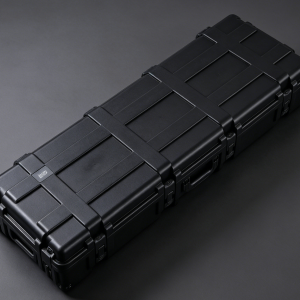
Metal toolboxes are widely used in automotive repair, industrial manufacturing, equipment maintenance, and outdoor operations. Their structural strength, dimensional accuracy, corrosion resistance, and service life are closely related to the sheet metal fabrication processes used during production. For toolbox manufacturers and purchasing companies, understanding these processes helps evaluate product quality and select suitable products for specific applications.Common metal toolbox fabrication processes include sheet metal cutting, stamping, bending, welding, riveting, grinding, surface finishing, and component assembly.
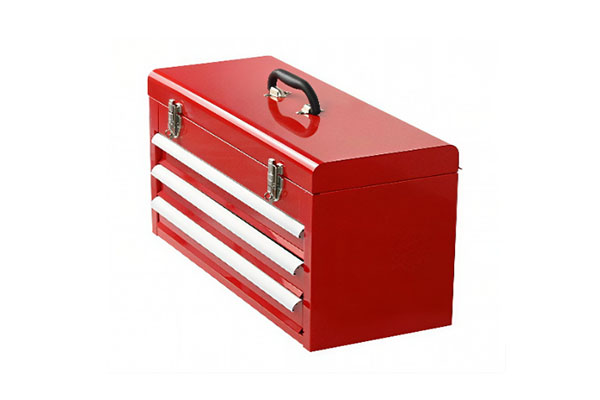
Main Sheet Metal Fabrication Processes for Metal Toolboxes
Sheet Metal Cutting: Ensuring Dimensional Accuracy
Sheet metal cutting is a fundamental step in metal toolbox manufacturing. Based on the toolbox’s length, width, height, and structural design, manufacturers cut cold-rolled steel sheets, aluminum alloy sheets, or stainless steel sheets into the required shapes. Common methods include laser cutting, mechanical shearing, and CNC cutting.
Laser cutting is suitable for complex contours, precision holes, and customized structures, while mechanical shearing is commonly used for sheets with relatively simple shapes. Accurate cutting dimensions help reduce errors during subsequent bending and assembly, improving product consistency.
Stamping and Bending: Forming the Toolbox Structure
Stamping is mainly used to create mounting holes, lock openings, reinforcing ribs, and other structural features. For mass-produced metal toolboxes, properly designed stamping dies can improve production efficiency and repeatability.
Bending transforms flat metal sheets into structural components such as bottom panels, side panels, lids, and connecting flanges. Properly designed bending angles, bend radii, and flange dimensions help shape the toolbox while increasing edge rigidity and reducing the risk of deformation during use.
Welding and Riveting: Improving Structural Stability
Welding joins different metal components of a toolbox. Depending on the material, sheet thickness, and structural requirements, manufacturers can select an appropriate welding method. Welding quality affects overall strength, appearance, and the sealing performance of joints.
Riveting is suitable for joining certain thin sheets, securing frames, and assembling different components. Compared with welding, riveting reduces localized heat distortion and is useful for structures where controlling material deformation is important. The appropriate joining method should be selected according to load requirements, production efficiency, and maintenance needs.
Post-Processing Techniques for Metal Toolboxes
Deburring and Grinding
After cutting, stamping, and welding, metal components may have burrs, sharp edges, or visible weld marks. Deburring, grinding, and polishing improve surface smoothness, reduce the risk of operator injuries, and prepare the components for subsequent surface finishing.
For industrial toolboxes used frequently, edge finishing and weld inspection are particularly important because these details directly affect usability and appearance.
Spray Painting, Powder Coating, and Anodizing
Surface finishing determines the appearance and protective performance of a metal toolbox. Different materials require different finishing methods.
Spray painting: Provides a variety of colors and finishes to meet different appearance requirements.
Powder coating: Uses electrostatic powder application and curing to form a coating that helps improve wear resistance and corrosion protection.
Anodizing: Primarily used for compatible aluminum alloy components. It forms an oxide layer and can produce different colors depending on the process.
Surface cleaning and pretreatment: Includes degreasing, cleaning, and other necessary preparation steps to improve coating adhesion and surface uniformity.
For toolboxes intended for prolonged outdoor use or humid environments, the protective process should be selected according to the base material, operating conditions, and maintenance requirements.
Component Assembly and Quality Inspection
Installing Locks, Hinges, and Sealing Strips
After fabrication and surface finishing, manufacturers install accessories such as handles, locks, hinges, feet, and sealing strips. During assembly, they should check hole alignment, connection stability, and the smooth operation of the lid.
For toolboxes requiring dustproof, moisture-resistant, or waterproof performance, special attention should be paid to sealing strip continuity, the fit between the lid and body, and whether the locking mechanism maintains consistent compression.
Inspecting Dimensions, Strength, and Surface Quality
Before shipment, metal toolboxes should undergo quality inspections based on product specifications and intended applications. Key inspection items include overall dimensions, bending angles, welding or riveting quality, coating integrity, lock functionality, and lid alignment. For products with higher load-bearing requirements, additional load and structural stability tests may also be performed.
How to Choose the Right Fabrication Processes for Metal Toolboxes
Selecting suitable fabrication processes requires consideration of material type, sheet thickness, toolbox dimensions, load-bearing requirements, production volume, and operating environment.
For example, aluminum toolboxes generally need to balance lightweight construction with structural strength, while steel toolboxes require particular attention to load-bearing capacity and rust prevention. Customized toolboxes also require careful consideration of internal layouts, lock positions, and mounting dimensions.
When evaluating products, purchasing companies should look beyond sheet thickness and surface color. They should also assess cutting accuracy, bending quality, joining methods, surface finishing, and assembly inspection procedures. The metal toolbox products and material-related information available from Siphia Box can also serve as references for understanding toolbox structures, metal materials, and fabrication details.
Conclusion
Metal toolbox sheet metal fabrication is not a single operation but an integrated manufacturing process involving cutting, stamping, bending, welding or riveting, surface finishing, and component assembly. Each stage affects dimensional accuracy, structural strength, appearance, and service life.
By selecting appropriate fabrication processes according to the intended application and implementing quality inspections throughout production, manufacturers can produce metal toolboxes that better meet the requirements of industrial storage, equipment maintenance, and outdoor operations.