
Agricultural machinery operates in farmland, storage areas, and outdoor production environments for long periods, where it is often exposed to dust, soil, rainwater, oil stains, and mechanical vibration. Maintenance tools are important auxiliary equipment for machinery servicing and require a stable storage environment with reliable protection. An agricultural machinery protective toolbox strengthens the box structure, optimizes sealing design, and improves internal protection performance to provide safe storage for repair tools. It helps maintenance personnel complete daily servicing, fault handling, and field repairs more efficiently. This type of toolbox not only meets agricultural equipment maintenance requirements but also adapts to complex working environments, extending tool service life and improving repair efficiency.
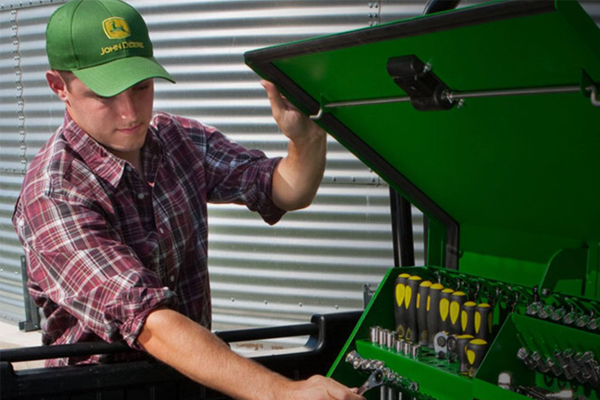
Agricultural Machinery Protective Toolboxes Improve Tool Protection Capability
Agricultural machinery maintenance features high usage frequency and changing working conditions, making ordinary toolboxes unsuitable for long-term outdoor applications. Protective toolboxes use professional structural designs to enhance tool protection while providing convenient carrying and quick access functions, allowing maintenance personnel to complete equipment servicing more efficiently.
Application Advantages of Agricultural Machinery Protective Toolboxes
Protective toolboxes are manufactured with high-strength materials and use designs such as impact resistance, dust protection, and moisture resistance to improve tool storage safety. Reasonable internal layouts reduce collisions between tools and allow technicians to quickly locate the required equipment.
Key advantages include:
- Enhancing Tool Protection Performance:Agricultural production environments often contain soil, moisture, and debris. Protective toolboxes use sealed structures and durable materials to reduce environmental impact on tools and maintain equipment in good condition.
- Adapting to Complex Outdoor Working Conditions:Agricultural machinery repairs may take place in different locations. Toolboxes need to withstand transportation vibration, temperature changes, and long-term outdoor use. High-strength structures provide stable protection for various working environments.
- Improving Repair Tool Management Efficiency:Internal compartments classify tools according to size and usage frequency, reducing searching time and improving maintenance operation efficiency.
Agricultural machinery protective toolboxes provide a more stable storage environment for repair tools, helping users reduce tool wear and improve equipment maintenance efficiency.
Applicable Equipment Types for Agricultural Machinery Protective Toolboxes
Different agricultural machines require different repair tools during maintenance. Protective toolboxes can be configured according to equipment characteristics to meet various agricultural machinery servicing requirements.
| Agricultural Equipment Type | Common Maintenance Requirements | Protective Toolbox Application Value |
| Tractor | Engine repair, component adjustment, fastening maintenance | Protects repair tools during long-term use |
| Combine Harvester | Transmission inspection, component replacement | Supports complex repair environments |
| Seeder | Structural adjustment, connector maintenance | Improves tool carrying convenience |
| Agricultural Transport Equipment | Routine inspection, fault handling | Meets mobile maintenance requirements |
Proper tool selection improves maintenance continuity and equipment reliability.
Structural Design Features of Agricultural Machinery Protective Toolboxes
Protective toolboxes are designed according to agricultural environment requirements. Aluminum alloy and high-strength engineering plastics are commonly used materials. Aluminum alloy structures provide lightweight construction and strong load-bearing capability, making them suitable for technicians who need to carry tools frequently. Engineering plastic structures offer excellent impact resistance and support long-term outdoor applications.
The toolbox uses reinforced corners to improve overall compression resistance. Internal designs include shock-resistant foam, fixing slots, and modular trays to keep tools in stable positions and prevent collisions during transportation. Sealing strip structures reduce the entry of dust and moisture, improving tool storage safety.
Application Scenarios and Functional Configuration of Agricultural Machinery Protective Toolboxes
Agricultural machinery maintenance requires support for daily inspections, field servicing, and emergency repairs. Protective toolboxes provide more complete maintenance support through reliable protective structures and flexible configuration methods.
Application of Protective Toolboxes in Agricultural Machinery Field Repairs
Agricultural machinery usually operates continuously outdoors, and maintenance personnel often need to enter farmland, orchards, and equipment operation areas for inspections. Traditional storage methods are easily affected by environmental conditions, while protective toolboxes keep internal tools protected and allow technicians to carry complete equipment for maintenance tasks.
During field servicing, the toolbox can store assembly tools, testing equipment, spare parts, and maintenance supplies. It helps workers complete equipment inspections, component adjustments, electrical testing, and basic repairs, improving equipment recovery speed.
Configuration Methods for Agricultural Machinery Protective Toolbox Functions
Protective toolboxes need to be configured according to agricultural equipment maintenance characteristics. Complete tool combinations improve adaptability during repair operations.
Common configurations include:
- Basic Mechanical Repair Tool Configuration:Includes wrenches, sockets, screwdrivers, pliers, and torque tools for mechanical component disassembly, installation, and adjustment. Fixed storage structures prevent tool confusion and improve technician efficiency.
- Professional Inspection Tool Configuration:Includes electrical testers, pressure testing equipment, and measuring tools for checking agricultural machinery operating conditions. These tools help maintenance personnel identify abnormal equipment locations and improve repair accuracy.
- Safety Auxiliary Tool Configuration:Includes cleaning supplies, protective accessories, spare fasteners, and maintenance materials to support additional repair requirements and improve maintenance completeness.
Scientific configuration of protective toolboxes helps technicians complete equipment maintenance tasks faster and improves agricultural machinery operating reliability.
Functional and Performance Features of Agricultural Machinery Protective Toolboxes
Agricultural machinery protective toolboxes need to provide storage functions while meeting long-term outdoor usage requirements. Excellent performance improves tool protection and increases maintenance convenience.
| Functional Performance | Practical Application Effect |
| Waterproof Sealing Performance | Prevents rainwater from affecting tools |
| Dust Protection Performance | Reduces agricultural dust contamination |
| Impact Resistance | Minimizes transportation damage |
| Wear Resistance | Extends toolbox service life |
| Classified Storage Performance | Improves tool management efficiency |
Stable performance allows protective toolboxes to adapt to long-term agricultural machinery maintenance requirements.
Selection and Maintenance Management Solutions for Agricultural Machinery Protective Toolboxes
Agricultural machinery repair tools need to remain in good condition for long-term use. Selecting suitable protective toolboxes and establishing proper management methods are important for improving maintenance efficiency.
Selection Standards for Agricultural Machinery Protective Toolboxes
When selecting a toolbox, users should consider the working environment, number of tools, and transportation requirements. Users who frequently perform outdoor repairs should focus on protection level, material strength, and sealing performance. Users with larger tool collections need products with reasonable storage space and strong load capacity.
The internal structure should support classified storage of different tools while maintaining stability during transportation.
Daily Maintenance Methods for Agricultural Machinery Protective Toolboxes
During long-term use, the toolbox should be cleaned regularly to remove dust and oil stains. Users should inspect the box surface, locks, sealing strips, and internal fixing structures. If tools become wet or contaminated, they should be handled promptly to prevent affecting future maintenance work.
Proper maintenance habits help maintain toolbox performance and extend product service life.
Future Development Trends of Agricultural Machinery Protective Toolboxes
With increasing agricultural machinery intelligence, repair tool management methods are also developing. Future protective toolboxes will focus more on intelligent management, modular designs, and customized configurations.
Smart labels, digital tool records, and lightweight materials will further improve tool management efficiency and provide more professional solutions for modern agricultural equipment maintenance.
Agricultural Machinery Protective Toolboxes Support Efficient Equipment Maintenance
Agricultural machinery protective toolboxes provide reliable support for equipment maintenance through reinforced structures, complete protection functions, and practical tool configurations. Whether used on farms, repair service centers, or mobile maintenance locations, high-quality toolboxes help technicians improve work efficiency and reduce tool damage.
With the continuous development of agricultural mechanization, protective toolboxes will play an increasingly important role in agricultural equipment maintenance systems.