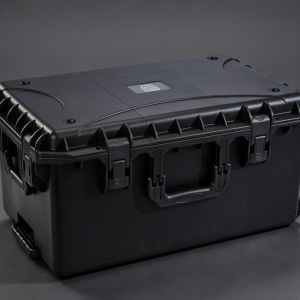
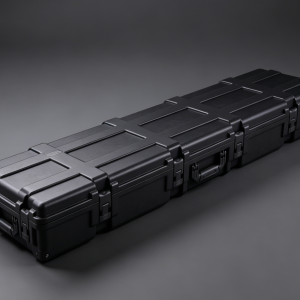
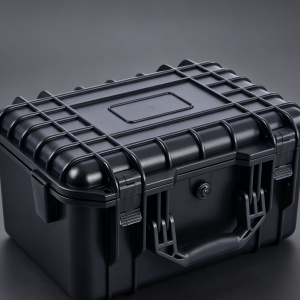
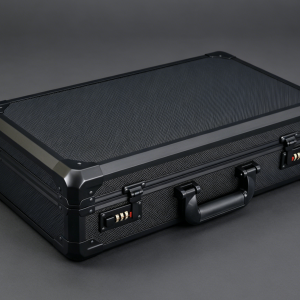
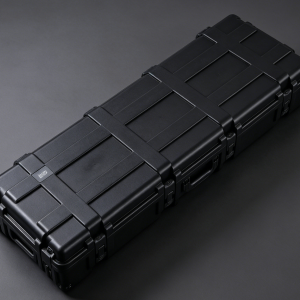
Metal toolboxes are widely used in industrial production, automotive repair, equipment maintenance, and outdoor work. When purchasing a toolbox, buyers should consider more than its appearance, storage capacity, and price. Material thickness also plays an important role in product quality. It affects load-bearing capacity, impact resistance, overall weight, service life, and manufacturing costs. Choosing the right material thickness helps improve usability and ensures that the toolbox meets the requirements of different working environments.
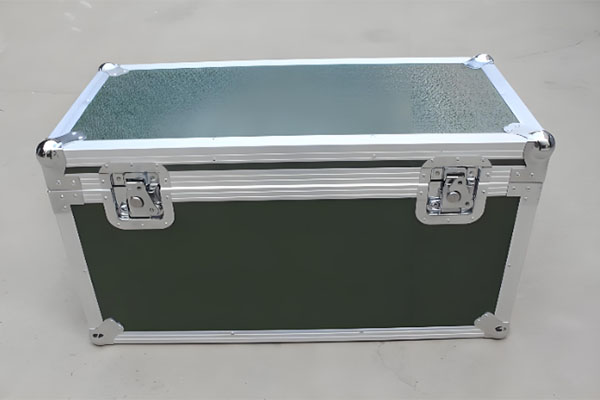
Why Does Material Thickness Affect Metal Toolbox Quality?
Material Thickness Affects Structural Strength
Metal toolboxes are commonly manufactured from materials such as steel sheets and aluminum alloy sheets. Sheet thickness influences the enclosure’s ability to resist bending, compression, and external impacts. When storing heavy tools such as wrenches, power drills, and socket sets, a toolbox with overly thin panels may develop dents or deformation under prolonged loads.
Increasing material thickness appropriately can improve structural stability. However, actual strength also depends on the metal type, toolbox dimensions, bending structure, welding quality, and reinforcement design. Product quality should not be judged by thickness alone.
Material Thickness Affects Service Life
During daily use, toolboxes may be opened and closed frequently, carried between work areas, or exposed to accidental impacts. If the panels are too thin, corners, handle mounting points, and the bottom panel may deform more easily, potentially affecting the performance of locks, hinges, and other hardware.
For industrial maintenance and mechanical workshops, selecting a metal toolbox with suitable material thickness and a sturdy structure can help reduce maintenance and replacement frequency. Steel toolboxes also require appropriate rust-resistant coatings, while aluminum toolboxes should be evaluated for surface treatment quality and the durability of their joints.
How Does Thickness Selection Differ Between Metal Materials?
Steel Toolboxes: Focus on Load Capacity and Deformation Resistance
Cold-rolled steel offers good processing properties and is commonly used to manufacture industrial toolboxes and tool cabinets. For applications involving heavy tools, buyers should pay particular attention to the thickness of the bottom and side panels, as well as the reinforcement structure.
For lightweight hand tools, a moderate sheet thickness may be sufficient. For power tools or heavy mechanical components, however, buyers should prioritize structural strength, bottom support, and the stability of connecting points.
Aluminum Toolboxes: Balance Weight and Structural Strength
Aluminum toolboxes are lightweight and offer good corrosion resistance, making them suitable for outdoor maintenance, equipment transportation, and mobile work. Panels that are too thin may reduce resistance to impacts and localized pressure, while simply increasing thickness can add unnecessary weight.
When selecting an aluminum toolbox, consider the alloy type, sheet thickness, frame design, and overall dimensions. For products that need to be carried frequently, a well-designed reinforced structure can often provide better value than simply increasing panel thickness.
How to Choose the Right Material Thickness for Different Applications
Home Use and Light-Duty Repairs
For storing everyday tools such as screwdrivers, pliers, and measuring tapes, buyers can prioritize toolboxes with manageable weight and convenient storage. During inspection, check whether the edges are smooth, the lid opens and closes properly, and the handles and latches are securely attached.
Industrial Maintenance and Heavy-Duty Tool Storage
Industrial applications often involve storing large quantities of metal tools, placing greater demands on load-bearing performance. Buyers should inspect bottom support, side-panel strength, welded joints, and reinforcement structures. The toolbox’s rated load capacity should also be verified against the total weight of the tools being stored.
Outdoor Applications and Vehicle-Mounted Toolboxes
Outdoor toolboxes must provide adequate structural strength while withstanding vibration, rain, dust, and temperature changes. Material thickness should be matched with the installation method, sealing structure, and surface protection. A thicker panel does not automatically guarantee waterproofing or rust resistance.
How to Evaluate Material Thickness When Purchasing a Metal Toolbox
Verify Material Specifications
Ask the supplier to confirm the material type, nominal sheet thickness, and relevant product specifications. Where necessary, request material certificates or inspection documentation. When comparing different products, ensure that the materials and structural conditions are reasonably comparable.
Inspect Key Load-Bearing Areas
In addition to the main panels, inspect the bottom panel, frame, handles, hinges, and lock mounting points. Even if the main panels are relatively thick, weak connections can still compromise overall durability.
Evaluate Weight and Cost Together
Thicker sheets generally require more raw material and increase product weight, potentially raising manufacturing, handling, and transportation costs. Buyers should select specifications based on usage frequency, tool weight, portability requirements, and budget rather than automatically choosing the thickest available material.
Conclusion
Material thickness is an important factor affecting the load-bearing capacity, deformation resistance, and service life of metal toolboxes. However, thickness alone does not determine overall product quality. Steel toolboxes require a balance between structural strength and rust protection, while aluminum toolboxes must balance lightweight construction with impact resistance.
By evaluating material specifications, enclosure structure, surface treatment, and manufacturing quality together, buyers can select a metal toolbox that better meets their practical working requirements.