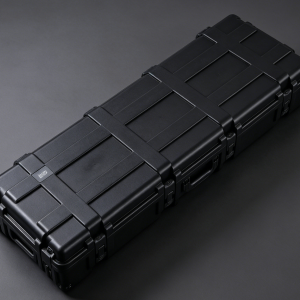
A box-type tool cart often needs to carry a large number of wrenches, sockets, power tools, and inspection equipment during actual work, with the weight distributed unevenly. The tool cart also experiences repeated drawer opening and closing, pushing, turning, and movement across different floor conditions, all of which place varying levels of stress on the structure. To maintain long-term stability, the load-bearing design needs to be planned as a complete system covering the frame, drawers, base, and safety mechanisms.
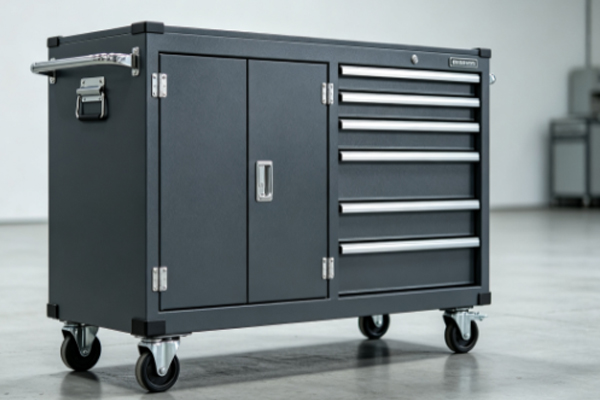
The Cabinet Frame Needs to Provide a Stable Load-Bearing Foundation
The overall strength of a box-type tool cart depends heavily on its main frame. The frame needs to transfer tool weight properly to the bottom of the cabinet and the caster positions while reducing excessive loads on individual areas.
The Main Frame Needs Reinforcement at Key Load-Bearing Areas
When the tool cart is fully loaded, the bottom panel, vertical posts, and side frames continuously bear weight. The frame structure can be reinforced in the following ways:
- Add longitudinal supports: Use vertical posts or reinforcement beams to distribute vertical loads and reduce the risk of deformation in large-span panels.
- Reinforce the bottom structure: The bottom supports the combined weight of the cabinet, tools, and drawers, so sufficient support beams need to be provided.
- Strengthen the corners: The four corners of the cabinet may experience impact and torsional loads, so reinforcement components can improve overall stability.
Continuous frame support allows weight to be transferred through the structure, reducing pressure concentration on a single panel.
Panel Thickness Needs to Match the Actual Load
The cabinet material should not simply be made thicker. It needs to be selected according to tool weight, cabinet dimensions, and usage frequency. The following factors can be considered:
- Reinforced plates or composite structures can be used in areas with higher load requirements.
- Standard side panels can be configured according to actual needs to balance weight and strength.
- A reasonable combination of materials can reduce unnecessary dead weight while maintaining load capacity and mobility.
Cabinet materials should be configured according to actual operating conditions to achieve a reasonable balance between strength and weight.
Drawers and Shelves Need to Consider Both Static and Dynamic Loads
Drawers and shelves are important load-bearing components inside a tool cart. In addition to the weight generated when tools remain stationary, vibration, impact, and opening and closing movements during transportation can also place additional loads on the structure.
Drawer Slides Need to Account for Movement Impact
When a tool cart passes over thresholds, floor joints, or uneven surfaces, the drawers may experience both vertical and horizontal impacts. The following aspects should receive particular attention during design:
- Select suitable heavy-duty drawer slides: Choose an appropriate load rating based on the actual drawer weight and frequency of use.
- Reinforce the slide mounting areas: Increase the structural strength around connection points to reduce loosening or deformation caused by long-term vibration.
- Reinforce the drawer bottom: Heavy sockets, wrenches, and power tools require stable bottom support.
- Control drawer width: Wide drawers require attention to lateral support and slide loading to prevent misalignment after long-term use.
The load capacity of drawer slides needs to be evaluated together with drawer construction, installation methods, and actual operating conditions rather than relying on a single static load rating.
Drawer Anti-Tip Interlocking Is an Important Safety Structure
When a multi-drawer tool cart is heavily loaded, opening several drawers at the same time can significantly increase the weight toward the front and shift the center of gravity forward. Professional tool carts commonly use interlocking mechanisms that restrict other drawers from opening when one drawer is already open, reducing the risk of tipping caused by multiple drawers being pulled out simultaneously.
Shelves Need to Accommodate Different Tool Weights
The tools placed on shelves can vary significantly in weight, so the internal layout needs to be arranged according to tool specifications:
- Heavy equipment should preferably be placed closer to the bottom.
- Frequently used lightweight tools can be placed on upper shelves for easier access.
- When a shelf has a large span, additional center support can reduce the risk of bending under long-term loads.
- The spacing between shelves can be adjusted according to tool height to improve internal space utilization.
Combining proper shelf support with suitable tool placement can create a more balanced weight distribution inside the cabinet.
Casters and Bottom Connections Determine Load-Bearing Performance During Movement
A box-type tool cart is subjected to pushing forces, turning forces, and ground impacts during movement. The bottom structure transfers these loads to the casters. The casters, mounting plates, and bottom frame need to maintain reliable connections to support frequent movement.
Caster Specifications Need to Match the Overall Cart Weight
Caster load capacity needs to be selected according to the tool cart’s own weight and the weight of the tools when fully loaded, while also considering movement frequency, floor conditions, and turning requirements:
- Distribute the number of casters reasonably: Spread the load across multiple support points.
- Reinforce the mounting plate: The caster connection area needs sufficient strength to reduce loosening after long-term use.
- Select an appropriate wheel diameter: Larger wheels are generally better able to pass over floor gaps and minor obstacles.
- Use casters with brakes: Secure the cart during storage and operation to reduce unintended movement.
When the casters are properly matched with the bottom structure, the tool cart can achieve more stable support when moving under full load.
Center-of-Gravity Design Needs to Consider Drawer Conditions
Large equipment and heavier tools should preferably be placed in the lower sections, while tools inside drawers should be distributed evenly to improve tool cart stability:
- Large equipment placed at the bottom can lower the overall center of gravity.
- Tools inside drawers should be distributed as evenly as possible to avoid long-term concentrated loading on one side.
- Taller tool carts need to be designed by considering the base width, caster positions, and drawer interlocking mechanism together.
- Increasing the base width alone should not be relied upon to solve tipping problems.
Center-of-gravity control needs to work together with drawer opening conditions, base structure, and caster layout.
The Load-Bearing Structure Needs to Be Optimized According to the Application
Different working environments place different demands on structural strength and mobility. Repair workshops focus more on tool capacity and drawer usage frequency, while engineering sites place greater emphasis on transportation and environmental adaptability. The structural solution needs to be adjusted according to actual working conditions.
Heavy-Duty Tool Carts Are Suitable for Reinforced Overall Structures
Automotive repair, industrial maintenance, and similar applications commonly require storage for sockets, wrenches, power tools, and inspection equipment. A combination of reinforced frames, heavy-duty drawers, and high-load-capacity casters can be used. Multi-drawer structures should also be equipped with appropriate anti-tip interlocking designs to reduce the risk of forward tipping when heavy tools are concentrated in use.
Mobile Applications Need to Balance Load Capacity and Flexibility
Engineering sites often require tools to be moved between different work areas, so the cabinet should not focus solely on high load capacity but should also control overall weight:
- Configure materials reasonably to balance structural strength and weight.
- Configure modules appropriately to balance load capacity and mobility efficiency.
- Configure casters appropriately to improve transportation convenience between different work areas.
- Tool carts used for frequent relocation can be equipped with push handles, brakes, and anti-collision structures to improve on-site operation.
The tool cart should be configured according to actual relocation requirements to achieve a reasonable balance between load capacity, weight, and mobility efficiency.
Modular Design Makes Later Adjustments Easier
When the number of tools or types of equipment change, a modular structure can adapt to new tool combinations by adding drawers, adjusting dividers, or changing the internal configuration. Enterprises can also establish different configurations for maintenance, installation, inspection, and other positions, allowing the same tool cart system to meet the work requirements of different personnel.
For industrial tool carts intended for long-term use, the design stage should also consider details such as material strength, welding or connection methods, drawer slides, anti-tip interlocking mechanisms, and caster mounting structures. SIPHIA BOX can provide toolboxes, tool carts, and customized storage solutions based on tool weight, dimensions, and application environments, using internal layouts and structural configurations to help enterprises build tool storage systems that better fit their actual workflows.