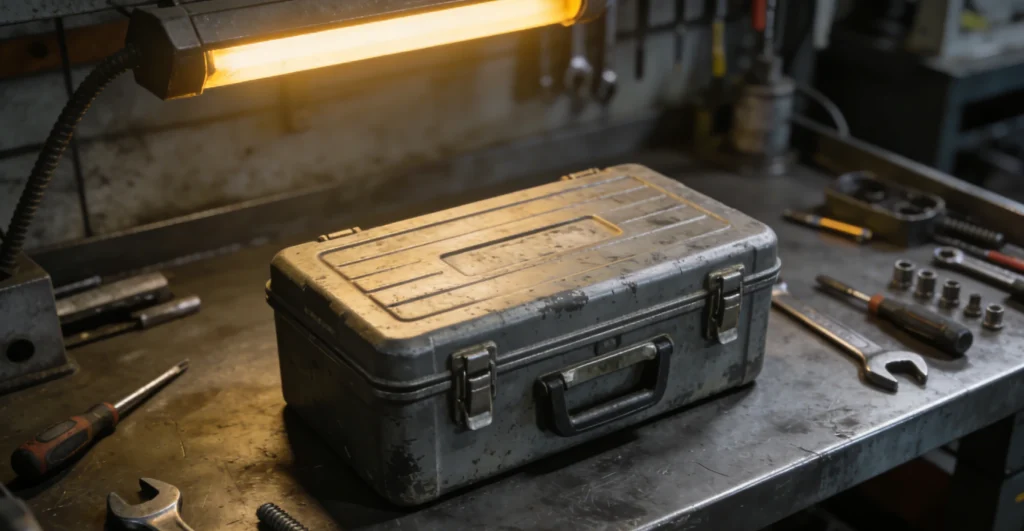
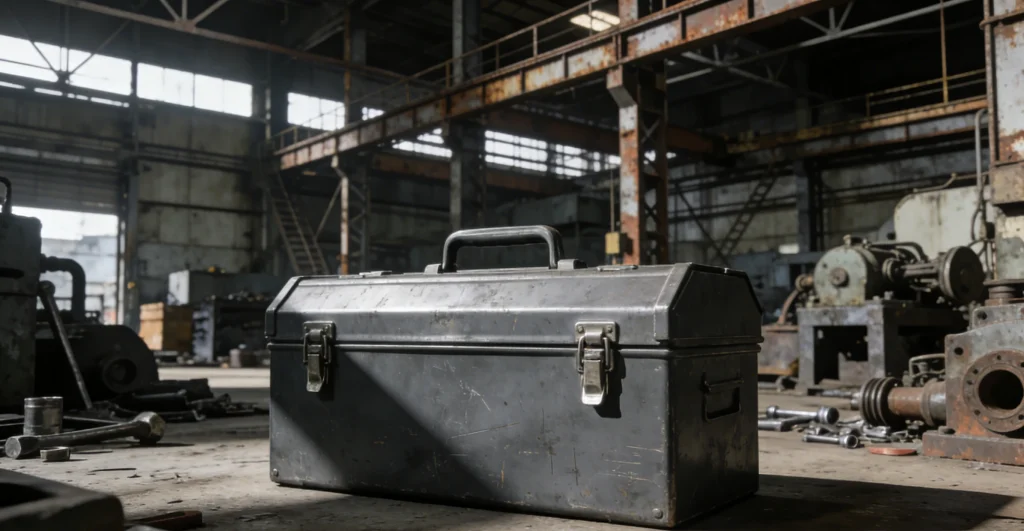
In daily household life, people often encounter simple installation, repair, and adjustment tasks, such as installing furniture, tightening screws, replacing door handles, assembling storage racks, adjusting cabinet doors, hanging decorations, and handling external components of small household appliances. These tasks usually do not require professional repair equipment, but a suitable screwdriver, a set of wrenches, a pair of pliers, or a tape measure is often essential. If there is no fixed storage space for tools at home, tools can easily become scattered across drawers, cabinets, and storage rooms. When needed, people have to search for them temporarily, which affects efficiency and can also result in lost tools. A portable toolbox can keep commonly used tools together and organize them through a lid, tray, compartments, or storage slots, allowing tools of different sizes to remain relatively organized.
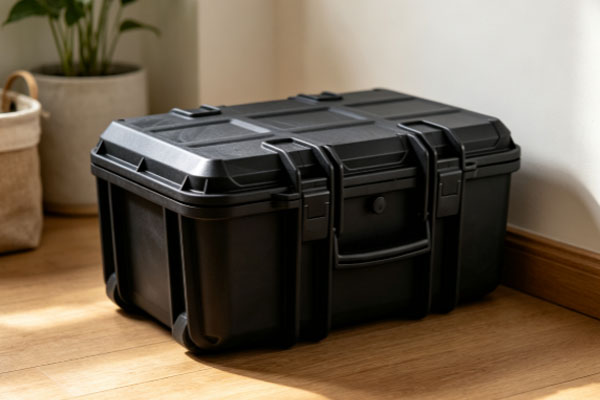
Compared with purchasing tools separately and storing them randomly, preparing a portable toolbox with a suitable capacity can provide a fixed storage location for household repair supplies. This is especially practical for households that frequently install furniture, perform routine maintenance, or handle simple repairs. Whether a toolbox is worth keeping at home for long-term use also depends on actual usage frequency, the number of tools, and available living space. If repair work is rarely required, a small basic model may be sufficient. If the household has many wrenches, screwdrivers, pliers, electrical tools, and other equipment, a portable toolbox with a more practical internal layout can be selected. Different materials, such as aluminum toolboxes and plastic toolboxes, also have their own characteristics. When choosing one, factors such as weight, strength, ease of cleaning, and the intended environment should be considered.
Why Does a Household Need a Portable Toolbox?
Keep Commonly Used Tools Together
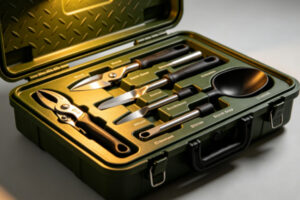
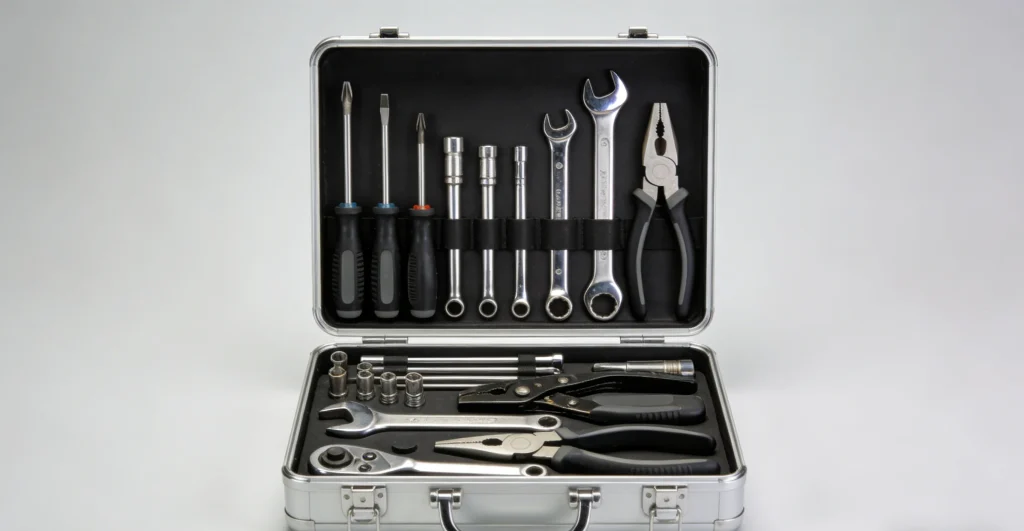
Household tools are usually used for different purposes. Screwdrivers are used to remove and install screws, wrenches are used to tighten nuts, pliers are suitable for holding or handling small components, and tape measures can be used to measure furniture and space dimensions. When these tools are stored separately, they can easily become scattered. A portable toolbox provides a unified storage space where different tools can be kept together. When the toolbox has compartments or trays, tools can also be simply organized according to size and purpose. For example, small screwdrivers can be placed in the upper tray, wrenches and pliers can be stored in the main compartment, while screws, nuts, and other small accessories can be placed in separate compartments. This not only makes tools easier to access but can also reduce collisions between tools.
Easier to Move and Use
Household repair work is not always performed in one fixed location. Furniture may be assembled in the living room, a bicycle may be repaired on the balcony, and a storage cabinet may be organized in a bedroom or garage. If tools are not stored together, each tool must be collected separately whenever it is needed. Portable toolboxes usually have handles, allowing multiple tools to be carried at once. After the repair work is completed, the tools can simply be returned to the toolbox together. For homes with limited space, a small toolbox can also be placed inside a cabinet, on a storage shelf, or under a bed without requiring a large dedicated storage area.
What Tools Are Suitable for a Household Portable Toolbox?
A household toolbox does not need to contain as many tools as possible. A reasonable combination of commonly used tools can prevent the toolbox from becoming too heavy while keeping the internal space organized.
Screwdrivers and Bits: Suitable for handling common screws on furniture, external components of appliances, door and window hardware, and other items. It is recommended to prepare different sizes and specifications.
Wrenches and Pliers: Adjustable wrenches, open-end wrenches, needle-nose pliers, and wire cutters can meet common tightening, gripping, and adjustment requirements.
Tape Measure and Level: These can be used to measure lengths and check installation conditions when assembling furniture, installing storage racks, or adjusting equipment positions.
Small Repair Accessories: Screws, nuts, washers, expansion tubes, and other loose components can be sorted and stored in small compartments inside the toolbox.
What Should Be Considered When Choosing a Household Portable Toolbox?
A household toolbox does not need to be configured exactly like one used in professional repair environments. When the number of tools is small, an oversized toolbox may increase storage space requirements. When there are many tools, a toolbox that is too small can cause tools to pile up and may prevent the lid from closing properly.
How Should Toolbox Capacity Be Selected?
Before choosing a toolbox, it is useful to count the tools already available at home. If there are only a few commonly used tools, a small portable toolbox can be selected. If the household already has multiple sets of wrenches, screwdrivers, pliers, and measuring tools, a larger capacity may be required. Some additional space should also be reserved. When a small number of screws, bits, or compact repair tools are added later, they can be placed directly into the existing toolbox without purchasing another storage unit.
The Material Should Match the Intended Environment
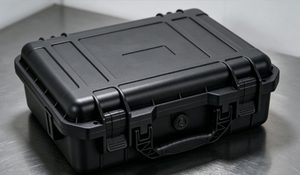
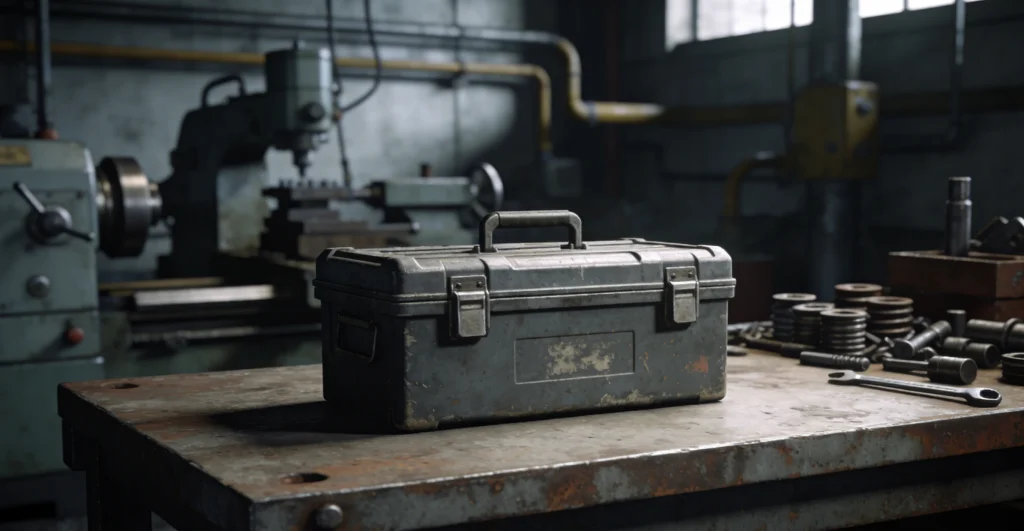
Plastic toolboxes are lightweight and easy to clean, making them suitable for storing ordinary household repair tools. Aluminum toolboxes generally offer good corrosion resistance and structural strength while maintaining relatively low weight, making them suitable for households that frequently move the toolbox or store many metal tools. Steel toolboxes have a relatively strong structure, but their own weight is usually higher, so carrying convenience should also be considered.
Check the Handle and Latches
Portable toolboxes are frequently carried by hand, so the handle connection needs to remain stable. Once the toolbox is filled with tools, its weight can increase significantly. If the handle structure is not strong enough, it may become loose during transportation. The latches can help prevent the lid from opening accidentally and keep the tools inside the box. When choosing a toolbox, open and close it several times to check whether the handle, lid, and latches operate smoothly.
Frequently Asked Questions
Q: Is it necessary for every household to have a portable toolbox?
A: If furniture is frequently assembled, simple repairs are performed, or household items often need adjustment, a portable toolbox can be quite convenient. When there are only a few tools, there is no need to choose a large product. A small toolbox can also meet basic storage requirements. If tools are rarely used, the choice can be made according to actual needs.
Q: Should I buy a larger household toolbox?
A: It is not recommended to choose a toolbox simply because it has a larger capacity. When there are only a few tools, a large toolbox takes up more storage space. A more suitable approach is to select the capacity according to the number of existing tools while leaving some extra space for adding a few tools later.
Q: Is an aluminum portable toolbox suitable for household use?
A: Yes. Aluminum toolboxes generally have relatively low weight and good corrosion resistance, making them suitable for storing metal tools such as wrenches, screwdrivers, and pliers. If the toolbox needs to be moved frequently, its weight and handle structure can also be considered carefully.
Q: Does a household toolbox need compartments?
A: A design with some dedicated storage compartments is recommended. Keeping different tools separated can reduce pressure between tools and make it easier to quickly find the required item. Small parts such as screws and nuts are especially suitable for storage in separate compartments.
Whether it is necessary to keep a portable toolbox at home mainly depends on daily repair and installation needs. For households that frequently use screwdrivers, wrenches, pliers, tape measures, and other tools, a suitable toolbox can provide a fixed storage location and prevent tools from being scattered. When repairs are needed, the entire toolbox can be carried directly to the work area. After the task is completed, all tools can be returned to the toolbox together, reducing the time spent searching for and organizing tools. When choosing a household portable toolbox, the capacity should be determined according to the number of tools, frequency of use, and available storage space. If there are only a few tools, a small model can be selected; if there are many tools, attention should be given to internal space and compartment design. The material should also be selected according to actual requirements. Plastic toolboxes are lightweight and easy to clean, making them suitable for ordinary household use. Aluminum toolboxes are relatively lightweight and offer good corrosion resistance and structural strength, making them suitable for storing more metal tools. Steel toolboxes have a strong structure, but their own weight and carrying convenience should be considered. Common tools such as screwdrivers, wrenches, and pliers can be stored separately, while small parts can be placed in individual compartments. Heavier tools should preferably be kept in stable positions to reduce continuous movement and collisions inside the box during transportation. The toolbox body, handle, hinges, and latches should also remain in normal working condition.