In mechanical repair work, there are usually many types of tools, including wrenches, screwdrivers, sockets, pliers, measuring tools, power tools, and various small parts. If the toolbox is not properly categorized, it will not only lead to a chaotic arrangement of tools but also severely impact work efficiency. Many repair personnel often find that “finding the right tool takes more time than actually repairing it.” Therefore, categorizing a mechanical toolbox is not just about “looking neat,” but more importantly, about improving work efficiency, reducing tool wear and tear, and optimizing repair processes. A well-organized toolbox allows repair personnel to find the corresponding tool in the shortest amount of time, while also facilitating daily inventory and management.
Core Methods for Quickly Organizing a Mechanical Tool Box
- Organize by Tool Type
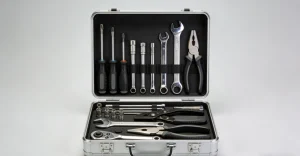
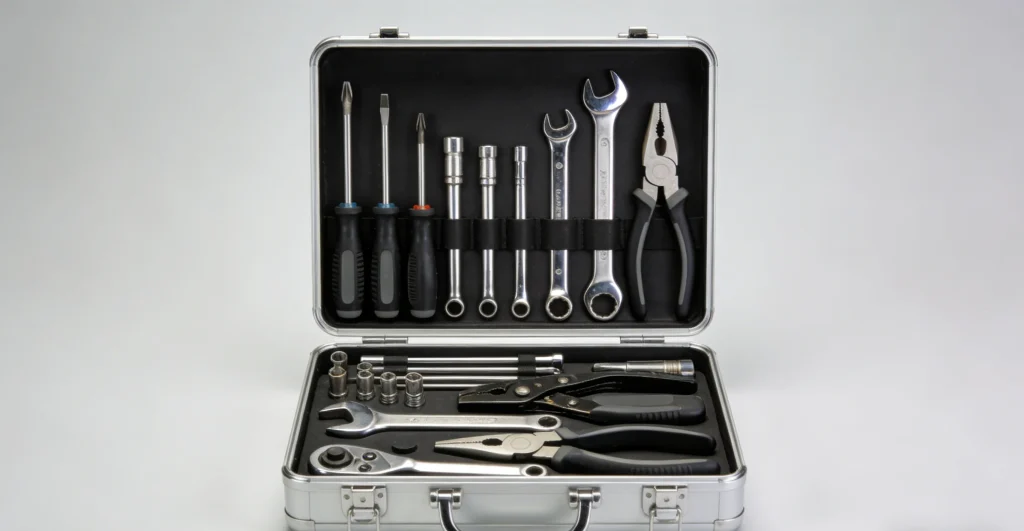
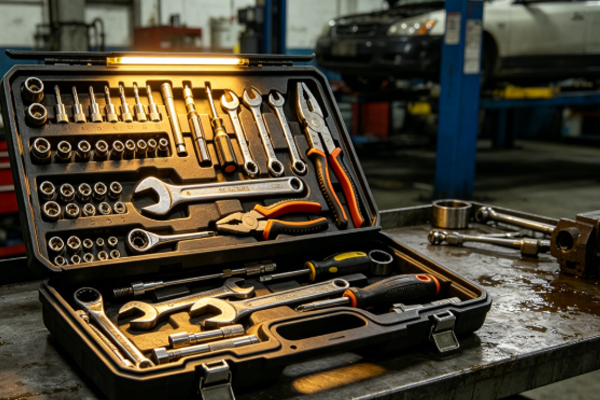
This is the most basic and most common organization method. Wrenches, screwdrivers, pliers, socket sets, and measuring tools can each be placed in separate areas. For example, all open-end wrenches can be stored together on the same layer, while screwdrivers can be fixed uniformly in slot areas, making tool searching more intuitive.This organization method is suitable for most maintenance scenarios, especially for maintenance personnel with a large number of tools, as it can significantly improve search efficiency.
- Organize by Frequency of Use
Place frequently used tools in the easiest-to-access positions. For example, screwdrivers, adjustable wrenches, and pliers that are used daily can be placed on the upper layer or front section of the tool box, while lower-frequency tools can be stored in lower or side areas. This method reduces repeated searching and improves repair workflow efficiency, especially in high-frequency maintenance environments.
- Organize by Maintenance Process
Arrange tools according to the actual working sequence. For example, during automotive repair, tools can be arranged in the order of “disassembly tools → inspection tools → installation tools.” This way, there is almost no need to repeatedly search for tools during the repair process, making the overall workflow smoother.
- Store Small Parts Separately
Small parts such as screws, washers, and clips are the easiest items to lose. It is recommended to use transparent compartment boxes or labeled small storage containers for separate classification, while marking specifications and models externally for quick identification. If small parts are mixed together long-term, they can easily become lost and may even affect repair accuracy.
Why Do Professional Maintenance Workers Value Tool Organization?
Tool categorization is essentially a form of efficiency management. Repair work demands speed and accuracy; frequent tool searches not only disrupt the work rhythm but also increase the risk of operational errors. Proper categorization also reduces tool collisions and damage; for example, separating precision tools from heavy-duty tools can extend their lifespan. Many experienced repair technicians develop fixed storage habits, enabling them to quickly locate tools over time, making the entire repair process more efficient and organized.
Common Questions
Q: Is more detailed tool organization always better?
A: No. Overly detailed categorization may actually reduce access efficiency.
Q: Why do many people still end up with messy tools after organizing them?
A: Because they do not develop the habit of returning tools to fixed positions.
Q: Should labels be attached inside the tool box?
A: Yes, especially in small parts storage areas.
Q: Should power tools be stored together with hand tools?
A: It is better to separate them to avoid collisions and cable entanglement.
Tool Organization Methods for Different Maintenance Scenarios
In automotive repair shops, socket sets, wrenches, and pneumatic tools are usually stored in separate layers because they are used most frequently. In factory equipment maintenance, greater emphasis is placed on separating measuring tools from electrical tools to avoid confusion. Outdoor mechanical maintenance personnel, on the other hand, tend to prefer “modular organization,” such as dedicating one area specifically for disassembly tools and another area for spare parts.
Below is a common reference for mechanical tool box organization:
| Organization Area | Stored Tools | Features |
| Upper Layer Area | Frequently used hand tools | Easy and fast access |
| Middle Drawers | Socket sets and measuring tools | Clear categorization |
| Lower Layer Area | Power tools | More stable load-bearing |
| Compartment Box Area | Screws and small parts | Prevents loss |
Through this type of structured organization, overall work efficiency can be significantly improved.
Quick organization of tools inside a mechanical tool box is essentially an optimization of repair workflow and work efficiency. Many people think a tool box is simply a storage container, but the organization method directly affects repair speed, tool lifespan, and daily work experience. Whether organizing by tool type, arranging by frequency of use, or sorting according to maintenance workflow, the core goal is always to make tools “faster to find, easier to return, and safer to store.” For people who work in mechanical maintenance long-term, tool organization is not only a habit of tidiness, but also a reflection of professional work standards.